

Overview
Appendicitis is inflammation of the appendix, a small pouch attached to the large intestine on the lower right side of the abdomen. It often begins when the appendix becomes blocked, leading to swelling, pressure, and infection that can worsen quickly. The classic pattern is abdominal pain that starts near the navel and shifts to the lower right side, often with loss of appetite, nausea, vomiting, and fever.
Because an inflamed appendix can progress, appendicitis is usually treated as time-sensitive. At Norelle Health in New York City, suspected appendicitis is evaluated promptly with a history, an examination, blood tests, and imaging when needed, and appendectomy is the common treatment when the diagnosis is confirmed. Sudden, severe, or rapidly worsening abdominal pain should prompt immediate medical attention.
Understanding Appendicitis
Appendicitis is inflammation of the appendix, a small, finger-shaped pouch attached to the large intestine on the lower right side of the abdomen. It often begins when the appendix becomes blocked, which can lead to swelling, increased pressure, and infection. Because an inflamed appendix can worsen quickly, appendicitis is usually treated as a time-sensitive condition.

Living with appendicitis? The next step is a quiet, unhurried conversation.
Why Patients Search for This Care
Many people look for information about appendicitis when they have new or worsening abdominal pain and want to know whether it is serious, whether testing is needed, and whether surgery is likely. Because appendicitis can progress to a ruptured appendix, it is one of the more time-sensitive causes of abdominal pain. This page is intended to help you understand the condition and recognize when to seek prompt or emergency care.
How Norelle Health Evaluates Appendicitis
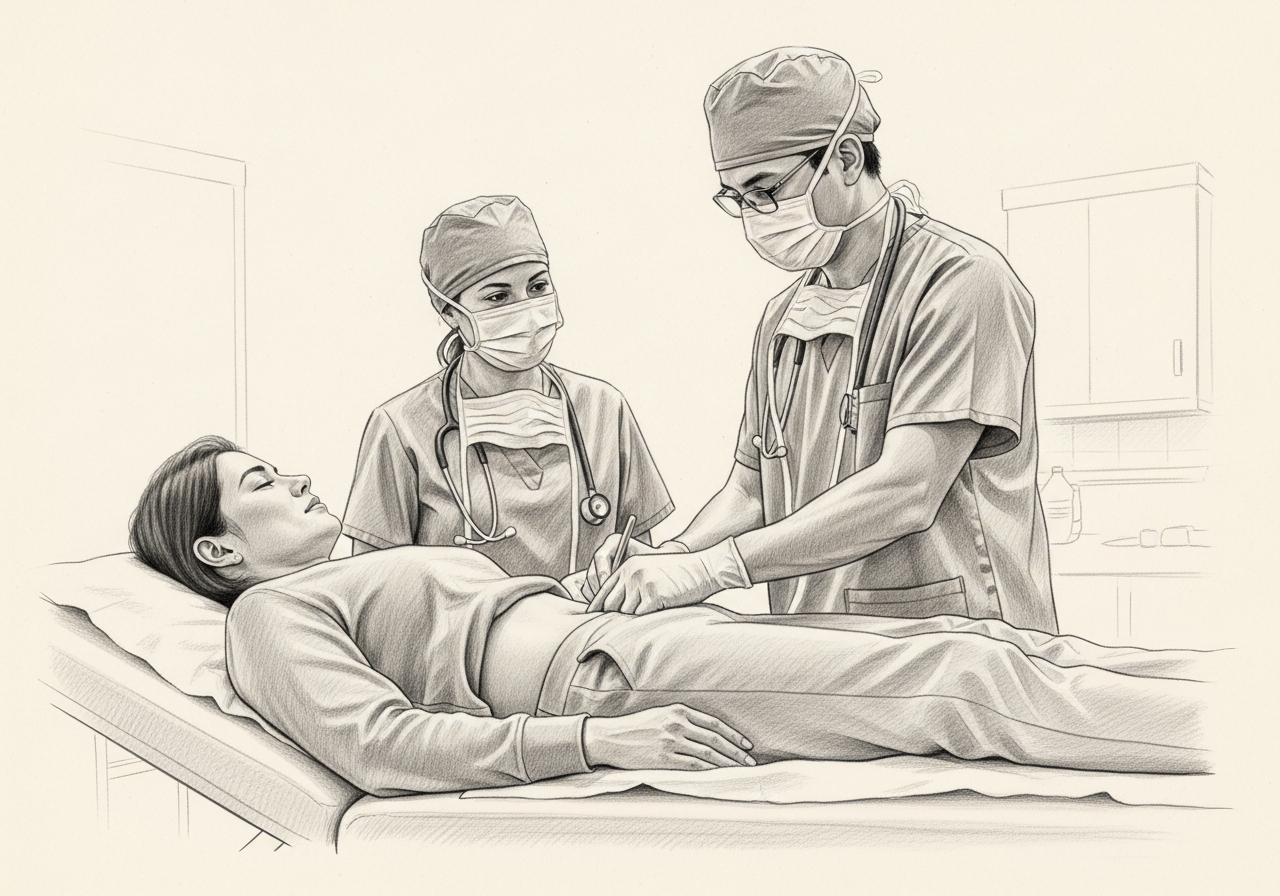
Evaluation begins with a focused history about when the pain started, how it has changed, and any associated nausea, vomiting, fever, or appetite loss. Our New York City team performs a physical examination and typically orders blood tests, and imaging such as ultrasound or CT is frequently used to confirm the diagnosis and rule out other causes of abdominal pain. Because timing matters, suspected appendicitis is assessed without unnecessary delay.
Symptoms and Warning Signs
The classic pattern is pain that begins near the navel and migrates to the lower right abdomen, often with loss of appetite, nausea, and a low-grade fever. Symptoms can vary, and not everyone follows the typical pattern. Sudden, severe, or rapidly worsening pain, a high fever, or persistent vomiting may signal a more advanced problem and should prompt immediate care.
Causes and Related Conditions
Appendicitis often develops when the opening of the appendix becomes blocked, which can lead to swelling and infection. It can occur at any age but is most common in the teens and twenties. Because lower abdominal pain has several possible causes, the evaluation also considers other conditions, such as gallstones or a hernia, which is part of why testing helps confirm the diagnosis.
Treatment Options
Appendectomy, the surgical removal of the appendix, is the common treatment when appendicitis is confirmed, and it can often be performed using a minimally invasive approach. Antibiotics are typically part of care and, in selected cases, may be used as an initial strategy. The recommended approach depends on the severity of inflammation, whether the appendix has ruptured, and your overall health.

Risks, Recovery, and Follow-Up
Treated promptly, many people recover well, while a delay can allow the appendix to rupture, which makes treatment more involved and recovery longer. As with any operation, appendectomy carries risks such as bleeding, infection, and a reaction to anesthesia, which the care team reviews with you. Recovery time varies with the approach and whether the appendix ruptured, and the team provides specific aftercare guidance and follow-up.

What Makes Norelle Health Different
Our New York City team focuses on prompt, careful evaluation and clear communication, using examination and the right testing to confirm the diagnosis before recommending treatment. You are evaluated in the context of your symptoms, history, and overall health, and warning signs that require urgent care are explained clearly.
Medical review
This page is a patient-education resource reviewed by the responsible Norelle Health clinician before publication. It does not replace an in-person evaluation. If symptoms are severe or rapidly worsening, seek immediate medical care.
Specialists who treat appendicitis

Dr. Youssef Mourad
MD
General Surgeon
Dr. Youssef Mourad is a general surgeon who cares for a range of general surgical conditions, including hernias, gallbladder disease, appendicitis, and soft-tissue masses, with experience in minimally invasive approaches.
- Hernia repair (inguinal, umbilical, ventral, and incisional)
- Gallbladder surgery (laparoscopic cholecystectomy)
- Appendectomy
- Lipoma and cyst excision
Not sure who to see? Our patient coordination team can help match you with the right specialist.
(212) 444-8006Frequently Asked Questions
It is usually treated urgently, because an inflamed appendix can worsen and rupture over time. Sudden, worsening lower-right abdominal pain should be evaluated without delay.
It often starts as discomfort near the navel and then shifts to the lower right abdomen, becoming sharper and more constant over hours. Movement, coughing, or pressing on the area may worsen it. Because patterns vary, any concerning or worsening abdominal pain should be evaluated.
Yes. Lower abdominal pain can also come from gallstones, a hernia, or urinary, gynecologic, or other causes, which is why an examination and imaging are used to help confirm the diagnosis.
In selected cases, antibiotics may be used as an initial treatment, but surgery to remove the appendix remains the common approach. Your care team can discuss what is appropriate for your situation.
An untreated, inflamed appendix can rupture, which can spread infection and make treatment more complex. This is why prompt evaluation is important when appendicitis is suspected.
Sudden, severe, or rapidly worsening lower-right abdominal pain, especially with fever or vomiting, should be evaluated urgently, and emergency care is appropriate when symptoms are severe.
Recovery varies with the approach and your condition, and many people return to routine activities over the following weeks with aftercare guidance.
Coverage varies by plan and medical necessity. Because appendicitis is often urgent, we recommend confirming benefits with your insurer when possible, and our team can help with the process.
Related Procedures

1 of 2 · Appendectomy

Request a consultation for appendicitis
Schedule an evaluation with our team to review your symptoms and the appropriate next steps.