

About the Procedure
Laparoscopic inguinal hernia repair uses several small incisions and a camera to return the protruding tissue to its proper place and reinforce the weakened area of the lower abdominal wall, often with a mesh. At Norelle Health in New York City, the care team reviews the size and type of hernia to determine whether a laparoscopic or open approach is more appropriate.
What the Procedure Involves
Laparoscopic inguinal hernia repair is a minimally invasive operation that addresses a hernia in the groin through several small incisions rather than one larger opening. A thin camera, called a laparoscope, lets the surgical team view the area on a monitor while specialized instruments return the protruding tissue to its proper place. The weakened section of the abdominal wall is then reinforced, frequently with a mesh.
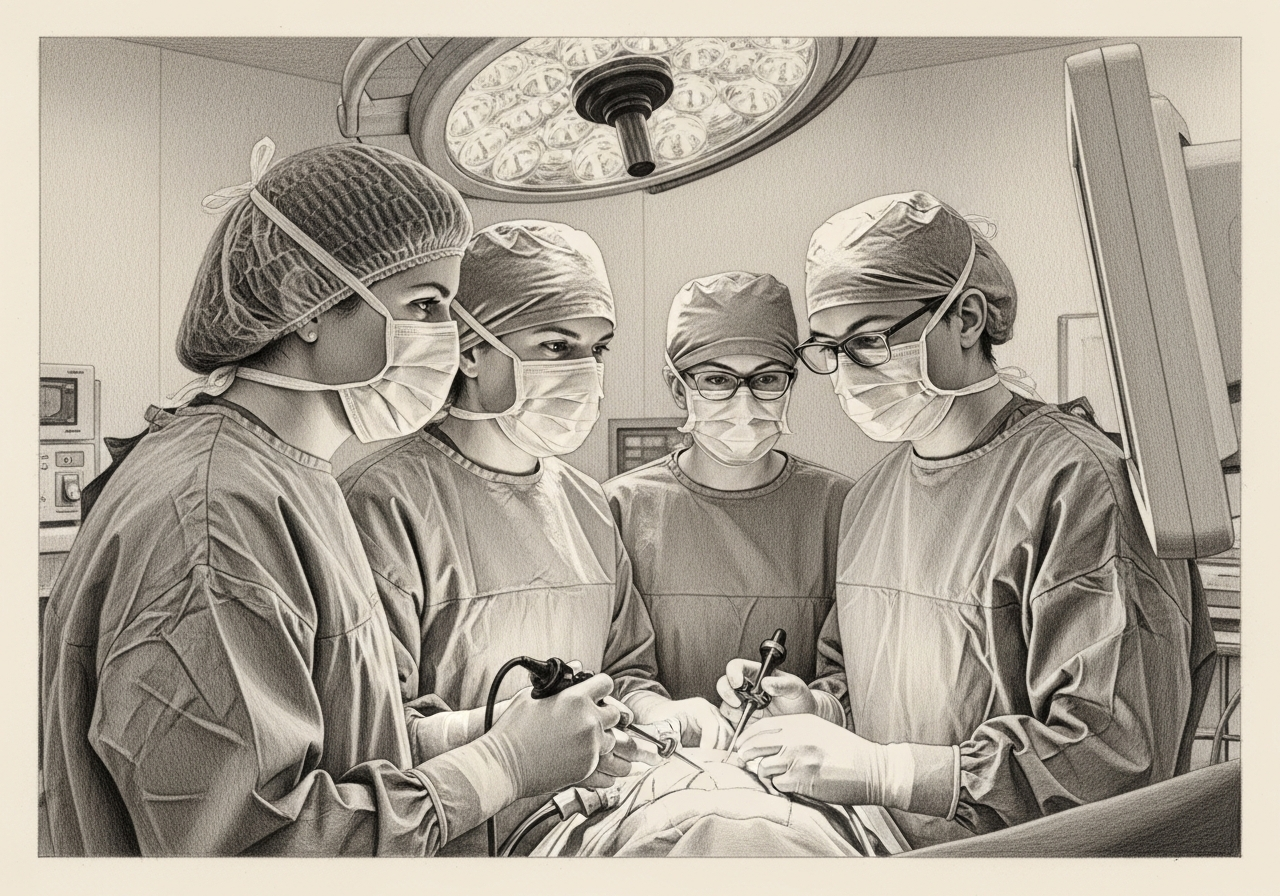
Considering laparoscopic inguinal hernia repair? The next step is a quiet, unhurried conversation.
When This Procedure Is Considered
Repair is considered when an inguinal hernia is causing symptoms, enlarging, or interfering with activity, and when the expected benefit outweighs the risks of surgery. Small, mildly symptomatic hernias may instead be monitored. Because some hernias can become trapped, a hernia that suddenly becomes firm, very painful, or impossible to push back in should be evaluated urgently.

Who May Be a Candidate
This approach may be suitable for adults with an inguinal hernia who are candidates for a minimally invasive repair, including some people with hernias on both sides or recurrent hernias. The decision depends on the size and type of the hernia, prior surgeries, anesthesia considerations, and overall health. An open approach may be recommended instead in some situations.
How It Is Performed
After anesthesia, the surgical team makes small incisions, places the camera and instruments, and gently repositions the hernia contents. Mesh is commonly secured to reinforce the abdominal wall and lower the chance of recurrence, and the small incisions are then closed. The specifics are tailored to the individual hernia.
Laparoscopic Compared with Open Repair
Inguinal hernias can be repaired with a laparoscopic approach or an open approach through a single larger incision. The laparoscopic route may offer smaller incisions and, for some people, a quicker return to activity, while an open repair can be preferable in certain situations, such as large, complex, or previously repaired hernias. The surgeon recommends the approach best suited to your hernia and health.
Risks and Limitations
As with any operation, possible risks include bleeding, infection, pain, fluid collection, mesh-related issues, and a chance that the hernia returns over time. Some people have temporary discomfort or numbness in the groin during healing. The care team reviews these risks with you and explains what the procedure can and cannot achieve.
Recovery and Outlook
Many people go home the same day and resume routine activities over the following days to weeks, often with less discomfort than larger open incisions. Heavier lifting and strenuous activity are usually delayed for several weeks. The care team provides individualized aftercare and activity guidance, and outcomes vary by patient.
Medical review
This page is a patient-education resource reviewed by the responsible Norelle Health clinician before publication. It does not replace an in-person evaluation. If symptoms are severe or rapidly worsening, seek immediate medical care.
Specialists who perform laparoscopic inguinal hernia repair

Dr. Youssef Mourad
MD
General Surgeon
Dr. Youssef Mourad is a general surgeon who cares for a range of general surgical conditions, including hernias, gallbladder disease, appendicitis, and soft-tissue masses, with experience in minimally invasive approaches.
- Hernia repair (inguinal, umbilical, ventral, and incisional)
- Gallbladder surgery (laparoscopic cholecystectomy)
- Appendectomy
- Lipoma and cyst excision
Not sure who to see? Our patient coordination team can help match you with the right specialist.
(212) 444-8006Frequently Asked Questions
Laparoscopic repair uses several small incisions and a camera, while open repair uses a single larger incision. Each has advantages, and the right choice depends on the hernia and your circumstances.
Not always. Small hernias with few symptoms may be monitored, while repair is often considered for hernias that enlarge, cause discomfort, or interfere with daily activity. A hernia that becomes trapped requires urgent care.
Mesh is commonly used to reinforce the repair and reduce the chance of recurrence, though the decision is individualized. Your surgeon can explain whether mesh is recommended for you.
Repair is intended to reinforce the weakened area and lower the chance of recurrence, but a hernia can return in some cases. Following the recommended activity and aftercare guidance can support healing.
Laparoscopic inguinal hernia repair is typically performed under general anesthesia. Your care team will review the anesthesia plan and any related considerations before surgery.
Many people resume light activity within days, while strenuous activity and heavy lifting are usually delayed for several weeks. Your care team will give specific guidance.
A hernia that becomes firm, very painful, discolored, or impossible to push back in, especially with nausea or vomiting, may signal trapped tissue and should be evaluated immediately.
Coverage varies by plan and medical necessity. We recommend confirming benefits with your insurer, and our team can help you understand the process.
Related Conditions

1 of 3 · Inguinal Hernia

Request a consultation about laparoscopic inguinal hernia repair
Schedule a consultation with our team to discuss whether this procedure is the right option for you.