

About the Procedure
Otoplasty is the surgical reshaping of the external ear. The most common reason it is performed is to address prominent ears — ears that project more than usual from the side of the head — but the term covers a range of procedures that change the shape, size, or position of the ear. Prominent ears usually result from two anatomic features, alone or together: an underdeveloped antihelical fold (the curved ridge of cartilage inside the rim of the ear, which normally folds the ear back toward the head) and an overly deep or large concha (the bowl-shaped hollow at the center of the ear, which can push the whole ear outward). Otoplasty works by recreating the missing fold and, when needed, reducing or repositioning the conchal bowl so the ear sits in a more typical position.
Otoplasty is also used for other concerns: reshaping a constricted or "cupped" ear, reducing an overly large ear, refining or repositioning the earlobe, and reconstructing the ear after injury. This page focuses on the most common form — setback otoplasty for prominent ears — while noting that the operation is individualized to the specific shape being treated.
Prominent ears are a normal anatomic variation, not a medical problem, and they do not affect hearing. The decision to have otoplasty is personal, and in children it is often driven by teasing or self-consciousness. At Norelle Health in New York City, the evaluation focuses on the specific anatomy responsible for the appearance — whether it is the fold, the conchal bowl, the earlobe, or a combination — and on setting realistic expectations, including that the two ears are never perfectly identical and the goal is natural-looking improvement and symmetry rather than perfection.
The anatomy behind prominent ears
Understanding what makes an ear prominent explains how otoplasty corrects it. The ear is a framework of cartilage covered by skin, with several named features:
- The helix is the outer rim of the ear.
- The antihelix is the curved ridge of cartilage just inside the rim. In a typical ear it folds the upper ear gently back toward the head. When this fold is underdeveloped or absent, the upper ear stands out.
- The concha is the deep central bowl of the ear. When it is unusually deep or large, it pushes the entire ear away from the head.
- The earlobe can also project, contributing to overall prominence.
Most prominent ears involve an underdeveloped antihelical fold, a deep concha, or both. Because the cause is structural — the shape and position of cartilage — the correction is structural: recreating the fold and adjusting the conchal bowl and, when relevant, the lobe. Identifying which of these features is responsible in a given ear is the central task of the evaluation, since the surgical steps differ accordingly.
Considering otoplasty? The next step is a quiet, unhurried conversation.
What otoplasty can address
Otoplasty is used for several distinct concerns of the outer ear:
- Prominent (protruding) ears, the most common indication, by recreating the antihelical fold and reducing or repositioning the concha.
- An overly deep conchal bowl, by reducing or setting back the cartilage so the ear sits closer to the head.
- A poorly defined antihelical fold, by reshaping the cartilage to create a natural curve.
- Earlobe prominence or shape, refined as part of the procedure.
- Constricted, cupped, or unusually large ears, reshaped or reduced with techniques tailored to the deformity.
- Asymmetry between the two ears, improved by adjusting one or both.
Otoplasty changes the appearance and position of the outer ear; it does not affect hearing, which depends on the ear canal and the structures deeper inside. The aim is a natural-looking ear in a more typical position, with reasonable symmetry between the two sides.
How the procedure is performed
The technique is matched to the specific anatomy, but setback otoplasty for prominent ears generally follows a consistent plan.
Incision. An incision is usually placed in the natural crease behind the ear, where the resulting scar is well hidden. In some techniques, additional small accesses are used.
Reshaping the cartilage. The antihelical fold is recreated using sutures that gently bend the cartilage into a natural curve, sometimes combined with careful scoring or thinning of the cartilage so it folds smoothly without sharp edges. The goal is a soft, natural-looking fold rather than an over-corrected, flattened ear.
Addressing the concha. When a deep conchal bowl is part of the problem, it is reduced or repositioned with sutures that set the ear closer to the head, and occasionally a small amount of cartilage is removed.
Earlobe and fine adjustments. The earlobe position is refined when it contributes to prominence, and the two ears are compared throughout to keep them balanced.
Closure. The incision behind the ear is closed, and a supportive head dressing is applied to protect the new shape during early healing.
Anesthesia and setting. In adults and older children, otoplasty can often be performed under local anesthesia with sedation; in younger children it is usually done under general anesthesia. It is typically a same-day, outpatient procedure.
Timing: children and adults
Otoplasty can be performed across a wide age range, and timing is a common question.
Children. The ear reaches close to its adult size early in childhood, so setback otoplasty is often considered from around the early school years onward, once the cartilage is mature enough to hold the correction and the child is able to cooperate with care and aftercare. Many families choose to address prominent ears before or during the early school years when teasing can become a concern, but there is no single required age, and the decision is individualized.
Infants. In the first weeks of life, some ear-shape problems can be improved without surgery using ear molding — a non-surgical splinting system applied while the cartilage is still soft and malleable. This is only effective in early infancy, which is why early recognition matters; it is not an option later in childhood or adulthood.
Adults. Otoplasty is equally appropriate for adults, who often have it under local anesthesia with sedation. Adult cartilage is firmer, which the surgeon accounts for in the technique.
For older children and teenagers, the young person's own wishes are an important part of the decision, and the procedure is generally most satisfying when the patient — not only the parents — wants it.
Risks and important considerations
Otoplasty is generally well tolerated, but like any surgery it has risks that should be understood:
- Recurrence or partial loss of correction, where the ear gradually moves back toward its original position; this can require revision.
- Asymmetry, since perfectly identical ears are not achievable and small differences may remain or become apparent as healing settles.
- Over-correction, where the ear is set too close to the head or the fold looks unnatural or sharp.
- Suture-related problems, including sutures that become palpable, visible, or extrude, sometimes requiring removal.
- Bleeding or hematoma behind the ear, which needs prompt attention to protect the cartilage.
- Infection, uncommon but potentially serious when it involves cartilage, requiring prompt treatment.
- Scarring behind the ear, usually well hidden but occasionally thickened, and changes in skin sensation around the ear that are usually temporary.
No surgeon can guarantee perfect symmetry or a specific shape. A careful evaluation, an individualized technique, and realistic expectations help align the result with what the patient is hoping to achieve.
Nonsurgical options and their limits
For most people seeking otoplasty, surgery is the means of correction, but there is one important nonsurgical window:
- Ear molding in early infancy. When ear-shape problems are recognized in the first weeks of life, a non-surgical molding system can reshape the soft newborn cartilage and may avoid the need for later surgery. Its effectiveness depends on starting early, while the cartilage remains malleable, and it is not useful once the cartilage has firmed in later infancy and childhood.
Beyond infancy, there is no reliable nonsurgical method to set back prominent ears, because the prominence is built into the shape and position of mature cartilage. Devices and adhesives marketed to "fix" prominent ears in older children and adults do not permanently change the cartilage. For these patients, otoplasty is the procedure that addresses the underlying structure. An honest evaluation includes explaining when the infant molding window has passed and surgery is the realistic option.
What to expect on the day of surgery
Otoplasty is typically an outpatient procedure, meaning the patient goes home the same day. The choice of anesthesia depends mainly on age: adults and older children can often have the procedure under local anesthesia with sedation, while younger children usually have general anesthesia so they remain comfortable and still. The surgeon and the anesthesia team review the plan beforehand and answer questions.
On the day, the ear or ears are marked and prepared, and the surgeon reshapes the cartilage through the incision behind the ear, comparing the two sides throughout to keep them balanced. The procedure usually takes a couple of hours, varying with whether one or both ears are treated and with the specific techniques used.
Afterward, a supportive head dressing is applied to protect the new shape, and the patient is observed during recovery from anesthesia before going home with a caregiver. Families receive instructions on caring for the dressing, managing discomfort, sleeping position, and the warning signs — such as severe or worsening pain — that should prompt a call, since pain out of proportion can signal a problem behind the ear that needs prompt attention.
Preparing a child and supporting recovery
When otoplasty is planned for a child, preparation and aftercare involve the whole family. Because the result depends partly on protecting the reshaped cartilage during healing, a child needs to be able to cooperate with wearing a dressing and, later, a protective headband, and to avoid bending or knocking the ears. This is one reason the timing of surgery takes the child's maturity into account, not only the size of the ear.
Explaining the process to a child in simple terms — that the ears will be a little sore and bandaged for a short time, and that a soft headband will be worn at night for a while — helps set expectations. Most children return to school within about one to two weeks, avoiding rough play and contact sports for several weeks while the correction stabilizes. A protective headband worn at night for a period of weeks helps keep the ears from being folded forward during sleep.
For teenagers and adults, recovery follows a similar path, with many returning to work or school within one to two weeks. Across all ages, the early dressing protects the shape, the result becomes clearer as swelling settles over the following weeks to months, and follow-up visits confirm that the correction is holding. Sharing the aftercare plan in advance helps families and patients feel prepared rather than surprised.
Specialists who perform otoplasty
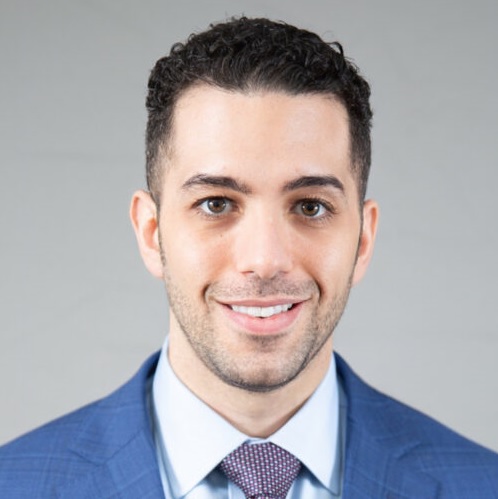
Dr. Moustafa Mourad
MD, FACS
Double Board-Certified Head & Neck and Facial Plastic & Reconstructive Surgeon
Dr. Moustafa Mourad is a double board-certified head and neck and facial plastic and reconstructive surgeon who cares for the full range of cosmetic and complex conditions affecting the face, head, and neck.
- Facial plastic and reconstructive surgery
- Head and neck cancer surgery
- Microvascular free-flap reconstruction
- Facial trauma and reconstruction
Also caring for this area


Not sure who to see? Our patient coordination team can help match you with the right specialist.
(212) 444-8006Frequently Asked Questions
The ear reaches close to adult size early in childhood, so setback otoplasty is often considered from around the early school years onward, once the cartilage is mature enough to hold the correction and the child can cooperate with aftercare. There is no single required age, and the decision is individualized. Many families choose to address prominent ears before teasing becomes a concern.
No. Otoplasty reshapes the outer ear, which is not involved in the mechanics of hearing. Hearing depends on the ear canal and the structures deeper inside the ear, which the procedure does not alter. Prominent ears themselves do not affect hearing either.
The main incision is usually placed in the natural crease behind the ear, where the scar is well concealed. It typically heals to a fine, hidden line, though it can occasionally thicken. Because the scar is behind the ear, it is not visible from the front.
That depends on your anatomy. When both ears are prominent, both are usually adjusted for balance; when only one ear is prominent, the surgeon may operate on one or adjust both slightly to improve symmetry. Perfect symmetry is not achievable, and the goal is a natural, balanced appearance.
Only in early infancy. In the first weeks of life, a non-surgical molding system can reshape the soft newborn cartilage and may avoid later surgery, but it only works while the cartilage is still malleable. Beyond infancy there is no reliable nonsurgical way to permanently set back prominent ears, because the prominence is built into mature cartilage; otoplasty is then the option.
A supportive dressing is worn for several days, and most children return to school and adults to work within about one to two weeks, avoiding pressure on the ears. A protective headband, especially at night, is commonly recommended for some weeks, and contact sports are restricted for several weeks. Final shape and scar fading continue over the following months.
Otoplasty results are generally long-lasting. A minority of patients experience some recurrence, where the ear drifts back toward its original position, which can require a revision. Wearing the recommended protective headband during early healing helps the correction hold.
Yes. Otoplasty is equally appropriate for adults and can often be done under local anesthesia with sedation. Adult cartilage is firmer than a child's, which the surgeon accounts for in the technique. Many adults choose the procedure for prominence that has bothered them since childhood.
Discomfort is usually mild to moderate and is managed with prescribed or over-the-counter medication as directed. The supportive dressing and avoiding pressure on the ears help during the first days. Significant or worsening pain should be reported, as it can indicate a problem that needs prompt attention.
Yes. When only one ear is prominent, the surgeon may operate on that ear alone or make a small adjustment to the other ear as well so the two match more closely. Because perfectly identical ears are not achievable, the goal is a balanced, natural appearance between the sides rather than exact symmetry. Whether one or both ears are treated is decided during the evaluation, based on the shape and position of each ear.
Most children return to school within about one to two weeks, but rough play and contact sports are usually restricted for several weeks while the reshaped cartilage stabilizes, since a blow to the ear during early healing can disturb the correction. A protective headband, especially at night, is commonly recommended for a period of weeks. Your surgeon will provide specific timelines for returning to physical activity based on the technique used and how healing progresses.
Clinical References
These independent resources from medical and professional organizations offer further reading. They are provided for general education and do not replace a consultation with a clinician.
Request a consultation about otoplasty
Schedule a consultation with our team to discuss whether this procedure is the right option for you.