
Overview
Facial laxity refers to the loosening and downward descent of skin, fat, and supporting tissues of the face and neck that develops gradually over time. As the deeper support layers relax and skin loses elasticity, the jawline can become less defined, folds around the mouth deepen, and the midface and neck may look heavier.
These changes are a normal part of aging and are influenced by genetics, sun exposure, weight changes, and lifestyle. They are not a medical danger, but many people seek evaluation because the changes affect how rested or approachable they feel they look.
At Norelle ENT, evaluation begins with understanding which tissues are contributing to the change and what a patient hopes to address. A natural-looking plan respects facial proportions and may range from nonsurgical measures to surgical lifting, depending on the degree of laxity and personal goals.
Common changes
People often describe a softer jawline, early jowls, deeper folds beside the nose and mouth, and loose skin or vertical bands in the neck. A descending brow can also add heaviness to the upper eyelids.
These changes usually develop slowly, so they may be noticed in photographs before they are noticed day to day.
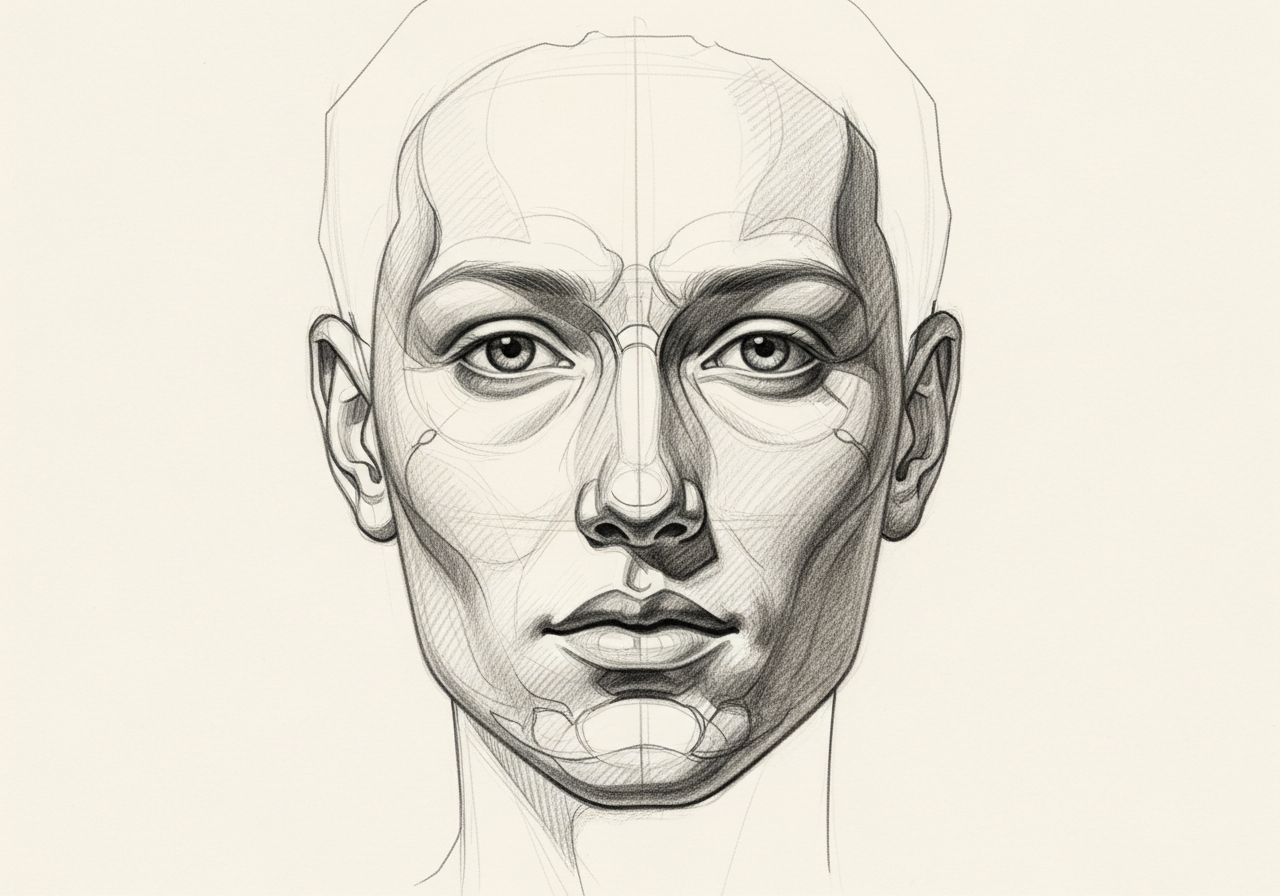
Living with facial laxity? The next step is a quiet, unhurried conversation.
Causes and risk factors
Aging is the primary driver, with loss of skin elasticity, thinning of deep fat, and loosening of facial ligaments. Contributing factors include genetics, cumulative sun exposure, smoking, and significant weight fluctuation.
Because several factors usually act together, evaluation looks at skin quality, volume, and support rather than skin alone.
How it is evaluated
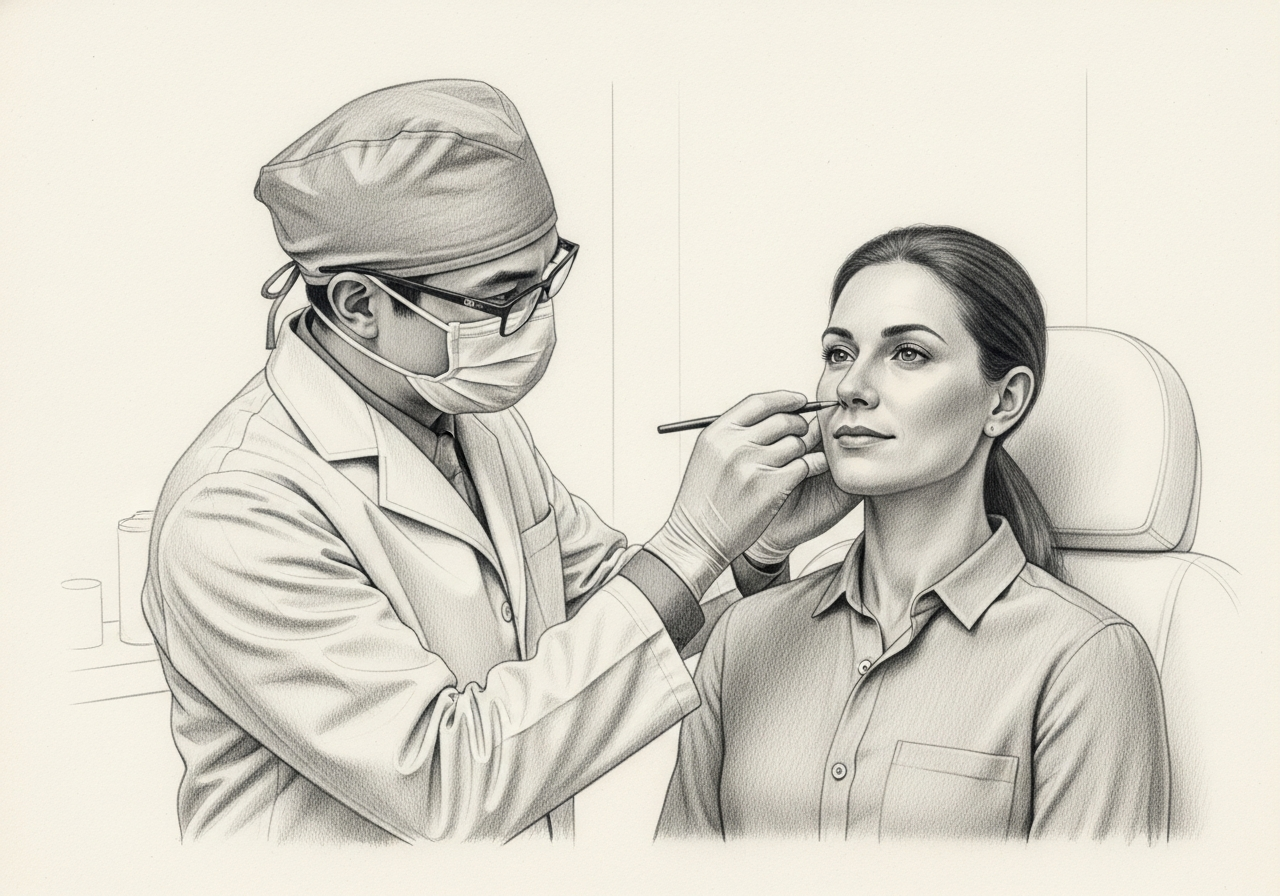
Evaluation is based on an in-person examination of skin tone, tissue descent, volume loss, and facial proportions, along with a discussion of your goals. Reviewing older photographs can help clarify how the face has changed.
The assessment identifies which layers are contributing, since loose skin, lost volume, and relaxed support are addressed in different ways.
Treatment options
For mild changes, skin care, sun protection, energy-based skin tightening, and injectable treatments to restore volume may be appropriate. These can soften the appearance of laxity but have limits when tissue descent is more advanced.
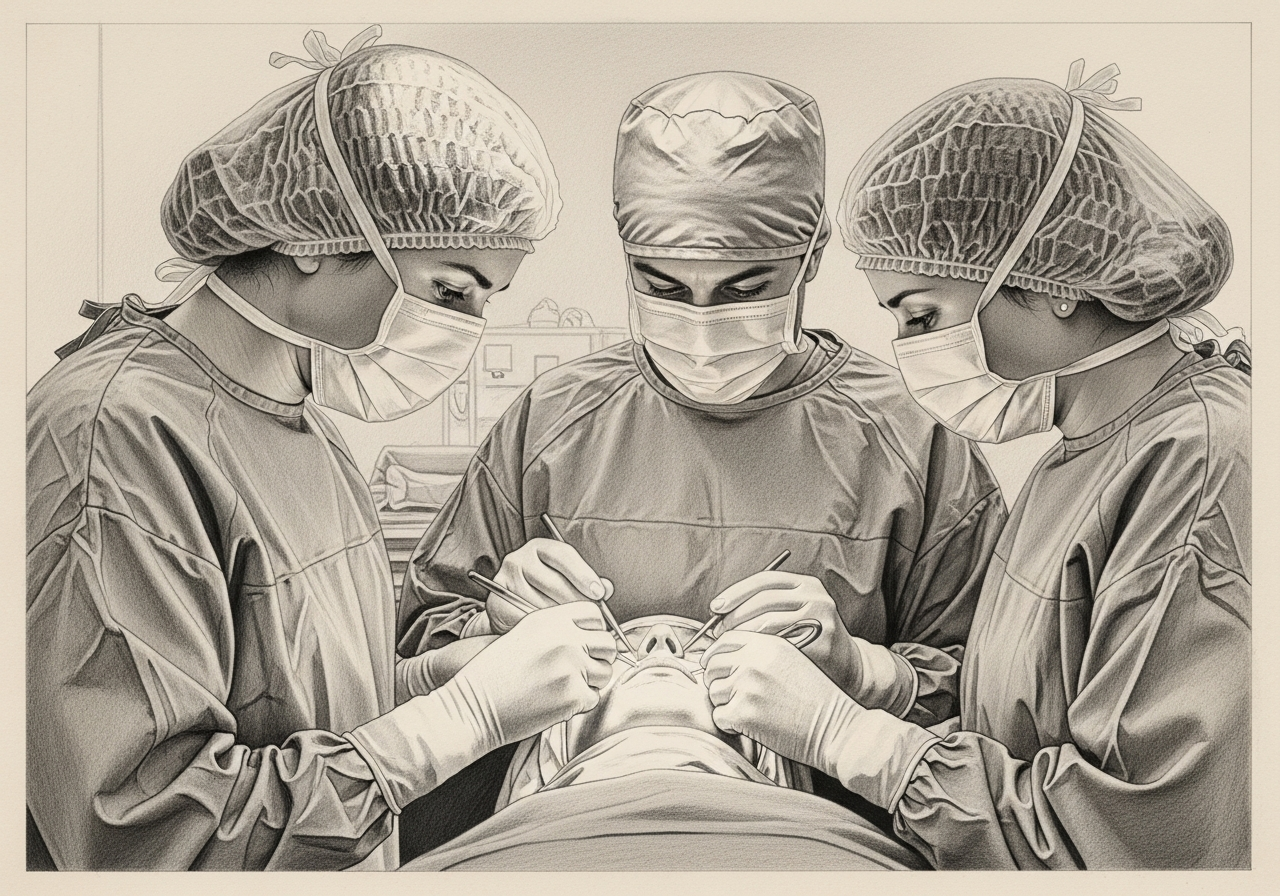
For moderate to advanced laxity, surgical lifting of the face, neck, or brow repositions and tightens deeper tissue for a more lasting change. The right approach depends on the degree of laxity, skin quality, and what you want to achieve. Treatment is elective, and the goal is a natural, balanced result rather than an altered appearance.
When to seek evaluation
There is no medical urgency to treat facial laxity. A consultation is reasonable whenever the changes bother you and you want to understand realistic options. New, asymmetric facial drooping that appears suddenly is different and should be evaluated promptly, since it can signal a nerve problem rather than aging.
Clinical references
Medical review
This page is a patient-education resource reviewed by the responsible Norelle ENT clinician before publication. It does not replace an in-person evaluation. If symptoms are severe or rapidly worsening, seek immediate medical care.
Specialists who treat facial laxity
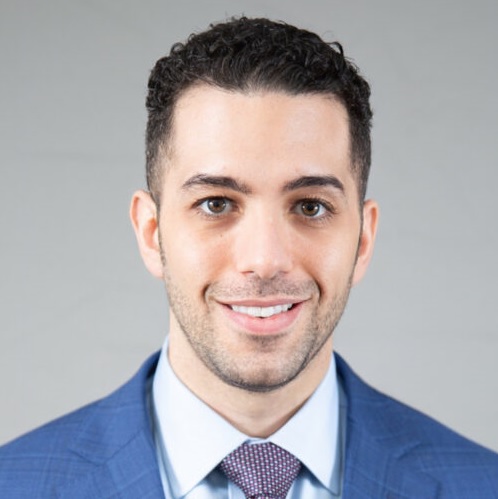
Dr. Moustafa Mourad
MD, FACS
Double Board-Certified Head & Neck and Facial Plastic & Reconstructive Surgeon
Dr. Moustafa Mourad is a double board-certified head and neck and facial plastic and reconstructive surgeon who cares for the full range of cosmetic and complex conditions affecting the face, head, and neck.
- Facial plastic and reconstructive surgery
- Head and neck cancer surgery
- Microvascular free-flap reconstruction
- Facial trauma and reconstruction
Also caring for this area


Not sure who to see? Our patient coordination team can help match you with the right specialist.
(212) 444-8006Frequently Asked Questions
Facial laxity is a normal aging change, not a disease. Treatment is elective and based on personal goals rather than medical necessity.
Good skin care and sun protection support skin health and can improve texture, but they cannot lift tissue that has descended. They are best viewed as part of an overall plan rather than a substitute for it.
Energy-based tightening and injectable volume can help with mild laxity and early changes. Their effect is more limited as descent becomes more pronounced, where surgical lifting tends to provide a more lasting change.
Surgery is generally considered when laxity is moderate to advanced and nonsurgical measures no longer meet a person's goals. A consultation can clarify which approach fits your anatomy.
The aim of facial rejuvenation is to restore support and balance while preserving your features. A plan that respects facial proportions is intended to avoid an overdone or pulled appearance.
Results vary by treatment and by individual. Nonsurgical options are temporary and need maintenance, while surgical lifting provides longer-lasting changes, though the face continues to age naturally over time.
It helps to bring photographs from earlier years and a clear sense of what bothers you most. This makes it easier to match realistic options to your goals.
Related Procedures


Request a consultation for facial laxity
Schedule an evaluation with our team to review your symptoms and the appropriate next steps.