
Overview
Olfactory neuroblastoma, also called esthesioneuroblastoma, is a rare cancer arising high in the nasal cavity near the smell fibers and the anterior skull base. Accurate pathology, MRI and CT review, assessment of skull-base and orbital extension, neck evaluation, and coordinated surgery and radiation planning are central to care. Treatment is multidisciplinary and individualized, and long-term surveillance is an important part of follow-up. This page is educational and does not replace specialist evaluation.
What this evaluation should clarify
A focused evaluation is designed to answer a few key questions:
- What objective evidence distinguishes olfactory neuroblastoma from look-alike conditions?
- Which anatomic, inflammatory, dental, neurologic, infectious, or tumor-related factors may be contributing?
- Which medical, procedural, surgical, or multidisciplinary path best fits the findings and your goals?
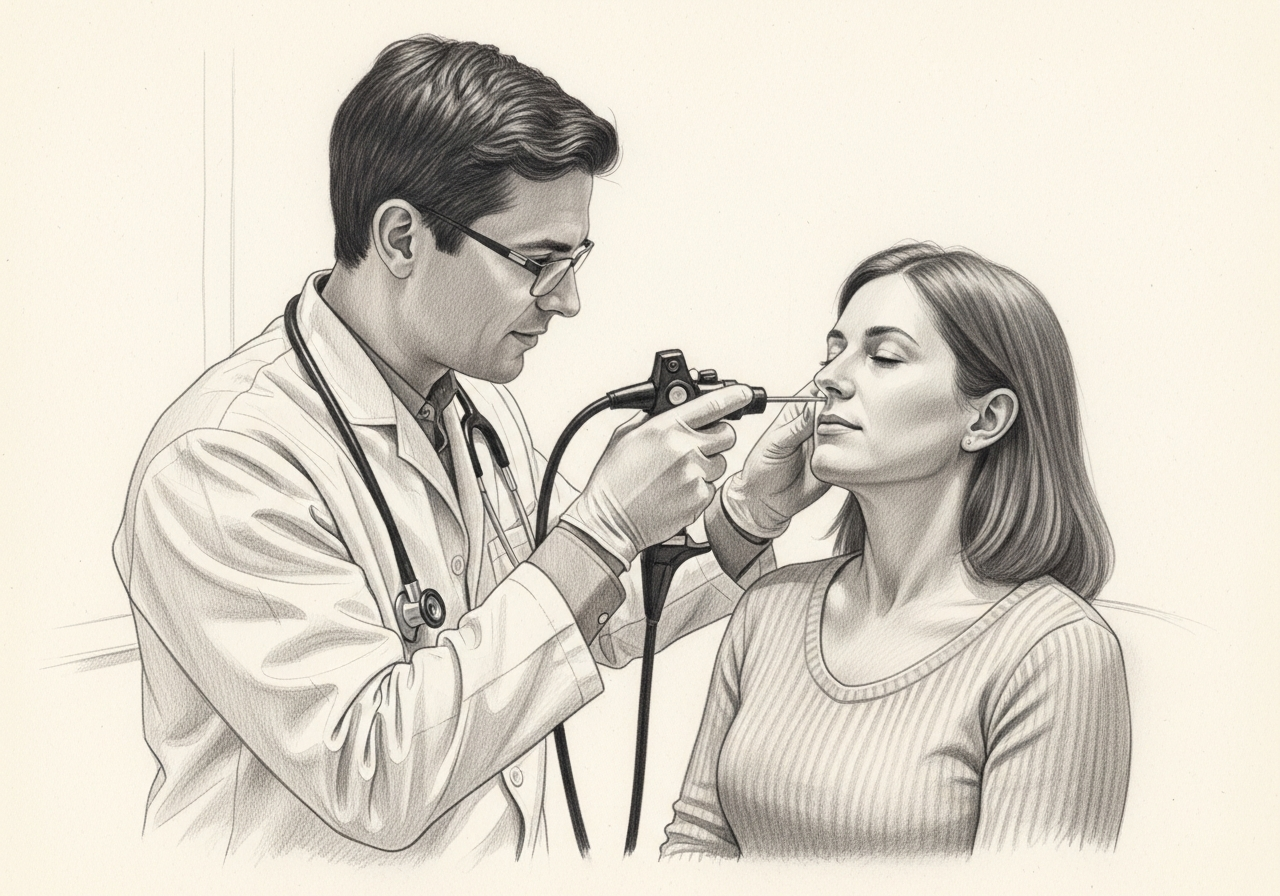
Living with olfactory neuroblastoma (esthesioneuroblastoma)? The next step is a quiet, unhurried conversation.
Evaluation and treatment pathway
Care generally follows a stepwise path:
- Clarify the symptom pattern, duration, triggers, prior treatment, operations, medications, and relevant medical history.
- Endoscopy, biopsy with expert pathology, and CT and MRI define the diagnosis and local extent. Staging may include the neck and distant sites, and pathology review is particularly valuable because rare sinonasal tumors can resemble one another.
- Identify important look-alikes, complications, and contributors before settling on a definitive diagnosis.
- Treatment often combines surgery and radiation, with systemic therapy used in selected advanced, recurrent, or high-risk settings. The approach and sequence depend on extent, pathology, prior treatment, and multidisciplinary review.
- Set a measurable follow-up plan covering symptom goals, objective reassessment, medication response, and imaging or surveillance when appropriate.
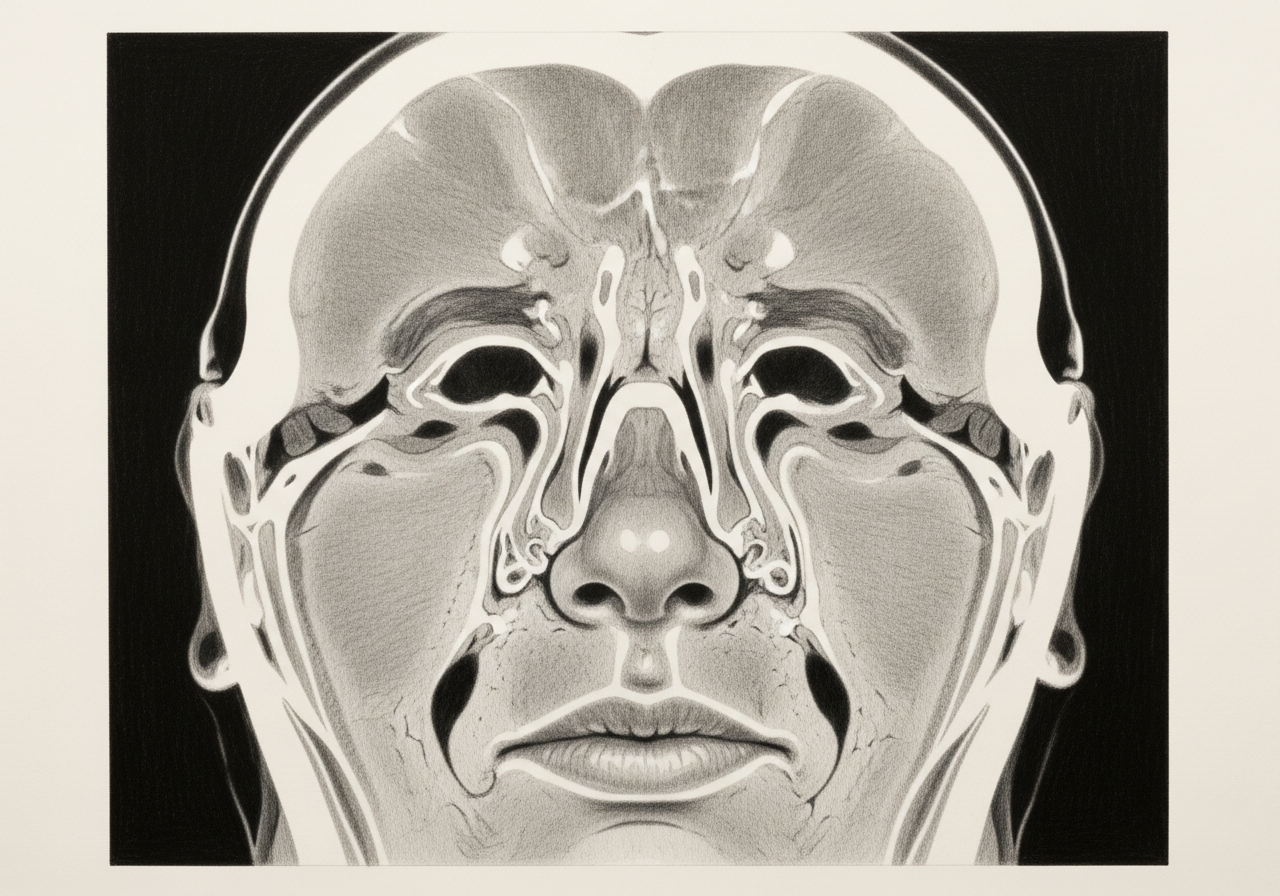
What the tumor is
Olfactory neuroblastoma (esthesioneuroblastoma) is a rare cancer that arises from olfactory tissue at the roof of the nasal cavity, where the nose meets the base of the skull. Because of this location, it can extend toward the eye socket and the front of the brain, which is why it is managed as a skull-base cancer.

Symptoms
Symptoms often build gradually and commonly include persistent one-sided nasal blockage, recurrent nosebleeds, and a change in or loss of smell. Larger tumors can cause eye symptoms such as tearing, bulging, or vision changes. One-sided, progressive nasal symptoms warrant evaluation.
Endoscopy, imaging, and biopsy
Nasal endoscopy allows the tumor to be seen and assessed, while CT and MRI define its extent and its relationship to the eye, brain, and skull base. A biopsy with expert pathology review establishes the diagnosis. Imaging is generally obtained before biopsy when a skull-base tumor is suspected.
Staging and multidisciplinary review
Once diagnosed, the tumor is staged to determine its extent, including whether it has spread. Treatment planning is multidisciplinary, drawing on skull-base surgery, radiation oncology, and medical oncology, and may include review of imaging and pathology by the team.
Surgery, radiation, and systemic therapy
Treatment commonly combines surgery to remove the tumor with radiation therapy. Depending on the tumor's location and extent, surgery may be endoscopic, open, or a combination. Systemic therapy is used in selected cases. The specific plan is individualized to the tumor and the patient.
Skull-base reconstruction and surveillance
Removing a tumor at the roof of the nose often requires reconstruction of the skull base to separate the nasal cavity from the space around the brain and prevent a CSF leak. Because the tumor can recur, long-term surveillance with examination and imaging is an essential part of care.
What to bring to your consultation
Bringing the right records helps make the visit focused and useful. Where available, gather:
- Imaging files and reports, including CT and any MRI
- Endoscopy or operative findings from prior care
- Pathology results from any biopsy or surgery
- Relevant laboratory results
- Notes from prior treatment and a current medication list
- The specific question you would like answered
When to seek urgent care
Major bleeding, acute vision change, severe headache, neurologic symptoms, rapidly progressive eye swelling, or breathing difficulty require urgent assessment.
Medical review
This page is a patient-education resource reviewed by the responsible Norelle ENT clinician before publication. It does not replace an in-person evaluation. If symptoms are severe or rapidly worsening, seek immediate medical care.
Specialists who treat olfactory neuroblastoma (esthesioneuroblastoma)

Dr. Adrian Ong
MD
Board-Certified Facial Plastic & Reconstructive and Head & Neck Surgeon
Dr. Adrian Ong is a board-certified surgeon who practices exclusively on the face, head, and neck, with expertise spanning rhinoplasty, sinus surgery, facial trauma, reconstruction, and sleep surgery.
- Functional and aesthetic rhinoplasty (including revision)
- Sinus surgery and complex revision sinus surgery
- Facial trauma and nasal fractures
- Head and neck cancer surgery and microvascular reconstruction
Also caring for this area


Not sure who to see? Our patient coordination team can help match you with the right specialist.
(212) 444-8006Frequently Asked Questions
Olfactory neuroblastoma, also called esthesioneuroblastoma, is a rare cancer arising high in the nasal cavity near the smell fibers and the anterior skull base.
Endoscopy, biopsy with expert pathology, and CT and MRI define the diagnosis and local extent. Staging may include the neck and distant sites, and pathology review is valuable because rare sinonasal tumors can resemble one another.
Treatment often combines surgery and radiation, with systemic therapy used in selected advanced, recurrent, or high-risk settings. The approach and sequence depend on extent, pathology, prior treatment, and multidisciplinary review.
Major bleeding, acute vision change, severe headache, neurologic symptoms, rapidly progressive eye swelling, or breathing difficulty require urgent assessment.
Clinical References
These independent resources from medical and professional organizations offer further reading. They are provided for general education and do not replace a consultation with a clinician.
Related Procedures

1 of 2 · Endoscopic Skull Base Surgery
Related Conditions

Request a consultation for olfactory neuroblastoma (esthesioneuroblastoma)
Schedule an evaluation with our team to review your symptoms and the appropriate next steps.