
Overview
Skull base meningiomas are often slow-growing, but their location near vision, the sense of smell, cranial nerves, blood vessels, and brain tissue can make even small changes important. Most are benign tumors of the meninges, the coverings of the brain.
Treatment is based on growth over time, symptoms, anatomy, age, and overall health, and on the functional tradeoffs of observation, surgery, or radiation. Many small, asymptomatic tumors are monitored, while others are treated by a multidisciplinary team, which may include skull-base rhinology when an endonasal approach is suitable. This page is educational and does not replace specialist evaluation.
What this evaluation should clarify
A focused evaluation is meant to answer a few key questions:
- What objective evidence distinguishes a skull base meningioma from conditions that can look similar?
- Where is the tumor, and which nearby structures, such as the optic pathways, sense of smell, cranial nerves, or vessels, are involved?
- Which path, from observation to surgery or radiation, best fits the findings and your goals?
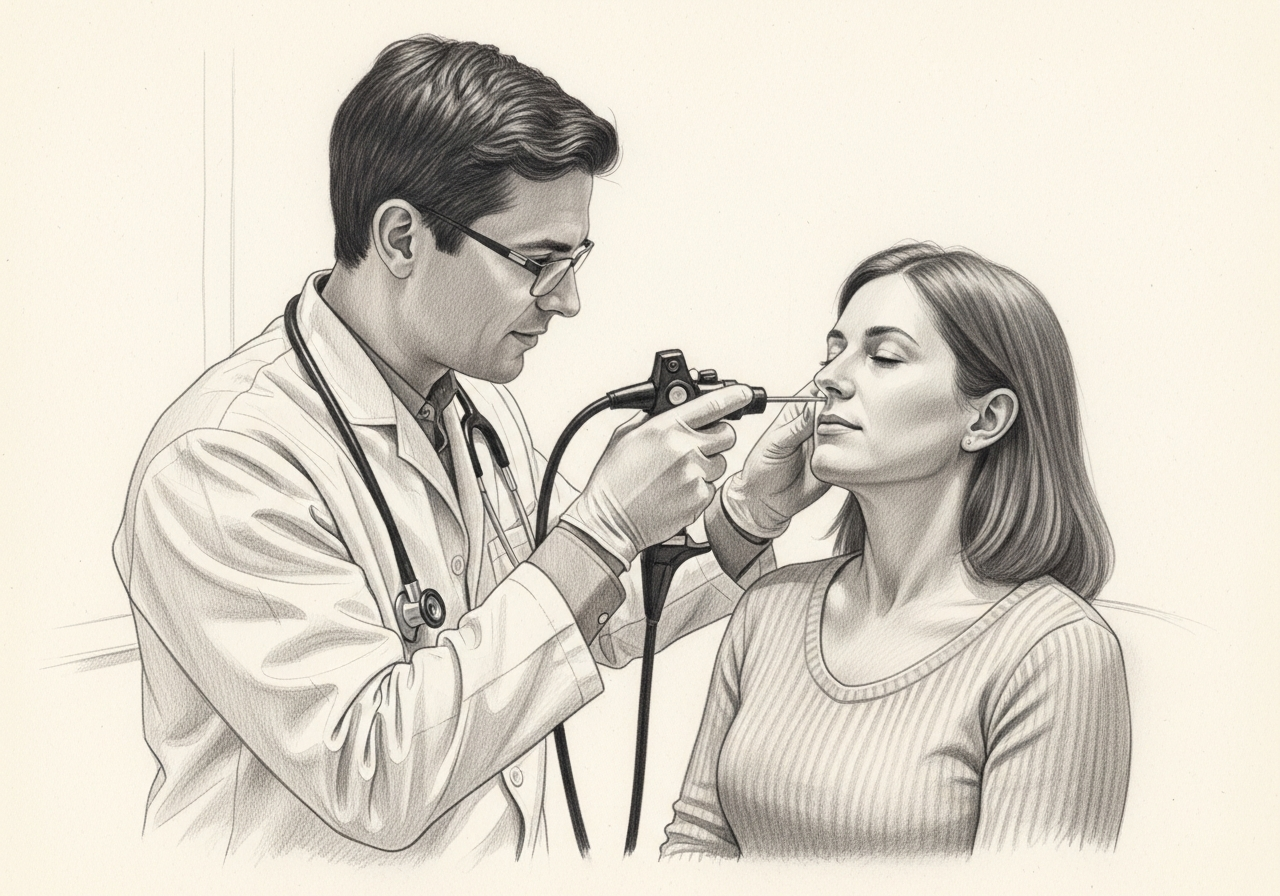
Living with skull base meningioma? The next step is a quiet, unhurried conversation.
Evaluation and treatment pathway
Care usually follows a stepwise pathway:
- Review the symptom pattern, duration, triggers, prior treatment, operations, medications, and relevant medical history.
- Use contrast-enhanced MRI, with CT for bone involvement, and serial imaging to establish growth. Formal vision, smell, cranial-nerve, or endocrine assessment is chosen according to location.
- Identify important look-alikes, complications, and contributors before settling on a diagnosis.
- Observation may be appropriate for selected stable, asymptomatic tumors. Surgery, radiation, or a combined strategy is considered for growth, symptoms, compression, or other risks, with the approach and extent tailored to preserve function.
- Set a clear follow-up plan, including symptom goals, objective reassessment, and imaging or surveillance when appropriate.
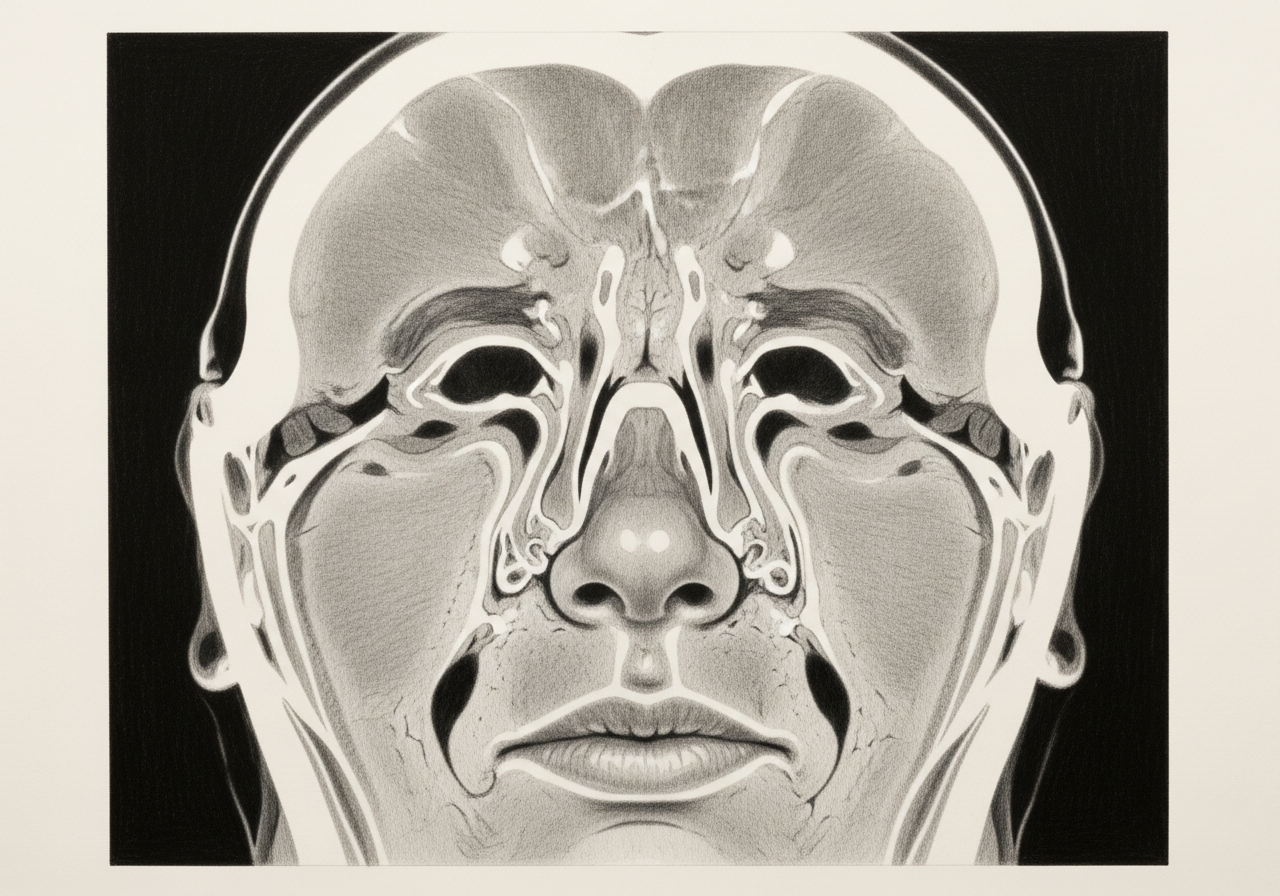
Location-dependent symptoms
Symptoms depend on where the meningioma is. Tumors near the optic pathways can affect vision, those at the front of the skull base can affect the sense of smell, and others can cause double vision, facial numbness, headaches, or, in certain locations, hormonal effects. Many small meningiomas cause no symptoms and are found incidentally.
Endoscopic versus transcranial approaches
When treatment is needed, surgery may be performed endoscopically through the nose for certain midline skull-base locations, or through a transcranial (open) approach for others. Some tumors are treated with a combination. The chosen route depends on the tumor's location and its relationship to nerves and vessels, with the aim of relieving pressure while protecting vital structures.

Radiation options
Radiation therapy, including focused techniques, is an option for some meningiomas, either as the main treatment in selected cases or after surgery when tumor remains. The plan is made with radiation oncology as part of multidisciplinary care.
Vision, hormonal, and neurologic follow-up
Because skull base meningiomas and their treatment can affect vision, hormones, and other neurologic functions, long-term follow-up with appropriate testing and imaging is important to monitor for changes or recurrence.

What to bring to your consultation
To make the most of your visit, bring or securely share the records that can change the plan:
- Imaging files and reports, such as CT or MRI
- Endoscopy or operative findings
- Pathology results
- Laboratory results
- Notes from prior treatment
- A current medication list
- The specific question you would like answered
When to seek urgent care
Sudden or rapidly progressive vision loss, new weakness, seizure, confusion, severe headache, or other acute neurologic change requires urgent assessment. An online form or routine appointment request is not an emergency service; for these symptoms, seek immediate in-person care.
Medical review
This page is a patient-education resource reviewed by the responsible Norelle ENT clinician before publication. It does not replace an in-person evaluation. If symptoms are severe or rapidly worsening, seek immediate medical care.
Specialists who treat skull base meningioma

Dr. Adrian Ong
MD
Board-Certified Facial Plastic & Reconstructive and Head & Neck Surgeon
Dr. Adrian Ong is a board-certified surgeon who practices exclusively on the face, head, and neck, with expertise spanning rhinoplasty, sinus surgery, facial trauma, reconstruction, and sleep surgery.
- Functional and aesthetic rhinoplasty (including revision)
- Sinus surgery and complex revision sinus surgery
- Facial trauma and nasal fractures
- Head and neck cancer surgery and microvascular reconstruction
Also caring for this area


Not sure who to see? Our patient coordination team can help match you with the right specialist.
(212) 444-8006Frequently Asked Questions
A meningioma is usually a tumor of the coverings of the brain. Skull-base meningiomas arise near complex nerves, blood vessels, the orbit, the pituitary region, or the interface with the nose and sinuses.
Contrast-enhanced MRI is central, and CT is useful for bone involvement. Serial imaging establishes how fast the tumor is growing, while formal vision, smell, cranial-nerve, or endocrine assessment is chosen according to location.
No. Observation may be appropriate for selected stable, asymptomatic tumors. Surgery, radiation, or a combined strategy is considered for growth, symptoms, compression, or other risks, with the approach and extent tailored to preserve function.
Sudden or rapidly progressive vision loss, new weakness, seizure, confusion, severe headache, or other acute neurologic change requires urgent assessment.
Clinical References
These independent resources from medical and professional organizations offer further reading. They are provided for general education and do not replace a consultation with a clinician.
Related Procedures

1 of 2 · Endoscopic Skull Base Surgery
Related Conditions

Request a consultation for skull base meningioma
Schedule an evaluation with our team to review your symptoms and the appropriate next steps.