

About the Procedure
The nasal valve is the narrowest part of the nasal airway, and when it is too narrow or collapses on inspiration, it can significantly restrict airflow. Treating the nasal valve improves nasal breathing, which is important for snoring, sleep quality, and the ability to tolerate CPAP.
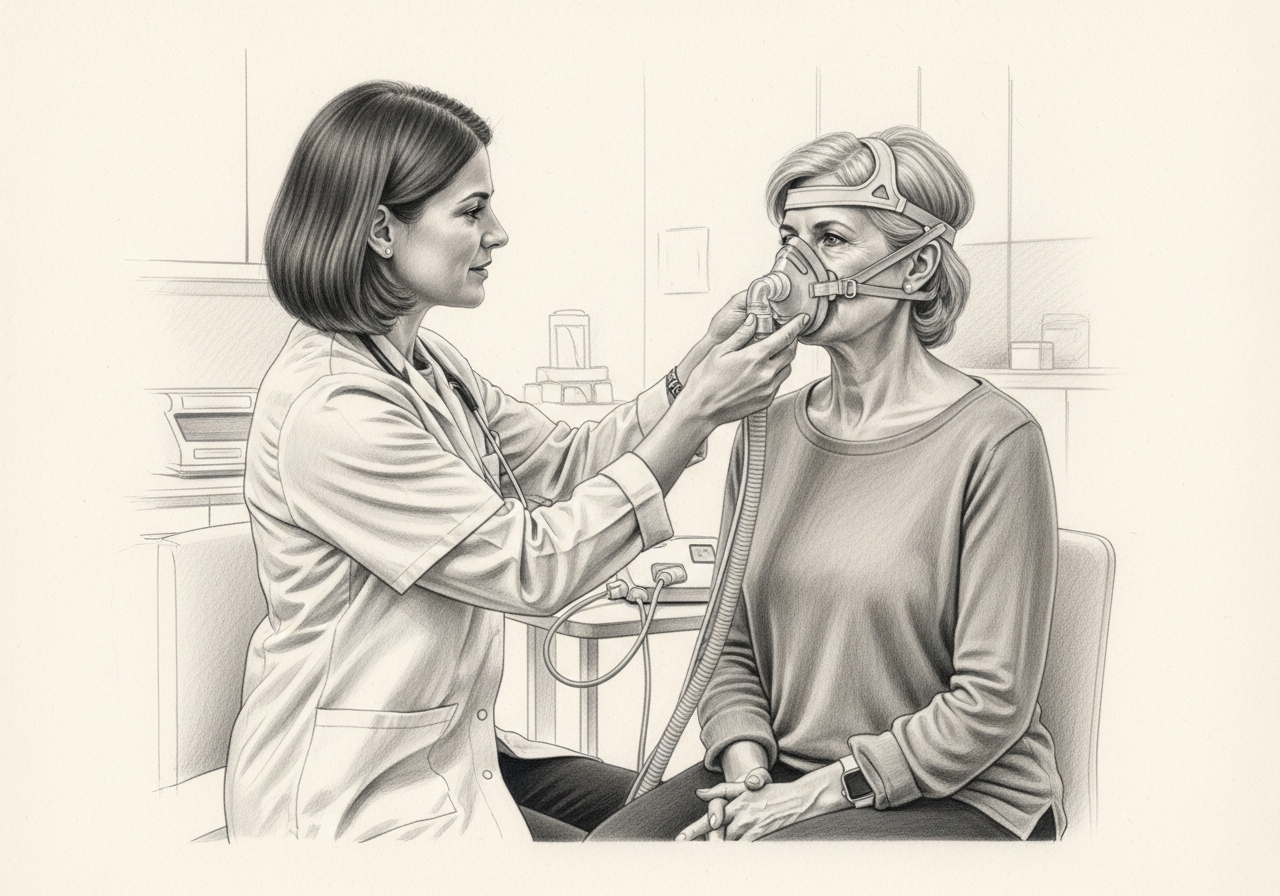
Nasal valve treatment is not a standalone cure for obstructive sleep apnea, but nasal obstruction is a common reason patients struggle with CPAP or breathe poorly at night. Options range from in-office procedures that stiffen or support the valve to surgical reconstruction with cartilage grafts.
At Norelle Health, the nasal valve is assessed as part of a complete airway evaluation. We clarify how much of the breathing problem comes from the valve versus the septum, turbinates, or lower airway, so treatment targets the actual source of obstruction.
Who may be a candidate
Treatment suits patients with demonstrated nasal valve narrowing or collapse who have nasal congestion that affects sleep, snoring, or CPAP tolerance.
During examination, gently supporting the side of the nose or watching the valve during a deep breath can show whether the valve collapses, helping confirm it is a real source of obstruction rather than congestion alone.
Considering nasal valve treatment for sleep apnea? The next step is a quiet, unhurried conversation.
How it is performed
Several approaches exist depending on the cause and severity:
- In-office procedures that stiffen or support the nasal sidewall
- Absorbable implants placed to reinforce a collapsing valve
- Surgical reconstruction using the patient's own cartilage grafts to widen and strengthen the valve
The choice depends on whether the problem is static narrowing, dynamic collapse, or both, and is often combined with septal or turbinate treatment.
Recovery and aftercare
Recovery varies with the approach.
- In-office treatments usually allow a quick return to normal activity
- Surgical repair involves congestion, mild swelling, and saline rinses for a couple of weeks
- Avoid strenuous activity briefly after surgical reconstruction
- Use nasal hygiene as directed to support healing
- Report persistent obstruction or graft-related concerns at follow-up

Risks and alternatives
Risks are generally low and depend on the technique: mild discomfort, temporary congestion, bruising, and, with grafting, small changes in nasal appearance or incomplete improvement.
Alternatives include nasal steroid sprays, allergy treatment, internal or external nasal dilator strips, and treating the septum or turbinates. For sleep apnea itself, CPAP, oral appliances, and airway surgery remain the primary treatments.
Results and follow-up
Improving the nasal valve can meaningfully ease nasal breathing, lessen snoring for some patients, and improve CPAP comfort and adherence. It generally does not, by itself, resolve moderate to severe sleep apnea.
Follow-up confirms healing and breathing improvement and revisits the overall apnea plan, which may still require CPAP, an oral appliance, or additional airway treatment.
Medical review
This page is a patient-education resource reviewed by the responsible Norelle Health clinician before publication. It does not replace an in-person evaluation. If symptoms are severe or rapidly worsening, seek immediate medical care.
Specialists who perform nasal valve treatment for sleep apnea

Dr. Adrian Ong
MD
Board-Certified Facial Plastic & Reconstructive and Head & Neck Surgeon
Dr. Adrian Ong is a board-certified surgeon who practices exclusively on the face, head, and neck, with expertise spanning rhinoplasty, sinus surgery, facial trauma, reconstruction, and sleep surgery.
- Functional and aesthetic rhinoplasty (including revision)
- Sinus surgery and complex revision sinus surgery
- Facial trauma and nasal fractures
- Head and neck cancer surgery and microvascular reconstruction
Also caring for this area

Not sure who to see? Our patient coordination team can help match you with the right specialist.
(212) 444-8006Frequently Asked Questions
Not on its own. Treating the nasal valve improves nasal breathing, which can reduce snoring and help CPAP tolerance, but moderate to severe sleep apnea usually needs additional treatment.
An examination, often with maneuvers that support or observe the nasal sidewall during breathing, can show whether the valve narrows or collapses and limits airflow.
Options range from in-office procedures and absorbable implants that support the sidewall to surgical reconstruction with cartilage grafts, often combined with septal or turbinate treatment.
Some valve treatments are office-based with minimal downtime, while surgical reconstruction is typically performed in an operating room. The setting depends on the technique and your anatomy.
Improving nasal airflow often makes CPAP more comfortable and easier to use, which can improve adherence for patients limited by nasal obstruction.
In-office procedures usually allow a quick return to activity, while surgical repair involves congestion, mild swelling, and short activity limits over a couple of weeks.
Nasal steroid sprays, allergy treatment, and nasal dilator strips can help some patients, and treating the septum or turbinates may address other sources of nasal blockage.
Related Conditions

1 of 4 · Nasal Valve Collapse
Related Procedures
1 of 4 · Septoplasty for Sleep Apnea
Request a consultation about nasal valve treatment for sleep apnea
Schedule a consultation with our team to discuss whether this procedure is the right option for you.