

About the Procedure
A deep-plane facelift is a surgical technique for lifting the lower two-thirds of the face — the cheeks, jowls, and upper neck — by repositioning a deep layer of tissue rather than by tightening skin. That layer is the SMAS (the superficial musculoaponeurotic system), a continuous sheet of muscle and fibrous tissue that lies beneath the fat and skin and connects to the muscles of facial expression. With age, the ligaments that anchor this layer loosen, and the soft tissue of the midface and jawline descends, producing flattened cheeks, deepening folds between the nose and mouth, and jowling along the jawline.
The "deep plane" refers to the level at which the surgeon works. In this technique, the dissection is carried beneath the SMAS, releasing the specific retaining ligaments that tether the tissue down. Once those attachments are released, the combined layer of SMAS, fat, and overlying skin is repositioned upward and slightly back as a single composite unit, then secured. Because the skin and deeper layer move together rather than being separated and pulled independently, the tension is placed on the strong deep layer instead of on the skin. The intent is a result that looks like a natural restoration of facial position rather than a tightened or "pulled" appearance.
At Norelle Health in New York City, a facelift is planned individually around a person's anatomy, the degree and pattern of facial aging, skin quality, and goals. A deep-plane approach is one of several facelift techniques, and it is not automatically the right choice for everyone. The purpose of the consultation is to examine where the facial tissue has descended, discuss what surgery can and cannot change, and decide on an approach — which may or may not be deep-plane — that fits the individual. A facelift addresses sagging and laxity; it does not change skin texture, sun damage, or fine surface wrinkles, which are treated with other measures.
What the SMAS layer is and why it matters
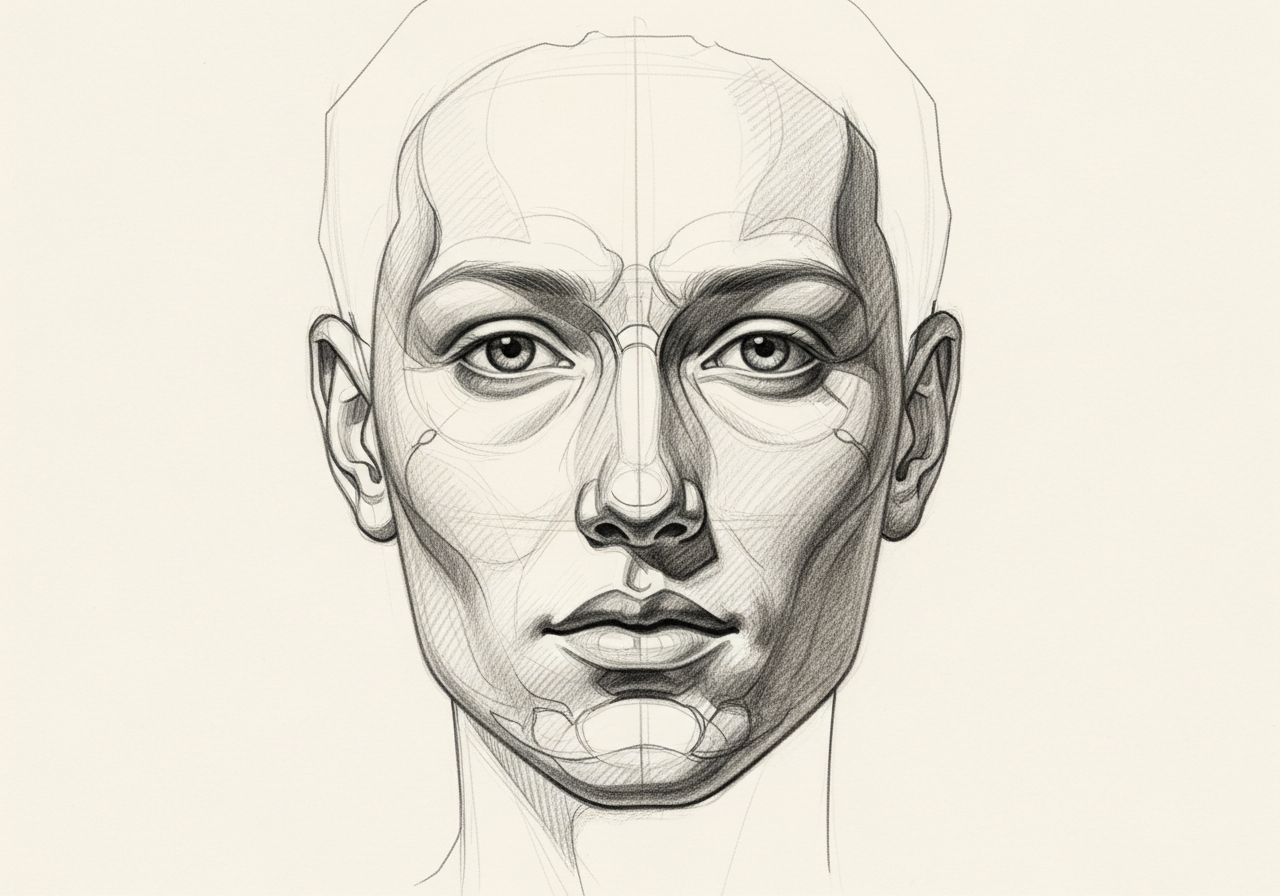
The face is built in layers: skin on the outside, then a layer of fat, then the SMAS, then a deeper plane of fat, and finally the muscles, bone, and the facial nerve that runs in a protected position beneath.
The SMAS is the structural layer that gives the face its support and transmits the movement of the expression muscles to the skin. It is connected to the deeper structures by retaining ligaments — strong fibrous tethers at specific, predictable points around the cheek and jawline. As these ligaments and the SMAS weaken with age, the soft tissue they once held in place slides downward. The high, full cheek of youth flattens and shifts toward the mouth, deepening the fold between the nose and the corner of the lip. Along the jaw, descending tissue collects into jowls.
Older facelift techniques worked mainly on the skin, removing and tightening it. Because skin is elastic and not a load-bearing structure, tension placed on skin alone tends to relax over time and can create an operated, tight look. Working at the level of the SMAS places the lift on a structural layer that holds position better and allows the skin to be redraped without tension.
Considering deep-plane facelift? The next step is a quiet, unhurried conversation.
What a deep-plane facelift addresses
A deep-plane facelift is directed at age-related descent and laxity of the lower face and upper neck. It can improve:
- Midface and cheek flattening, by repositioning descended cheek fat back over the cheekbone.
- Deep nasolabial folds (the lines from the nose to the corners of the mouth), which soften when the cheek tissue that deepened them is lifted, rather than simply filled.
- Jowls along the jawline, by repositioning the tissue that has fallen below the jaw border.
- Loss of jawline definition and early laxity of the upper neck, particularly when the neck is addressed at the same time.
It does not treat skin-surface concerns. Sun damage, pigmentation, fine "crepey" wrinkling, and thinning skin are problems of skin quality and texture, and they are managed with skin-directed treatments rather than by lifting. A facelift also does not lift the brow or treat the eyelids; those areas are addressed with separate procedures when desired. Setting these boundaries clearly is part of an honest plan, because a facelift that is expected to do things it cannot do leads to disappointment even when the surgery is technically successful.
How the procedure is performed
The specifics vary with the individual, but the general sequence is consistent.
Incisions. Incisions are placed to be as inconspicuous as possible: typically beginning in the hairline at the temple, running along the natural contour in front of the ear (or just inside the cartilage), curving around the earlobe, and continuing behind the ear into the hairline. When the neck is treated, a small incision may also be made beneath the chin.
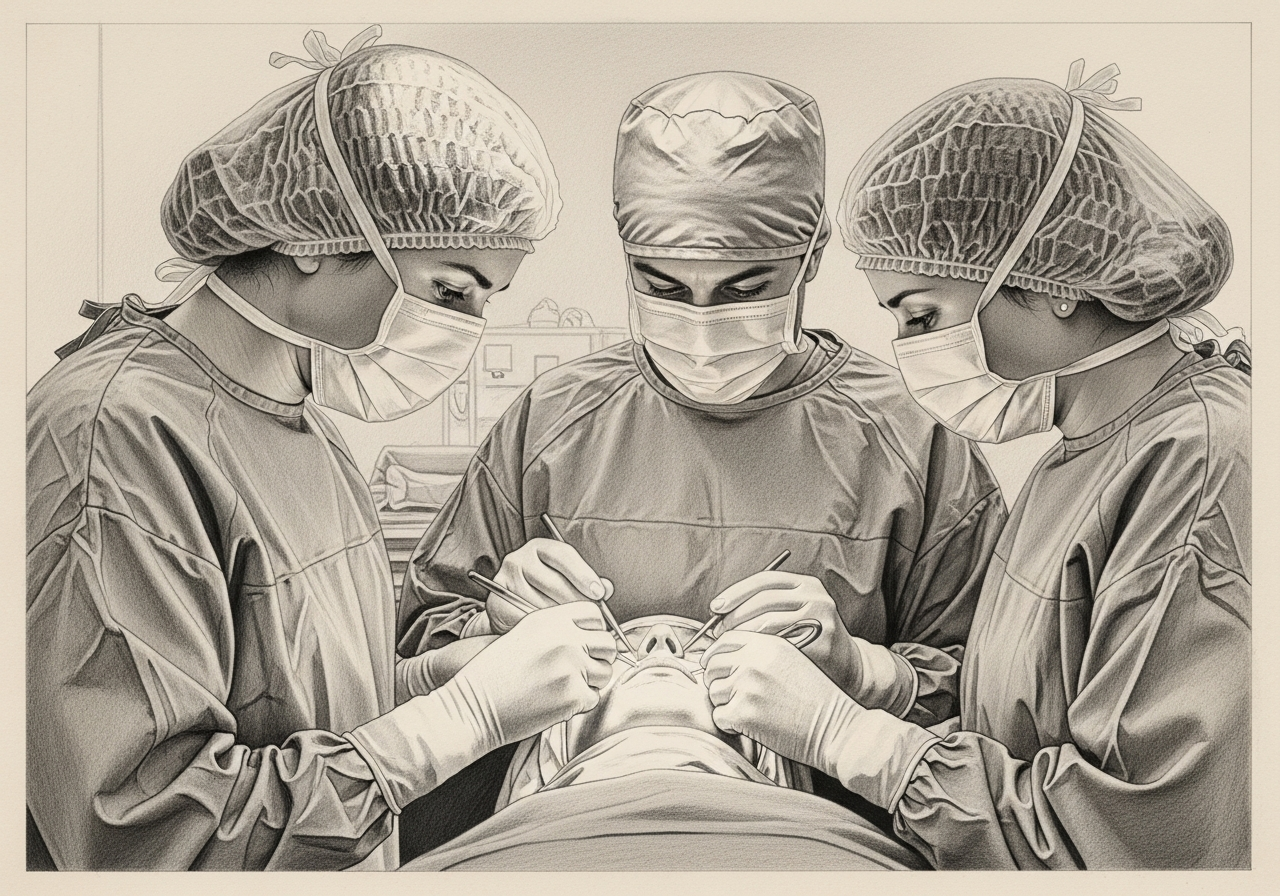
Dissection and ligament release. The skin is lifted, and the dissection is then carried into the deep plane beneath the SMAS. The retaining ligaments that hold the descended tissue down are deliberately released. This release is the defining step of the technique and is what allows the tissue to be repositioned without tension on the skin.
Repositioning. The freed composite layer of SMAS, fat, and skin is moved upward and slightly backward to restore a more youthful position to the cheek and jawline, and secured with sutures to deep, stable tissue.
Redraping and closure. Excess skin is trimmed conservatively and redraped without tension, and the incisions are closed. Because the lift is carried by the deep layer, only a modest amount of skin is removed.
Anesthesia and setting. A deep-plane facelift is commonly performed under general anesthesia or deep sedation, often as a same-day or short-stay procedure depending on the extent of surgery and whether other procedures are combined. Operative time is longer than for skin-only techniques because the deep-plane dissection is more involved.
How it differs from other facelift techniques
"Facelift" is a family of operations, not a single procedure, and the right one depends on anatomy and goals.
- Skin-only facelift. The oldest approach, working on skin alone. It is now used less often for comprehensive lifting because tension on skin tends to relax and can look tight.
- SMAS facelift (plication or imbrication). The SMAS layer is tightened by folding or trimming and suturing it, without the deeper ligament release of the deep-plane technique. This is a well-established, versatile approach that works well for many patients.
- Deep-plane facelift. Adds release of the retaining ligaments and repositions the SMAS, fat, and skin together as a unit. It can be particularly useful for restoring midface and cheek position and for softening the nasolabial fold by lifting rather than filling.
- "Mini" or short-scar lifts. Use shorter incisions and address a more limited area; appropriate for earlier or milder changes, with correspondingly more limited results.
No single technique suits everyone. The deep-plane approach involves a more extensive dissection near the facial nerve, which is why it should be matched to the right candidate and performed with detailed knowledge of facial anatomy. The choice among techniques is made together during the consultation.
Procedures often combined with a facelift
A facelift addresses the lower face and jawline. Because facial aging rarely affects only one zone, other procedures are sometimes planned at the same time so that the result is balanced and the recovery is consolidated into one period.
- Neck lift to address the platysma muscle bands, fullness, and laxity of the neck, which commonly age along with the lower face.
- Brow lift to raise a heavy or descended brow, which a facelift does not treat.
- Eyelid surgery (blepharoplasty) to address excess upper-eyelid skin or lower-eyelid puffiness.
- Fat grafting to restore lost volume in areas that have hollowed, since aging involves volume loss as well as descent.
- Skin-surface treatments such as resurfacing, performed in a coordinated way, to address texture and sun damage that lifting cannot change.
Combining procedures is a decision balanced against the length of surgery and the recovery involved, and it is individualized rather than routine.
Risks and important considerations
A deep-plane facelift is a major surgical procedure, and an informed decision means understanding its risks. They include:
- Hematoma (a collection of blood under the skin), the most common early complication of facelift surgery, which may require drainage.
- Injury to the facial nerve, which can cause temporary or, uncommonly, lasting weakness of part of the face. Because the deep-plane dissection is performed near branches of this nerve, detailed anatomical knowledge is essential.
- Skin healing problems, particularly in smokers, whose risk of poor healing and skin loss is substantially higher; stopping smoking before and after surgery is strongly advised.
- Infection, which is uncommon but possible.
- Scarring that is usually well concealed but can occasionally widen or become noticeable, and temporary numbness of the skin in front of and around the ears.
- Changes in hairline position near the incisions, and asymmetry, since the two sides of the face are never perfectly identical.
- Anesthesia-related risks, discussed separately as part of consent.
- Results that change with continued aging. A facelift repositions tissue but does not stop the aging process; the face continues to age naturally afterward.
No surgeon can guarantee a specific result. Realistic expectations, good general health, and not smoking meaningfully influence both safety and outcome.
Nonsurgical options and their limits
Several nonsurgical treatments address facial aging, and they have a real role — but they treat different problems than a facelift and cannot substitute for it once significant descent has occurred.
- Injectable fillers restore volume and can soften folds, but they fill rather than lift, and large volumes used to mimic a lift can distort the face.
- Neuromodulators relax specific muscles to soften dynamic lines; they do not address sagging.
- Energy-based skin tightening (radiofrequency, ultrasound, and similar devices) can produce modest tightening of skin and is most suited to mild, early laxity, not to established jowls or midface descent.
- Skin-resurfacing treatments improve texture, fine lines, and pigment but do not reposition tissue.
These treatments can be excellent for the right concern and can complement surgery, but when the underlying problem is descended deep tissue, only repositioning that tissue surgically addresses it. An honest evaluation includes saying when a nonsurgical option is reasonable and when it is unlikely to meet the goal.
Incisions, scars, and how the result settles
The incisions for a deep-plane facelift are planned to fall where they heal inconspicuously. They typically begin in the temple area or hairline, follow the natural contour in front of the ear (or just inside the cartilage edge), pass around the earlobe, and continue behind the ear into the hairline. Placing incisions along these natural borders allows the resulting lines to blend with the edges of the ear and to be concealed by hair in most cases.
Scars mature slowly. In the first weeks they can look pink or firm, and they soften and fade over many months — often up to a year or more — before reaching their final, settled appearance. How a scar heals depends partly on individual tissue and healing tendencies, and the surgeon reviews scar care during recovery. Most facelift incisions heal to fine lines, but occasionally a scar can become more noticeable and may benefit from additional treatment.
The result of the lift also evolves over time rather than appearing all at once. In the early weeks, swelling, firmness, and numbness make the face look fuller and feel tight; this is expected and does not represent the outcome. As swelling resolves over the following months, the repositioned tissues settle and the contour of the cheeks, jawline, and neck becomes apparent. Sensation returns gradually, and areas of numbness near the incisions usually improve over weeks to months.
It is also important to be clear about what a facelift does and does not change over the long term. The procedure repositions tissue that has descended, which can set the appearance back, but it does not stop the ongoing process of aging. The face continues to change after surgery, and skin quality, sun exposure, weight changes, and individual factors all influence how the result holds. Framing the operation as restoring position rather than freezing the face in time helps set realistic expectations for the years after surgery.
Specialists who perform deep-plane facelift
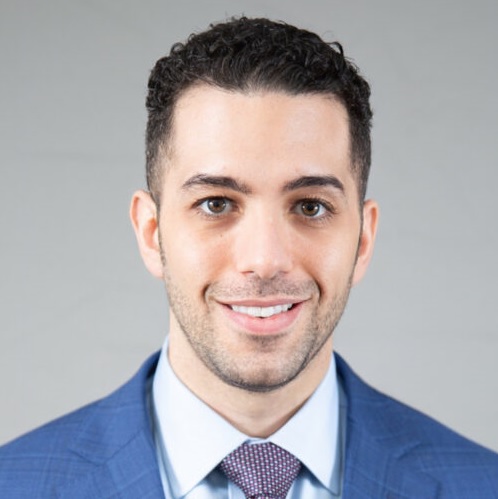
Dr. Moustafa Mourad
MD, FACS
Double Board-Certified Head & Neck and Facial Plastic & Reconstructive Surgeon
Dr. Moustafa Mourad is a double board-certified head and neck and facial plastic and reconstructive surgeon who cares for the full range of cosmetic and complex conditions affecting the face, head, and neck.
- Facial plastic and reconstructive surgery
- Head and neck cancer surgery
- Microvascular free-flap reconstruction
- Facial trauma and reconstruction
Also caring for this area



Not sure who to see? Our patient coordination team can help match you with the right specialist.
(212) 444-8006Frequently Asked Questions
A deep-plane facelift releases the retaining ligaments beneath the SMAS layer and repositions the SMAS, fat, and skin together as one composite unit, placing tension on the strong deep layer rather than on skin. A traditional skin-only facelift relies on tightening skin, which tends to relax over time and can look tight. The deep-plane approach is one of several valid techniques and is matched to the right candidate.
The goal of a deep-plane technique specifically is to avoid a pulled look by lifting the deep layer and redraping the skin without tension. A natural result depends on technique, the right plan for your anatomy, and conservative skin handling. No technique can guarantee a particular appearance, but placing the lift on the deep layer is intended to restore natural facial position rather than to tighten skin.
No. A facelift repositions sagging deep tissue; it does not change fine surface wrinkles, sun damage, pigmentation, or skin texture. Those concerns are treated with skin-directed measures such as resurfacing, which can be coordinated with surgery. Understanding this distinction is important for setting realistic expectations.
A facelift repositions tissue but does not stop aging, so the face continues to age naturally afterward. Many patients enjoy a long-lasting improvement, but the exact durability varies with anatomy, skin quality, lifestyle, and the technique used. It is more accurate to think of a facelift as setting the clock back rather than stopping it.
The dissection in a deep-plane facelift is performed near branches of the facial nerve, so detailed anatomical knowledge is essential. Temporary weakness of part of the face can occur and usually recovers; lasting weakness is uncommon. This is one reason the procedure should be performed by a surgeon with specific training in facial anatomy.
The neck commonly ages along with the lower face, and many patients address both together so the jawline and neck are balanced and the recovery is consolidated into one period. Whether to combine a neck lift is an individual decision based on your anatomy and goals, discussed during the consultation.
Many patients return to non-strenuous routines and social activities within roughly two to three weeks, often using makeup over any residual bruising. Strenuous exercise and heavy lifting are restricted for several weeks. Timelines vary with the individual and with any combined procedures.
Smoking reduces blood flow to the skin and substantially increases the risk of poor healing and skin loss along the incisions, which can affect both safety and the final appearance. Surgeons strongly advise stopping smoking well before and after surgery, and may defer the operation until you have done so.
Incisions are placed to be as inconspicuous as possible — in the hairline and along the natural contours around the ear. Scars usually heal to fine, well-concealed lines but can occasionally widen or become more noticeable, and they take many months to fully mature and fade. Your surgeon will discuss scar placement and care.
No. Fillers restore volume and can soften folds, but they fill rather than lift, and using large volumes to imitate a lift can distort the face. When the problem is descended deep tissue, repositioning that tissue surgically is what addresses it. Fillers and other nonsurgical treatments can complement surgery but do not replace it for established sagging.
Clinical References
These independent resources from medical and professional organizations offer further reading. They are provided for general education and do not replace a consultation with a clinician.
Related Conditions

Related Procedures

Request a consultation about deep-plane facelift
Schedule a consultation with our team to discuss whether this procedure is the right option for you.