
Overview
Most short-lived hoarseness is benign, but a voice change that does not improve within about four weeks should be examined with laryngoscopy, and sooner when breathing difficulty, a neck mass, a tobacco history, recent neck surgery, or other serious features are present.
Hoarseness is a change in the sound of the voice, which may become rough, breathy, strained, weak, or lower in pitch. It happens when the vocal cords cannot vibrate normally, whether from swelling, a growth, a nerve problem, irritation, or muscle tension.
Most hoarseness is temporary and follows a cold, voice overuse, or irritation. However, a voice change that does not improve within about four weeks, especially in someone who smokes or has other risk factors, should be examined, because the voice box can be looked at directly to find the cause.
Norelle ENT evaluates hoarseness by examining the vocal cords with laryngoscopy and identifying the underlying cause. Treatment may involve voice therapy, management of reflux or allergy, and, when needed, procedures directed at a specific vocal cord lesion or nerve problem.
How we approach the decision
Seeing the larynx before treating it is the central principle. The decisions this page is meant to help you understand are:
- Has the larynx been visualized before medication or voice therapy is prescribed?
- Is the cause inflammatory, structural, neurologic, functional, traumatic, postoperative, or neoplastic?
- Does the situation call for standard laryngoscopy, stroboscopy, imaging, voice therapy, a procedure, or a cancer workup?

Living with hoarseness and voice changes? The next step is a quiet, unhurried conversation.
What happens next
Evaluation usually follows a clear sequence:
- A history of onset, voice use, pain, swallowing, breathing, surgery or intubation, tobacco, reflux symptoms, and neurologic signs.
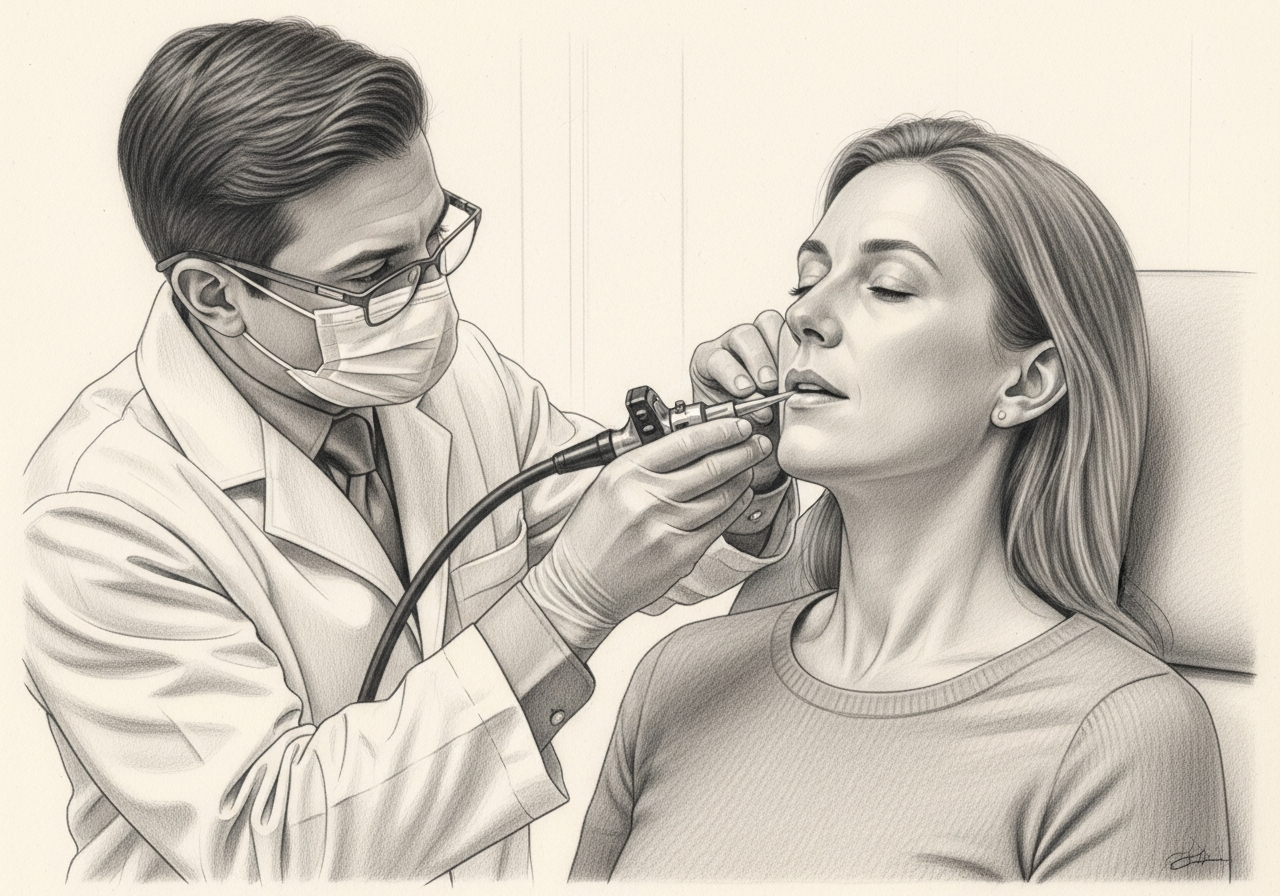
- Flexible laryngoscopy to inspect structure and movement.
- Stroboscopy when vibration and subtle vocal-fold lesions require closer assessment.
- Imaging or additional testing only after visualization when indicated.
- Cause-specific treatment, including voice therapy, behavior change, medication, injection, surgery, or referral. A persistent or suspicious finding may prompt a larynx cancer specialist evaluation and, when appropriate, laryngeal cancer surgery, while a voice change after thyroid surgery or with a neck mass evaluation is assessed rather than assumed.
Symptoms and warning signs
Hoarseness can sound rough, breathy, strained, or weak, and the voice may tire with use. Many people also notice frequent throat clearing or a sensation of something in the throat.
A voice change that lasts more than about four weeks deserves examination, particularly with a history of smoking, a neck lump, difficulty swallowing, coughing up blood, or significant throat pain.
Causes and risk factors
Common causes of hoarseness include:
- Viral laryngitis and voice overuse
- Vocal cord nodules, polyps, or cysts
- Acid reflux affecting the throat
- Allergy and postnasal drainage
- Vocal cord paralysis or weakness from a nerve problem
- Less often, a growth on the vocal cords
Risk factors include smoking, heavy voice use, and reflux.
How it is diagnosed
Evaluation begins with a history about how the voice has changed and how long it has lasted. The key step is examining the voice box:
- Flexible laryngoscopy views the vocal cords through the nose
- Videostroboscopy can assess the fine vibration of the cords
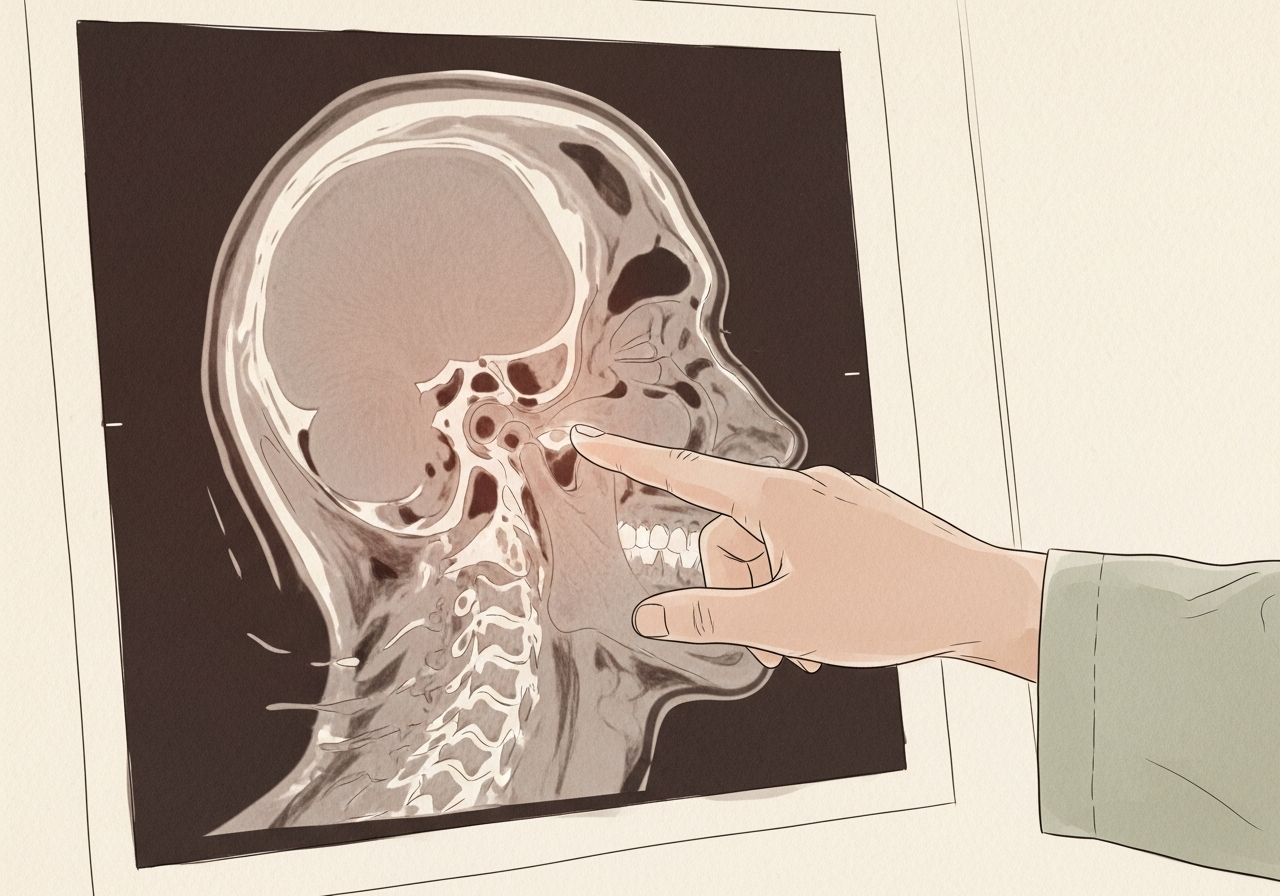
- Imaging is added if a nerve problem or mass is suspected
Seeing the vocal cords directly is the most reliable way to find the cause.
Treatment options
Treatment depends on the cause. Irritation-related hoarseness often improves with voice rest, hydration, and time. Voice therapy is helpful for many conditions, including nodules and muscle tension.
Reflux and allergy are managed when they contribute. Vocal cord lesions such as polyps or cysts may be treated with a procedure when they do not resolve, and vocal cord paralysis is managed with therapy or targeted procedures depending on the situation.

When to seek urgent care
Use these categories to guide timing:
- Emergency, meaning call 911 or go to the nearest emergency department: difficulty breathing, noisy breathing, coughing up blood, an inability to swallow, or new neurologic symptoms.
- Same-day or urgent evaluation: rapidly progressive voice loss, or a voice change after neck surgery or intubation.
- Routine specialist evaluation: a voice change that does not resolve or improve within about four weeks, or sooner when a serious cause is suspected.
The online consultation form is for routine scheduling and is not an emergency service.
Clinical perspective
Our head and neck team follows a simple principle aligned with national guidance: do not treat a voice you have not seen. In isolated hoarseness, routine antibiotics, steroids, imaging, or empiric reflux medication may be inappropriate before the larynx is visualized.
Factors that prompt earlier or closer evaluation include a tobacco history, a neck mass, breathing difficulty, recent neck surgery or intubation, and rapidly progressive voice loss. Standard laryngoscopy examines structure and movement, while stroboscopy assesses fine vocal-fold vibration and can reveal subtle lesions or stiffness not seen on a standard examination.
What commonly changes the recommendation is what the laryngoscopy shows. Voice therapy helps many functional, behavioral, neurologic, and postoperative voice disorders, but the larynx is visualized before therapy is prescribed, and the plan is individualized after specialist review.
What to bring to your consultation
Bringing the right records makes a consultation more efficient. Helpful items include:
- Prior imaging and the written reports
- Pathology or biopsy results when available
- Recent laboratory results
- Treatment notes from any prior care
- A current medication list
- The specific decision you want the consultation to answer
Request a consultation for a focused review of the diagnosis, the available options, the likely tradeoffs, and the steps needed before treatment. For urgent symptoms, follow the guidance above rather than using the routine form.
Medical review
This page is a patient-education resource reviewed by the responsible Norelle ENT clinician before publication. It does not replace an in-person evaluation. If symptoms are severe or rapidly worsening, seek immediate medical care.
Specialists who treat hoarseness and voice changes

Dr. Moustafa Mourad
MD, FACS
Double Board-Certified Head & Neck and Facial Plastic & Reconstructive Surgeon
Dr. Moustafa Mourad is a double board-certified head and neck and facial plastic and reconstructive surgeon who cares for the full range of cosmetic and complex conditions affecting the face, head, and neck.
- Facial plastic and reconstructive surgery
- Head and neck cancer surgery
- Microvascular free-flap reconstruction
- Facial trauma and reconstruction
Also caring for this area


Not sure who to see? Our patient coordination team can help match you with the right specialist.
(212) 444-8006Frequently Asked Questions
Laryngoscopy is recommended when a voice change does not resolve or improve within about four weeks, and sooner if it occurs with a neck lump, swallowing trouble, coughing up blood, or a history of smoking.
No. Hoarseness has many causes, and empiric reflux treatment should not replace visualization of the larynx when symptoms persist.
Stroboscopy uses synchronized light to assess vocal-fold vibration and can reveal subtle lesions or stiffness that are not apparent on a standard examination.
It may reflect swelling, intubation injury, vocal-fold weakness, or another cause, and it should be examined rather than assumed to be temporary.
Common causes include viral laryngitis, voice overuse, vocal cord nodules or polyps, acid reflux, allergy, and vocal cord weakness. Less often, a growth on the vocal cords is responsible.
The vocal cords are examined directly with flexible laryngoscopy, sometimes with videostroboscopy to assess vibration. Imaging is added when a nerve problem or mass is suspected.
Often, yes. Voice therapy with a speech-language pathologist helps many causes, including nodules and muscle tension, by improving how the voice is produced and reducing strain.
Yes. Acid reflux can irritate the throat and contribute to hoarseness, throat clearing, and a lump-in-the-throat sensation. Managing reflux is often part of treatment when it contributes.
Most hoarseness is not cancer, but a persistent voice change can be an early sign of a voice box problem. That is why a voice change that does not improve within about four weeks should be examined.
It is reduced or absent movement of a vocal cord, usually from a nerve problem. It can cause a breathy, weak voice and sometimes swallowing trouble, and it is managed with therapy or targeted procedures.
Clinical References
These independent resources from medical and professional organizations offer further reading. They are provided for general education and do not replace a consultation with a clinician.
Related Resources
Related Procedures

Related Conditions

Request a consultation for hoarseness and voice changes
Schedule an evaluation with our team to review your symptoms and the appropriate next steps.