
Overview
Oral cancer develops in the mouth, including the lips, tongue, gums, floor of the mouth, inner cheeks, and the roof of the mouth. It often begins as a sore that does not heal, a lump, or a white or red patch that persists. Because the mouth is easy to examine, many oral cancers can be noticed and evaluated early.
Persistent changes in the mouth that last more than two to three weeks should be examined, particularly in people who use tobacco or alcohol, which are recognized risk factors. A dentist or clinician may be the first to notice a suspicious area during a routine examination.
Norelle ENT evaluates oral cancer with a thorough head and neck examination, biopsy, and imaging when needed, and coordinates care across pathology, radiology, and medical and radiation oncology. Treatment planning focuses on accurate diagnosis and on preserving speech, swallowing, and appearance.
How we approach the decision
Oral cavity cancer can affect the tongue, floor of mouth, gums, inner cheek, hard palate, or lips. A precise map of the tumor and neck lymph nodes is essential, because even a small lesion can have major implications for speech, chewing, swallowing, dental health, and reconstruction. The decisions this care is meant to help you understand are:
- Is the lesion truly in the oral cavity rather than the oropharynx, and has pathology been reviewed?
- What depth, bone involvement, nerve symptoms, or lymph-node risk changes the operation?
- Will the defect need local tissue, a regional flap, a free flap, dental preparation, or a staged prosthetic plan?
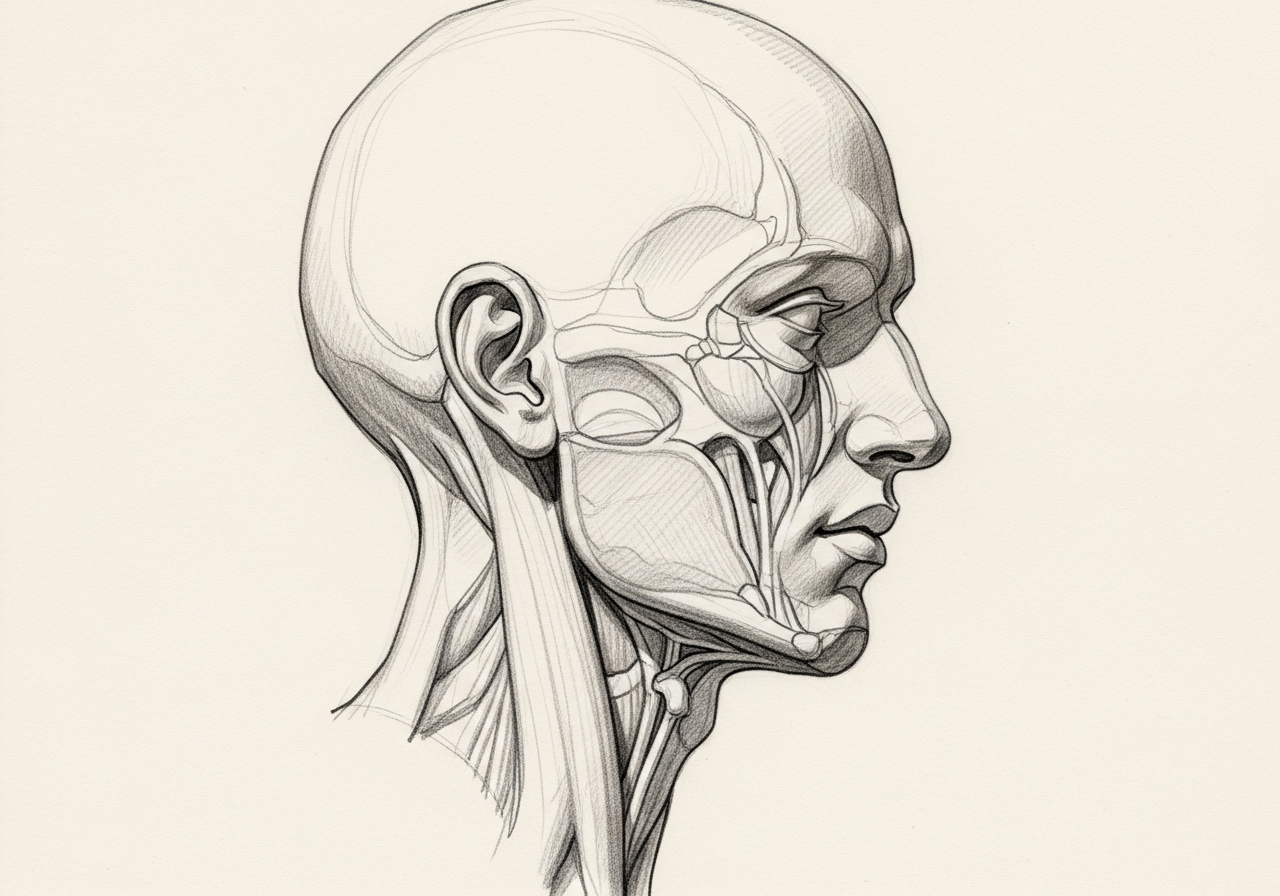
Living with oral cancer? The next step is a quiet, unhurried conversation.
What happens next
Evaluation usually follows a clear sequence:
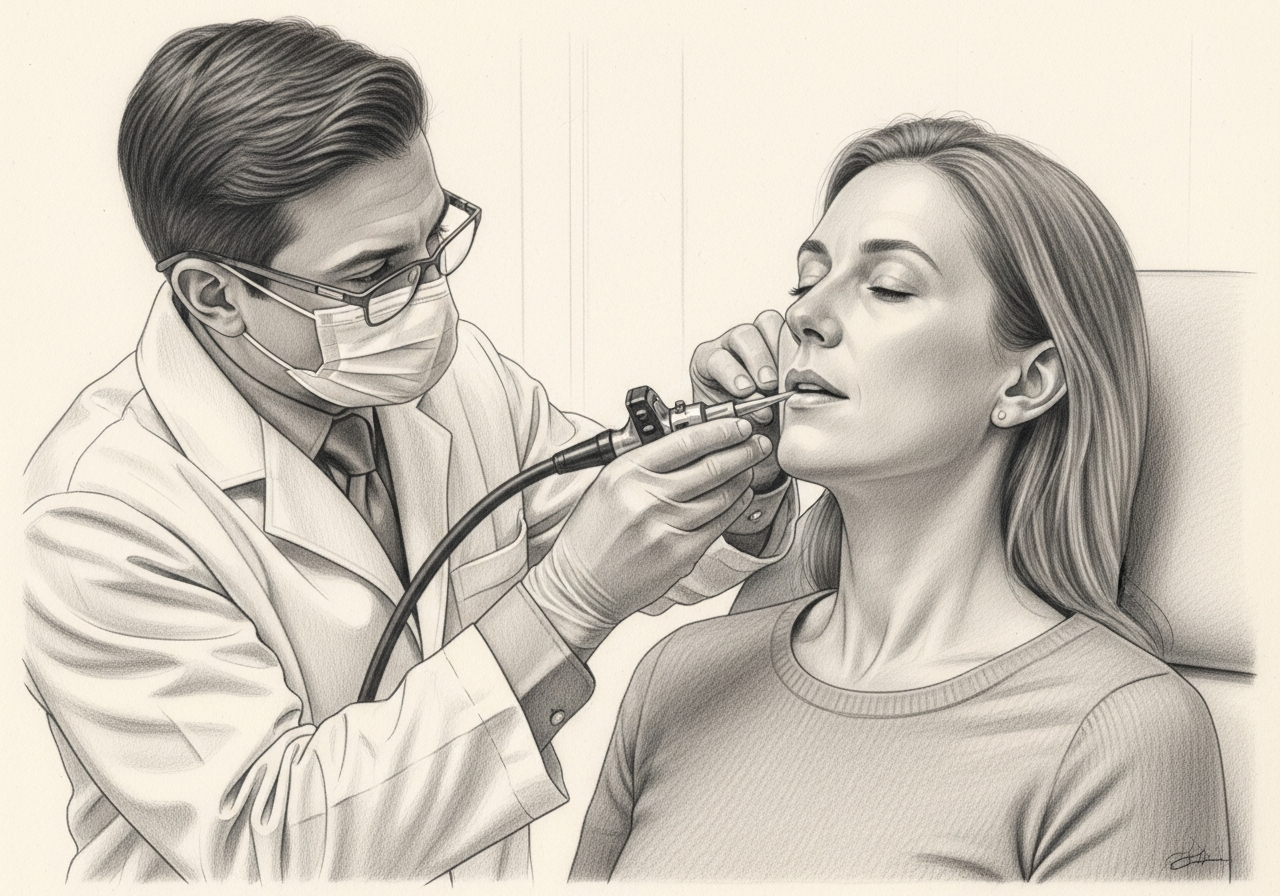
- Detailed oral and neck examination, with measurement and photographs when appropriate, and assessment of any neck mass.
- Biopsy and expert pathology review.
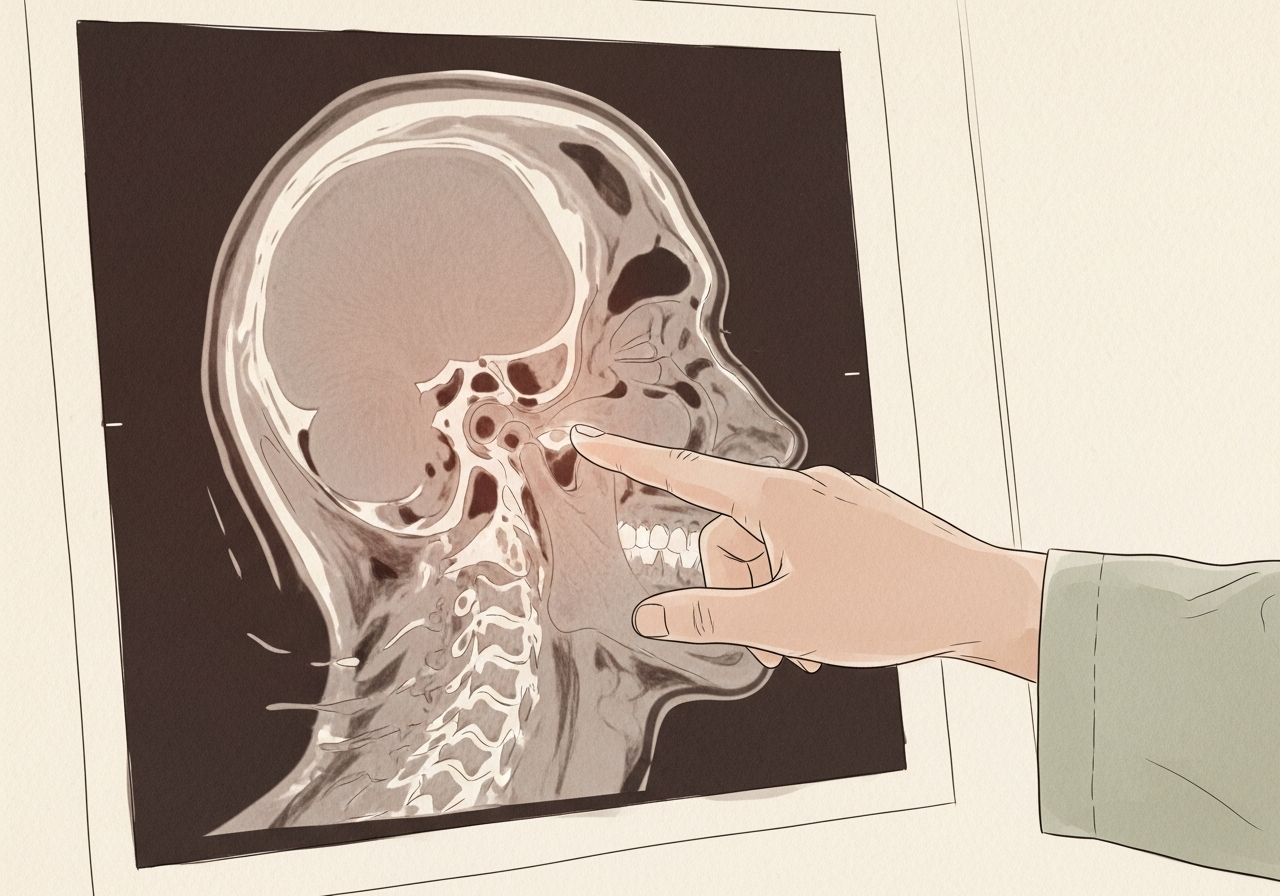
- Imaging to assess deep tissue, jaw involvement, nerves, and lymph nodes.
- Dental, nutrition, speech and swallowing, and reconstructive planning before definitive treatment, often comparing oral cancer surgery with radiation and planning head and neck reconstruction, including microvascular free flap reconstruction for larger defects.
- A clear plan for neck management, which may include a neck dissection, and for postoperative pathology, with nutrition support after surgery arranged as needed.
Symptoms and warning signs
Common warning signs include a mouth sore that does not heal, a persistent white or red patch, a lump or thickening, pain or numbness, and difficulty chewing or moving the tongue. A neck lump can also be a sign.
Any of these changes that last more than two to three weeks should be examined, particularly with a history of tobacco or alcohol use.
Causes and risk factors
Recognized risk factors include tobacco use in any form, heavy alcohol use, and sun exposure for cancers of the lip. Certain types of HPV are associated with some cancers at the back of the mouth and throat.
A clinician will ask about tobacco, alcohol, sun exposure, and other factors. Many patients have risk factors, but oral cancer can also occur without them.
How it is diagnosed
Diagnosis is based on examination and tissue sampling:
- A thorough head and neck and oral examination
- Biopsy of the suspicious area to confirm the diagnosis
- CT, MRI, or PET imaging to define the tumor and check the neck
These steps establish the diagnosis and stage, which guide treatment.
Treatment options
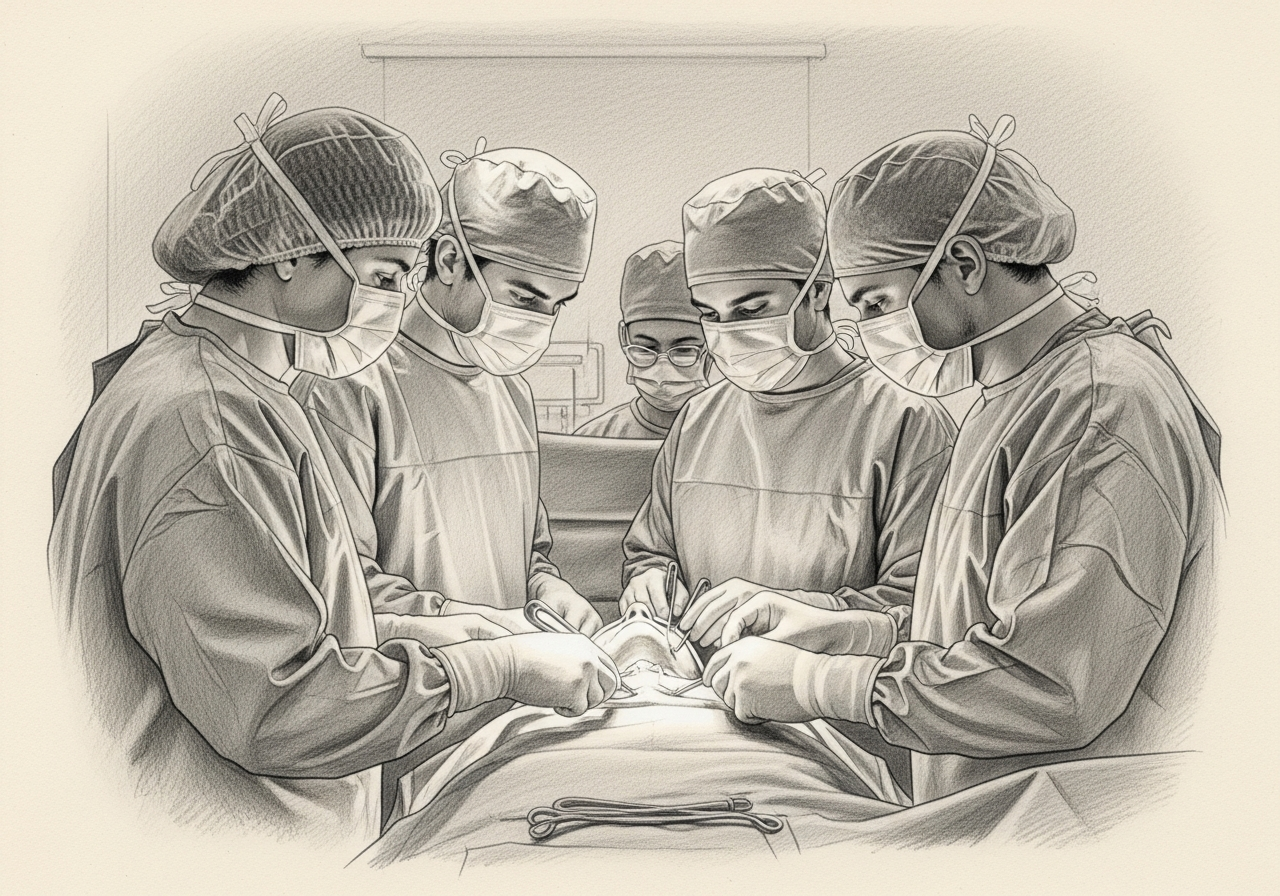
Treatment depends on the location and stage of the cancer. Surgery to remove the tumor is often a central part of treatment, sometimes with surgery to address lymph nodes in the neck.
Reconstruction may be used to restore appearance and function, and radiation therapy or chemotherapy may be added depending on the diagnosis. Speech, swallowing, and dental rehabilitation help support recovery. Care is coordinated through a multidisciplinary team.
Oral cavity cancer versus oropharyngeal cancer
Oral cavity cancer begins in the visible mouth, including the lips, the front portion of the tongue, the gums, the inner cheek, the floor of the mouth, the hard palate, and the area behind the wisdom teeth. It is different from oropharyngeal cancer, which begins farther back in the throat at the tonsils, soft palate, or base of the tongue.
This distinction matters because it affects how a cancer is staged and treated, and certain types of HPV are more often associated with oropharyngeal than with oral cavity cancer.
Surgical options and pathology
An operation is generally named for the structure being treated and may involve removing a small lesion, part of the tongue, the floor of the mouth, part of the jaw, or part of the palate, alone or in combination. The goal is to remove the tumor with an appropriate margin while preserving function whenever it is safe to do so.
Pathology details such as depth of invasion, margins, perineural invasion, and lymphovascular invasion can influence whether the neck needs treatment and whether additional therapy is recommended. The surgeon explains what tissue is expected to be removed and whether teeth, bone, a feeding tube, or a temporary airway may be involved.
Lymph nodes and neck dissection
Oral cavity cancers can spread to lymph nodes in the neck even when the nodes are not obviously enlarged. The need for a neck dissection depends on the tumor site, depth, stage, and other risk factors, and neck surgery can be performed at the same time as the operation on the mouth.
The plan describes which lymph node levels are addressed, how nearby nerves and muscles are protected, and what rehabilitation may be helpful afterward.
Reconstruction and recovery
Small defects may close directly or heal with a graft, while larger defects may require local tissue, a regional flap, or a microvascular free flap from the forearm, thigh, or another donor site. The choice depends on whether lining, soft tissue, or bone must be replaced and on goals such as restoring tongue movement, swallowing, dental rehabilitation, or facial contour, and it includes a discussion of donor-site expectations.
Recovery may include a hospital stay, drains, wound care, pain control, temporary diet changes, feeding support, and airway monitoring. Final pathology helps determine whether margins are clear and whether radiation or systemic treatment should be considered.

Speech, swallowing, and nutrition
Treatment can affect articulation, chewing, saliva, taste, and swallowing. Counseling before surgery and speech-language pathology afterward can help patients understand and adapt to changes. Nutrition support and dental planning are especially important when radiation may be part of treatment.
When to seek urgent care
Use these categories to guide timing:
- Emergency, meaning call 911 or go to the nearest emergency department: significant oral bleeding, difficulty breathing, rapidly increasing tongue or floor-of-mouth swelling, or an inability to drink.
- Same-day or urgent evaluation: quickly worsening oral pain or swelling.
- Routine specialist evaluation: a mouth sore, a red or white patch, a tongue lesion, numbness, a loose tooth, or unexplained oral pain that persists more than two to three weeks, particularly with tobacco or alcohol use.
The online consultation form is for routine scheduling and is not an emergency service.
Clinical perspective
Our head and neck surgeons highlight that oral cavity cancer is not the same as HPV-related oropharyngeal cancer. The mobile tongue and floor of mouth differ from the tonsil and tongue base, and HPV has a different role, which changes staging and treatment.
When planning surgery, the aim is to remove the tumor with an appropriate margin while preserving function whenever it is safe to do so. Tumor depth, proximity to the jaw, nerve symptoms, and the risk of microscopic spread to neck lymph nodes all influence the operation and whether the neck is treated electively. Reconstruction is planned alongside removal so that tongue movement, bulk, sensation, and safe swallowing are protected when possible.
What commonly changes the recommendation is final pathology, including depth of invasion, margins, and perineural or lymphovascular invasion, which can guide whether additional treatment is discussed. Candidacy is determined individually after specialist review.
What to bring to your consultation
Bringing the right records makes a consultation more efficient. Helpful items include:
- Prior imaging and the written reports
- Pathology or biopsy results when available
- Recent laboratory results
- Treatment notes and operative reports from any prior care
- A current medication list
- The specific decision you want the consultation to answer
For a second opinion, the biopsy report and slides and any imaging files are especially useful. Request a consultation for a focused review of the diagnosis, the available options, the likely tradeoffs, and the steps needed before treatment.
Medical review
This page is a patient-education resource reviewed by the responsible Norelle ENT clinician before publication. It does not replace an in-person evaluation. If symptoms are severe or rapidly worsening, seek immediate medical care.
Specialists who treat oral cancer

Dr. Moustafa Mourad
MD, FACS
Double Board-Certified Head & Neck and Facial Plastic & Reconstructive Surgeon
Dr. Moustafa Mourad is a double board-certified head and neck and facial plastic and reconstructive surgeon who cares for the full range of cosmetic and complex conditions affecting the face, head, and neck.
- Facial plastic and reconstructive surgery
- Head and neck cancer surgery
- Microvascular free-flap reconstruction
- Facial trauma and reconstruction
Also caring for this area


Not sure who to see? Our patient coordination team can help match you with the right specialist.
(212) 444-8006Norelle Academic Work
Research by Our Physicians
Selected scholarly work related to this topic.

Estimating survival after salvage surgery for recurrent oral cavity cancer
JAMA Otolaryngology–Head & Neck Surgery

Jaw in a Day: Immediate Dental Rehabilitation During Fibula Reconstruction of the Mandible
Facial Plastic Surgery
Flap Failure and Salvage in Head and Neck Reconstruction
Seminars in Plastic Surgery
Worldwide 10-Year Systematic Review of Treatment Trends in Fibula Free Flap for Mandibular Reconstruction
Journal of Oral and Maxillofacial Surgery
Free Flap Monitoring Techniques and Frequency in the Era of Restricted Resident Work Hours: Analysis of Outcomes
JAMA Otolaryngology–Head & Neck Surgery
Citation details link to the original PubMed, DOI, journal, or publisher record.
Explore all Norelle research on this topicFrequently Asked Questions
Common signs include a mouth sore that does not heal, a persistent white or red patch, a lump or thickening, pain or numbness, and difficulty chewing or moving the tongue. Changes lasting more than two to three weeks should be examined.
Diagnosis is based on a thorough oral and head and neck examination and a biopsy of the suspicious area. Imaging such as CT, MRI, or PET defines the tumor and checks the neck.
Tobacco use, heavy alcohol use, and sun exposure for lip cancers are recognized risk factors, and certain HPV types are linked to some cancers at the back of the mouth. Oral cancer can also occur without these factors.
Treatment depends on the location and stage and often includes surgery, sometimes with treatment of neck lymph nodes, reconstruction, and radiation or chemotherapy. Rehabilitation supports speech and swallowing.
Yes. Dentists often notice suspicious areas during routine examinations, which is one reason regular dental visits are valuable. A suspicious area is referred for further evaluation and biopsy.
It can, depending on the location and extent of the cancer. Reconstruction and speech and swallowing rehabilitation are used to help preserve and restore function as much as possible.
No. Oral cavity cancer starts in the visible mouth, while oropharyngeal, or throat, cancer starts farther back at the tonsils and base of the tongue. The distinction affects staging and treatment.
That depends on the location and extent of the tumor. The surgeon reviews imaging and examination findings and discusses the smallest operation that can safely treat the cancer, with reconstruction when larger defects are involved.
No. The recommendation depends on the risk of lymph node involvement, which is assessed using factors such as tumor depth, subsite, stage, and imaging.
Yes, second opinions are reasonable for cancer decisions. Bringing prior biopsy results, imaging, and reports helps make the review thorough and efficient.
No. Oral cavity cancers arise in structures such as the mobile tongue, floor of mouth, gums, cheek, hard palate, and lips. HPV is much more strongly linked to cancers of the tonsil and tongue base in the oropharynx.
Some oral cancers have a meaningful risk of microscopic spread to neck lymph nodes. Tumor depth, site, imaging, and other factors help determine whether elective neck treatment is appropriate.
Only when the tumor's relationship to the mandible makes it necessary for cancer control. Imaging and examination help determine whether a marginal or segmental resection, or no bone removal, is appropriate.
Margins describe the tissue around the removed tumor. Final pathology helps determine whether further surgery, radiation, or chemoradiation should be discussed.
Clinical References
These independent resources from medical and professional organizations offer further reading. They are provided for general education and do not replace a consultation with a clinician.
Related Resources
Related Procedures

Related Conditions

Request a consultation for oral cancer
Schedule an evaluation with our team to review your symptoms and the appropriate next steps.