
About the Procedure
Surgical navigation links instruments to a patient's preoperative scan to provide an additional localization tool during selected complex operations. It can support orientation in revision, frontal, sphenoid, orbital, neoplasm, and skull-base cases, but it does not replace anatomy knowledge, judgment, or careful planning.
Image-guided sinus surgery is a technology used during endoscopic sinus and skull-base procedures rather than a separate operation. The sinuses sit close to the eye sockets, the optic nerves, and the skull base, and anatomy can be distorted by prior surgery, polyps, or disease, so navigation gives the surgeon an added reference point in selected cases.
What this evaluation should clarify
When navigation is being considered, the evaluation should clarify a few core questions:
- Is the underlying diagnosis and treatment goal established with the right examination, imaging, testing, or pathology?
- How does this option compare with continued medical care, a different procedure, observation, or referral to another specialty?
- Which anatomy, prior treatment, comorbidities, benefits, risks, and recovery requirements change the recommendation?
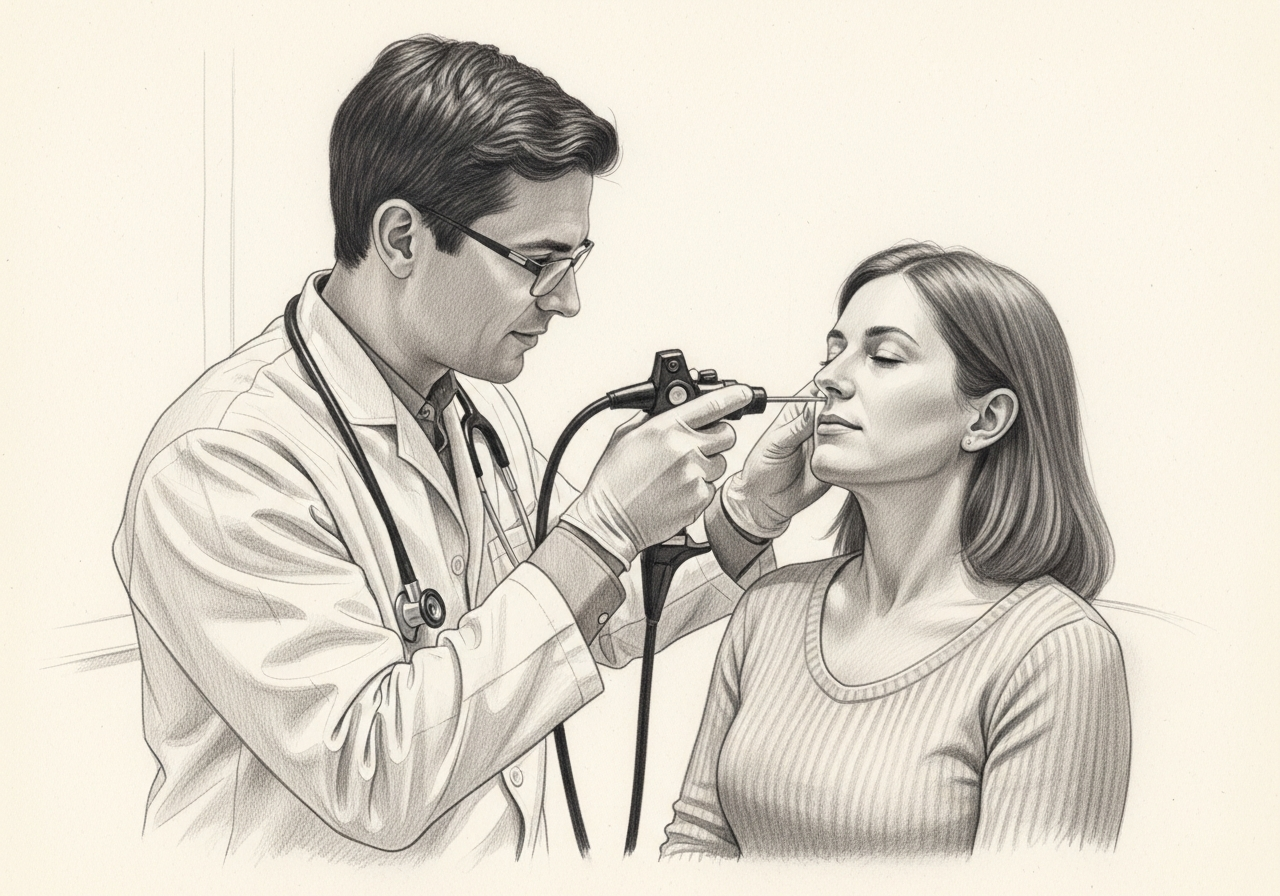
Considering image-guided sinus surgery? The next step is a quiet, unhurried conversation.
Evaluation and treatment pathway
- Confirm the diagnosis, treatment goal, and the reasons a less invasive or nonsurgical approach is insufficient.
- Use is selected according to anatomy and procedure complexity, such as revision surgery, distorted landmarks, extensive polyps, frontal or sphenoid disease, disease near the orbit or skull base, selected tumors, and CSF-leak repair.
- Navigation is an adjunct, not an alternative treatment. The clinical decision remains whether an operation is indicated and what operation should be performed.
- The patient's imaging is registered to the navigation system, and tracked instruments display their location relative to the scan. Accuracy checks and the surgeon's direct anatomic assessment remain essential.
- Navigation itself does not determine recovery; the underlying sinus, orbital, or skull-base operation does. Recovery and risk follow the procedure-specific guidance.
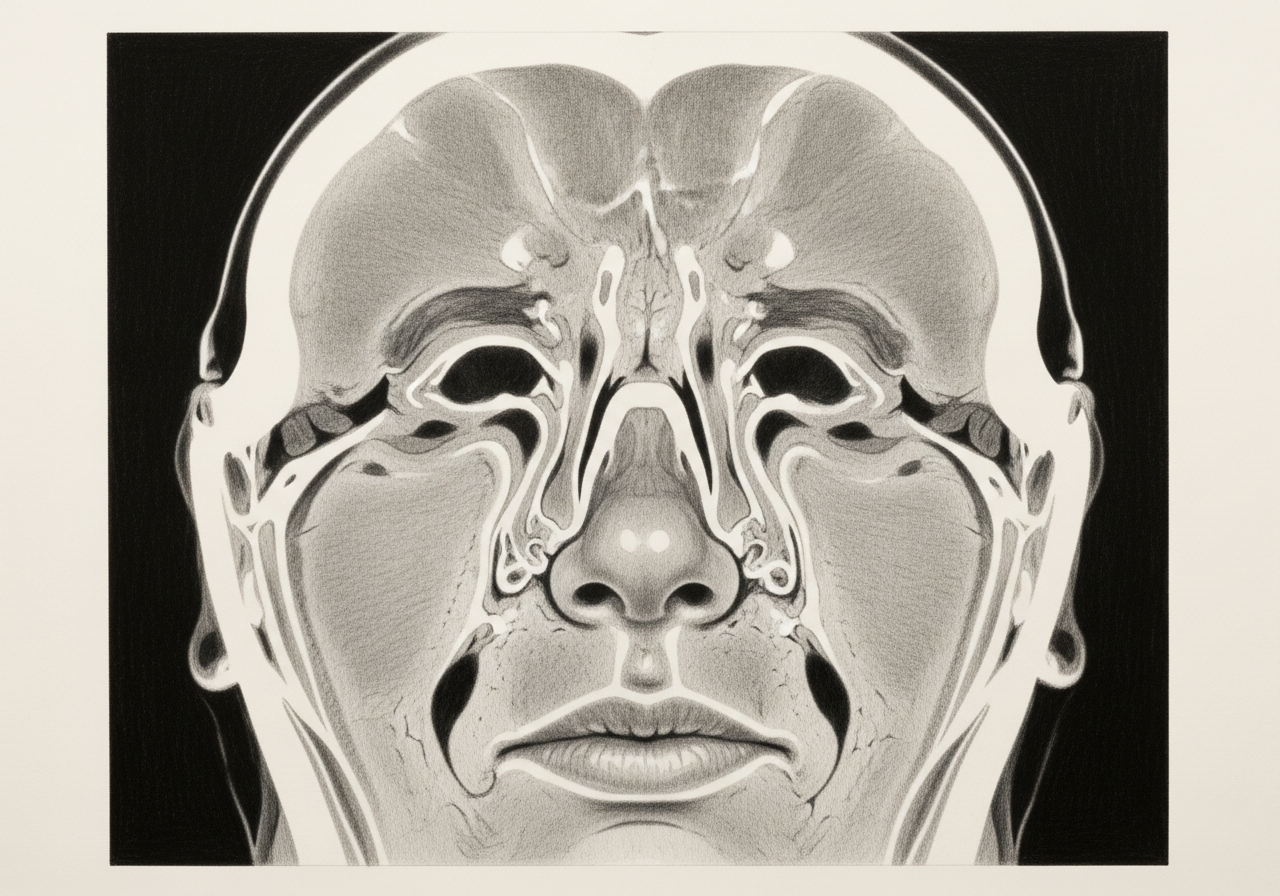
How it works
Before surgery, a CT scan is loaded into the navigation system. During the procedure, sensors track the position of the patient and the instruments, and the system displays the instrument location on the CT images in real time.
This gives the surgeon an additional reference for orientation, particularly in areas where normal landmarks are missing or distorted. The underlying surgery is still performed endoscopically through the nostrils.

Benefits and limitations
The main benefit of image guidance is added precision and orientation in complex anatomy, which can help protect the eye and skull base. It does not change the goals of the surgery or guarantee a particular result.
Navigation is an aid that supports, but does not replace, the surgeon's anatomical knowledge and experience. It is most valuable in selected, more complex cases.
Risks and considerations
Image guidance does not add meaningful risk on its own; the risks are those of the underlying sinus or skull-base procedure, such as bleeding, infection, crusting, and, less commonly, eye-related complications or a CSF leak.
The technology relies on an accurate CT scan and proper setup, and the surgeon continually confirms findings against the direct endoscopic view.
What to bring to your consultation
Bring or securely transfer the records that can change this decision:
- Imaging files and reports
- Endoscopy or operative findings
- Pathology results
- Laboratory results
- Prior treatment notes
- A current medication list
- The specific question you want answered
Having these available helps the team review the diagnosis and the available options together.
When to seek urgent care
Urgent postoperative symptoms are determined by the operation and include significant bleeding, vision change, severe headache, clear drainage, fever with neck stiffness, or neurologic change.
An online form or routine appointment request is not an emergency service. For emergency symptoms, use emergency services rather than the routine form.
Medical review
This page is a patient-education resource reviewed by the responsible Norelle ENT clinician before publication. It does not replace an in-person evaluation. If symptoms are severe or rapidly worsening, seek immediate medical care.
Specialists who perform image-guided sinus surgery

Dr. Adrian Ong
MD
Board-Certified Facial Plastic & Reconstructive and Head & Neck Surgeon
Dr. Adrian Ong is a board-certified surgeon who practices exclusively on the face, head, and neck, with expertise spanning rhinoplasty, sinus surgery, facial trauma, reconstruction, and sleep surgery.
- Functional and aesthetic rhinoplasty (including revision)
- Sinus surgery and complex revision sinus surgery
- Facial trauma and nasal fractures
- Head and neck cancer surgery and microvascular reconstruction
Also caring for this area


Not sure who to see? Our patient coordination team can help match you with the right specialist.
(212) 444-8006Frequently Asked Questions
Use is selected according to anatomy and procedure complexity, such as revision surgery, distorted landmarks, extensive polyps, frontal or sphenoid disease, disease near the orbit or skull base, selected tumors, and CSF-leak repair.
The patient's imaging is registered to the navigation system, and tracked instruments display their location relative to the scan. Accuracy checks and the surgeon's direct anatomic assessment remain essential.
Navigation is an adjunct, not an alternative treatment. The clinical decision remains whether an operation is indicated and what operation should be performed.
Navigation itself does not determine recovery; the underlying sinus, orbital, or skull-base operation does. Recovery and risk follow the procedure-specific guidance.
Clinical References
These independent resources from medical and professional organizations offer further reading. They are provided for general education and do not replace a consultation with a clinician.
Related Conditions

1 of 3 · Chronic Sinusitis
Related Procedures

1 of 4 · Revision Sinus Surgery
Request a consultation about image-guided sinus surgery
Schedule a consultation with our team to discuss whether this procedure is the right option for you.