
Overview
Base-of-tongue cancer begins in the back one-third of the tongue, a region that forms part of the oropharynx. This area is not the same as the oral tongue that can be seen when someone sticks out the tongue. The base of tongue lies deep in the throat, contains lingual tonsil tissue, and contributes to swallowing, speech, and airway protection.
Most base-of-tongue cancers are squamous cell carcinomas. Many are associated with high-risk human papillomavirus, although HPV-negative disease also occurs. A tumor may cause a painless neck node before it produces a visible throat lesion. Other symptoms include persistent throat discomfort, one-sided ear pain, difficulty swallowing, blood in saliva, altered speech, a feeling of fullness, or unexplained weight loss.
Treatment can involve transoral surgery, neck dissection, radiation, systemic therapy, or a combination. The choice is individualized because the base of tongue is functionally important and lies near major blood vessels and muscles. The treatment team should compare cancer control, swallowing outcomes, airway risk, rehabilitation needs, and the possibility of combined therapy rather than presenting one modality in isolation.
How we approach the decision
This page is meant to help you understand the choices that shape a base-of-tongue cancer plan, then connect each one to the next appropriate step. Three questions usually frame the discussion:
- Has the primary tumor been located and mapped with endoscopy and imaging? Many tumors here are forms of HPV-related oropharyngeal cancer and can be small or hidden.
- Can it be removed transorally with acceptable margins and functional impact—for example with transoral robotic surgery and neck dissection—or is radiation-based treatment a better fit?
- Would surgery reduce treatment burden, or is it likely to add to radiation or chemoradiation? Because the tongue base drives swallowing, expect attention to difficulty swallowing and speech and swallowing rehabilitation.
Living with base-of-tongue cancer? The next step is a quiet, unhurried conversation.
Why this condition deserves a focused evaluation
The base of tongue is difficult to inspect without endoscopy and can hide a small tumor within irregular lymphoid tissue. Benign lingual tonsil enlargement, infection, reflux, and other causes can create similar symptoms. A careful evaluation prevents both delayed diagnosis and unnecessary treatment.
The disease also requires focused planning because lymph-node spread is common and treatment can affect the coordinated movement that propels food through the throat. A small, accessible tumor may be removable through the mouth, while a larger or deeply infiltrative tumor may be better treated with radiation-based therapy or a combined plan. Expert review of imaging helps determine exposure, vessel proximity, muscle involvement, and whether surgery is likely to achieve an appropriate margin without unacceptable functional cost.
Anatomy and where the disease begins
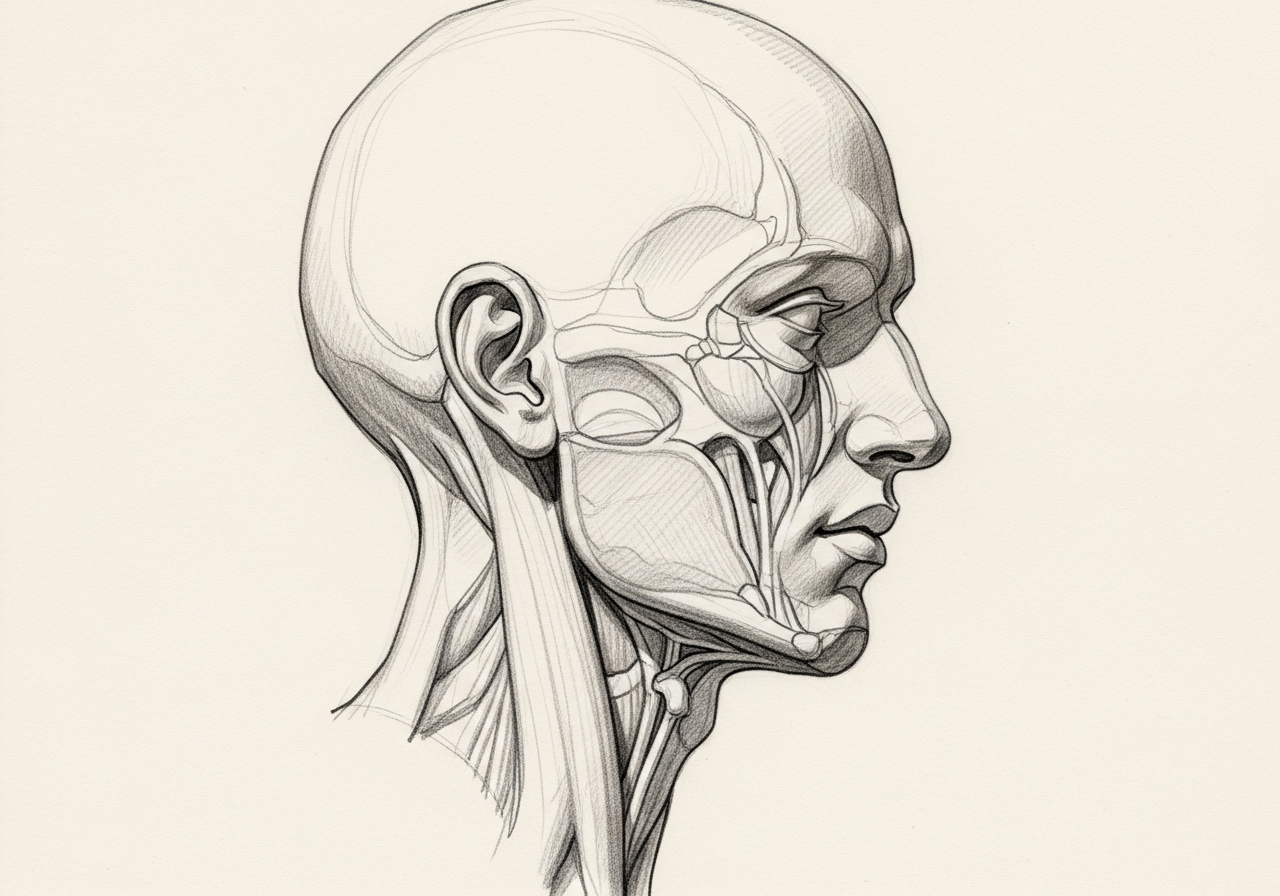
The tongue has an oral portion in front of the circumvallate papillae and a base-of-tongue portion behind them. The base of tongue attaches near the hyoid bone and epiglottis and contains paired lingual tonsils. It works with the pharyngeal muscles and larynx to move food, protect the airway, and shape speech.
Lymphatic drainage is rich and can travel to nodes on one or both sides of the neck. A midline or extensive tumor may therefore require bilateral neck evaluation. The lingual and hypoglossal nerves, external carotid branches, deep tongue muscles, vallecula, epiglottis, and pharyngeal constrictors may influence treatment.
HPV-related tumors can arise from the tonsillar crypt epithelium and remain small beneath the surface. They may be discovered during evaluation of an HPV-positive neck node when no primary is visible.
Symptoms and warning signs
Because the site is deep, symptoms may be mild or absent until a neck node appears. Persistence, one-sided symptoms, and associated neck findings deserve attention.
- Painless upper-neck mass: A cystic or solid lymph node can be the first sign of HPV-related base-of-tongue cancer.
- Persistent throat fullness or soreness: Patients may feel that something is present deep in the throat even when the mouth looks normal.
- One-sided ear pain: Referred ear pain with a normal ear examination can originate from the base of tongue or tonsil.
- Difficulty or pain with swallowing: Food may feel slow, painful, or difficult to initiate, and patients may change their diet.
- Blood in saliva: Intermittent blood-streaked saliva or throat bleeding should be assessed, particularly when persistent.
- Muffled or altered speech: Larger tumors can change tongue mobility or resonance.
- Weight loss, cough, or aspiration symptoms: These can occur when swallowing is impaired or disease is more extensive.
Symptoms alone cannot establish the diagnosis. Benign infections, inflammation, reflux, dental disease, nerve problems, and other conditions can cause overlapping complaints. The purpose of evaluation is to understand the pattern, examine the relevant anatomy, and decide whether tissue sampling or imaging is appropriate rather than assuming the most serious or the most reassuring explanation.
When to seek urgent care
Seek urgent care when symptoms indicate bleeding, airway compromise, severe dehydration, or aspiration-related illness.
- Difficulty breathing, stridor, or rapidly worsening throat swelling
- Active bleeding that is more than minor streaking or does not stop
- Inability to swallow liquids or saliva
- High fever, chest pain, shortness of breath, or confusion in a patient with swallowing difficulty
- Rapidly expanding neck swelling after a biopsy or procedure
Causes and risk factors
Base-of-tongue cancer is frequently HPV-related, but risk assessment includes other exposures and medical context.
- High-risk HPV: Persistent infection with oncogenic HPV types is a major driver of oropharyngeal cancers involving the tonsil and base of tongue.
- Tobacco: Smoking and other tobacco use are associated with HPV-negative disease and can worsen general and treatment-related health risks.
- Alcohol: Heavy use, especially with tobacco, increases the risk of several head and neck cancers.
- Immune suppression: Reduced immune function can influence HPV persistence and cancer risk.
- Prior head and neck cancer: A new symptom may represent recurrence, a second primary, or a treatment effect and needs assessment.
- No recognized risk factor: Cancer can occur without a known exposure. The diagnosis depends on examination, imaging, and tissue.
A risk factor changes probability; it does not prove that a person has cancer, and the absence of a recognized risk factor does not rule it out. A clinician uses risk information to determine the urgency and breadth of the workup, not as a substitute for examination and diagnosis.
How the evaluation is performed
A complete workup is assembled in steps. Not every person needs every test, and the order can change when there is airway compromise, significant bleeding, a rapidly enlarging mass, or a prior pathology diagnosis. The aim is to answer three separate questions: what is the abnormality, where did it begin, and how far does it extend?
Complete head and neck examination
The clinician examines tongue movement, oral cavity, tonsils, neck nodes, cranial nerves, jaw opening, and skin. This identifies related sites, functional deficits, and clues to disease extent. The base of tongue cannot be fully assessed by mouth examination alone.
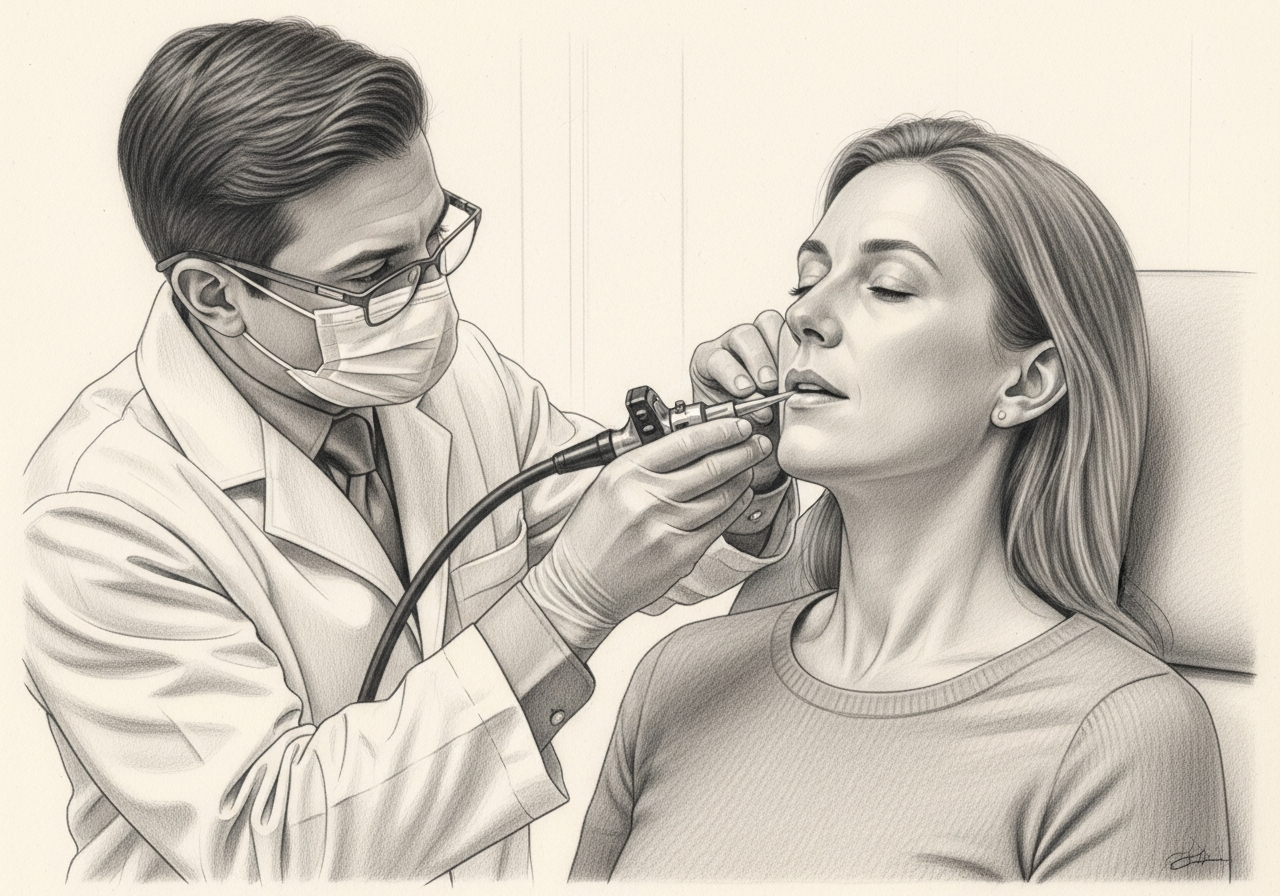
Flexible endoscopy
A camera through the nose visualizes the base of tongue, vallecula, epiglottis, pharynx, and larynx. It can reveal asymmetry, mucosal abnormality, pooling of secretions, or airway compromise. Small tumors within lingual tonsil tissue may remain hidden.
Needle biopsy of a neck node
Fine-needle aspiration or core biopsy can diagnose squamous cell carcinoma and allow p16 or HPV testing. This may establish the diagnosis without immediately biopsying the deep primary site. Cystic nodes sometimes require repeat sampling for adequate tissue.
Biopsy or transoral evaluation
A visible lesion is biopsied. When an HPV-related node is present without an obvious primary, lingual tonsil tissue may be evaluated or removed using transoral techniques in selected cases. Tissue establishes the primary site and can make treatment fields more precise. The procedure carries pain, bleeding, airway, and swallowing considerations.
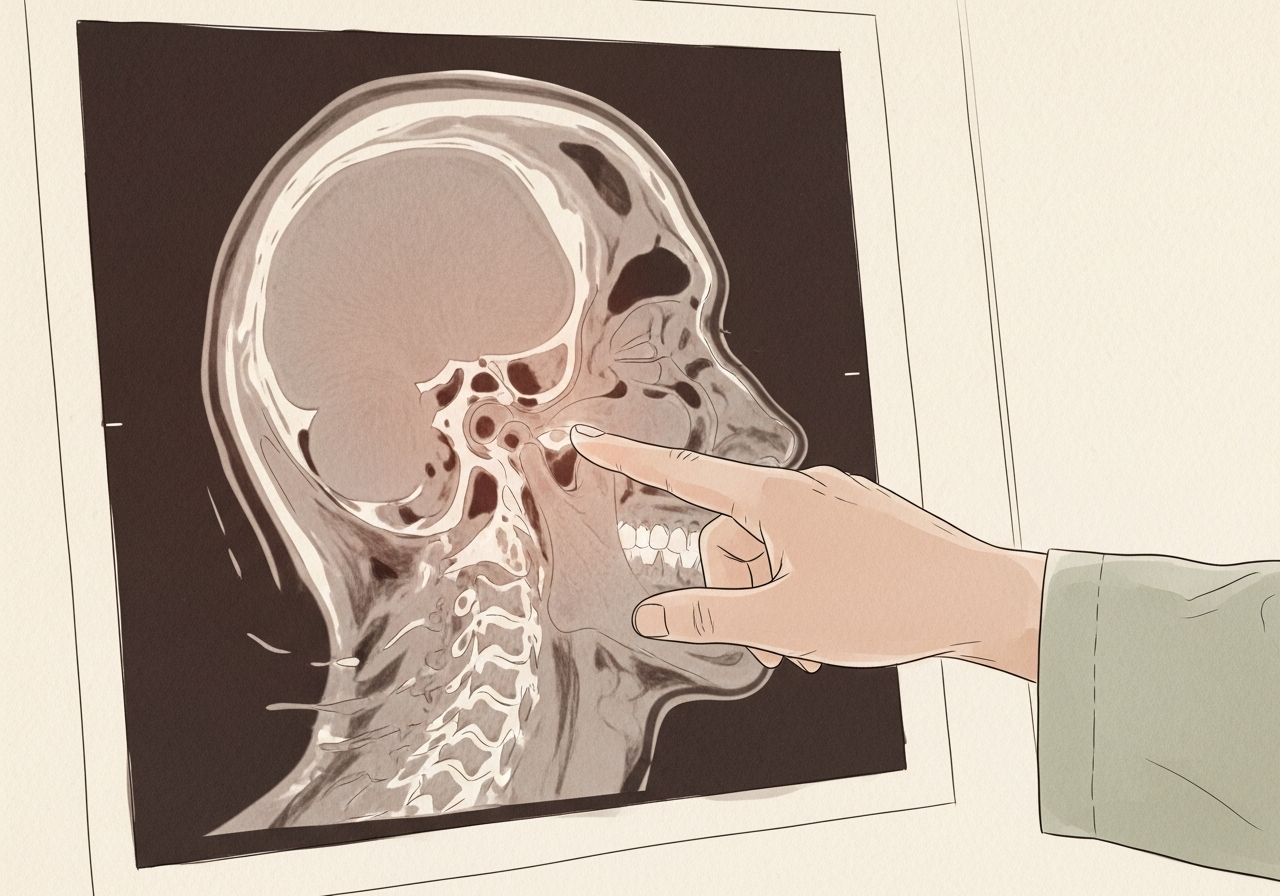
CT and MRI
Imaging defines deep muscle invasion, midline crossing, hyoid or epiglottic involvement, vessel proximity, and nodal disease. These details determine resectability and functional implications. Dental artifact and small submucosal lesions can reduce accuracy.
PET/CT and multidisciplinary staging
Metabolic imaging can identify the primary, additional nodes, distant disease, or another tumor. A multidisciplinary review integrates the results. The combined review compares transoral surgery with radiation-based options. PET findings require correlation because inflammation can mimic tumor.
Understanding pathology, biomarkers, and staging
Pathology should identify squamous cell carcinoma and include p16 testing in the appropriate setting. Direct HPV testing may also be used. HPV-related oropharyngeal cancer has a distinct staging system, and the prognostic implications should be explained without minimizing the seriousness of the diagnosis.
For surgical specimens, important findings include tumor size, depth and extension, margins, lymphovascular and perineural invasion, number and size of involved nodes, and extranodal extension. A tumor that appears small on imaging may have a broader submucosal footprint, while an apparent large neck node may arise from a relatively small primary.
No treatment should be de-intensified simply because the tumor is HPV-positive outside an evidence-based plan or appropriate clinical trial. The complete stage, smoking history, health, pathology, and expected functional outcomes matter.
Treatment planning
Treatment is individualized. A useful recommendation accounts for cancer control, expected speech and swallowing, airway safety, appearance, recovery time, medical fitness, prior treatment, personal priorities, and the possibility that more than one approach can be reasonable. The following options are discussed according to the diagnosis and stage.
Transoral surgery
Selected tumors can be removed through the mouth using robotic, laser, or conventional techniques, frequently with neck dissection. The surgeon considers exposure, depth, midline extension, vessel proximity, anticipated margin, and how much tongue-base tissue can be removed while preserving swallowing.
Neck dissection
Lymph nodes are removed from defined levels for treatment and staging. Laterality and extent depend on the primary location, midline involvement, and nodal distribution.
Radiation therapy
Radiation treats the primary and at-risk neck, sometimes as definitive therapy. It may be favored for anatomy unsuitable for surgery or when the expected surgical and postoperative treatment burden would be greater.
Chemoradiation or other systemic therapy
A systemic agent may be combined with radiation for selected locally advanced disease. Medical fitness, hearing, kidney function, neuropathy, and disease risk influence selection.
Postoperative radiation or chemoradiation
Adverse pathology after surgery can require additional treatment. Patients should understand the likelihood and functional implications before choosing surgery.
Clinical trials
Trials may study surgical selection, radiation dose, systemic therapy, biomarkers, or supportive care. Participation is voluntary and should be compared with standard treatment options.
Surgical considerations
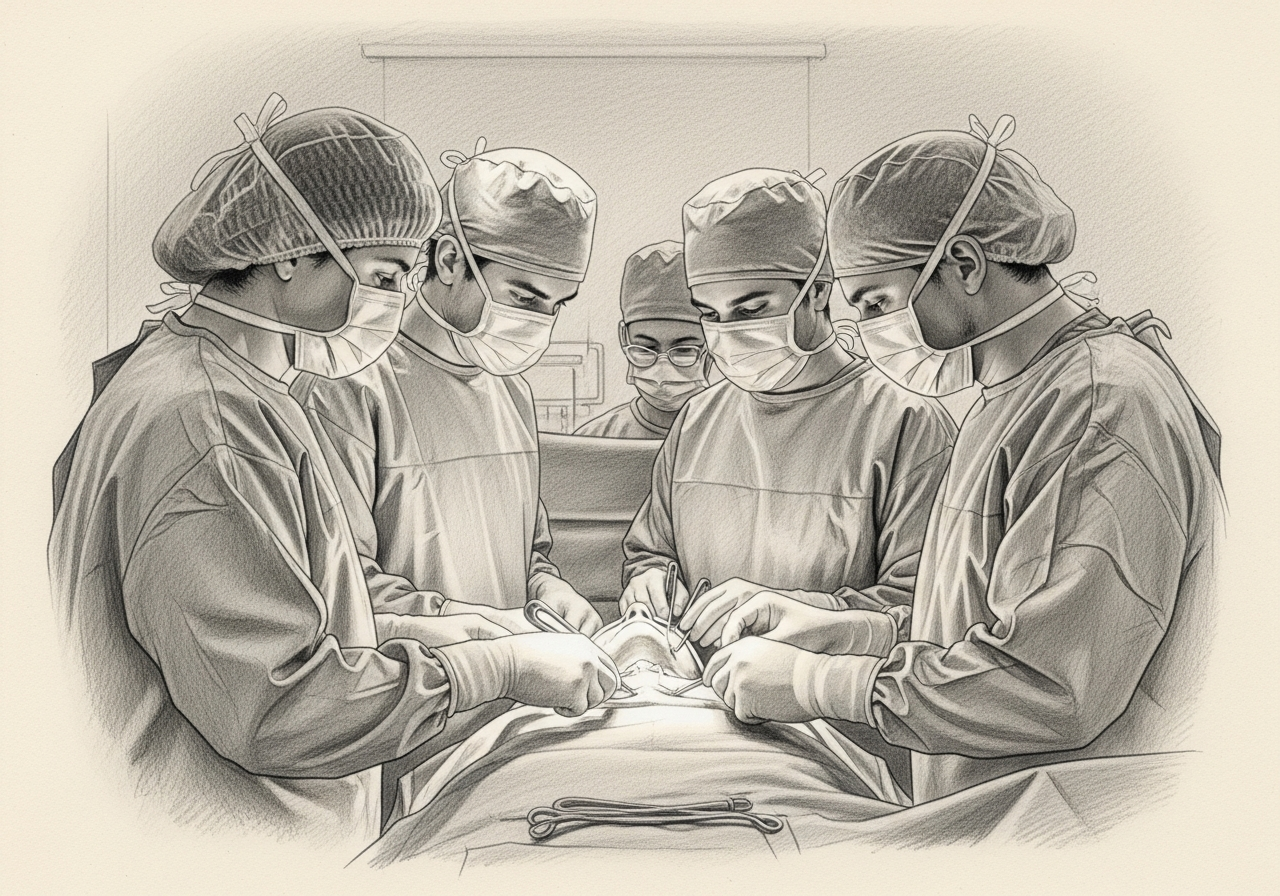
Transoral surgery avoids an external mandibular-splitting approach for selected tumors, but “minimally invasive” does not mean minor. Resection can create a deep throat wound with significant pain and bleeding risk. The surgeon must maintain orientation to the lingual artery and other vessels while obtaining an appropriate margin.
The amount of tongue base removed affects swallowing. A limited lateral tumor differs from a broad lesion crossing the midline or involving the vallecula and epiglottis. The surgeon should explain whether the operation is intended to remove the visible primary only, identify an occult site, or serve as part of a broader treatment plan.
A neck dissection is often performed during the same episode. Depending on the operation and institutional practice, vessel ligation may be considered to reduce post-transoral hemorrhage risk. Temporary feeding support, airway observation, or tracheostomy may be needed in selected cases. Surgery does not guarantee that radiation will be avoided.
Function, reconstruction, and rehabilitation
The base of tongue generates pressure that moves a food bolus into the pharynx. Removing or irradiating this tissue can reduce propulsion, alter sensation, and increase residue. Pain, edema, dry mouth, fibrosis, and weakness can add to the problem. Some patients compensate well; others need prolonged therapy or feeding support.
Baseline assessment by a speech-language pathologist can document swallowing and teach exercises. Instrumental testing with a modified barium swallow or endoscopic examination may be recommended before or after treatment when aspiration or significant dysfunction is suspected. Nutrition support protects weight and healing.
Reconstruction is considered when a larger defect needs bulk, separation, coverage, or protection of vessels. Local, regional, or free tissue can be selected according to the defect. The goal is not simply to fill space but to support swallowing and durable healing.
Preparing for treatment
Preparation is not only a list of preoperative tests. It is an opportunity to identify problems that can make treatment harder and to establish a baseline for recovery. Depending on the plan, preparation may include:
- Review pathology and HPV status: Confirm the primary site and biomarker interpretation.
- Review original imaging: Assess midline extension, muscle and vessel relation, lymph nodes, and possible distant disease.
- Swallowing evaluation: Document baseline diet, coughing, aspiration symptoms, and tongue-base function.
- Dental and nutrition planning: These are particularly important before radiation or combined therapy.
- Medical assessment: Review tobacco, alcohol, anticoagulants, heart and lung health, kidney and hearing status, and prior treatment.
- Bleeding plan: Patients considering transoral surgery need clear emergency instructions and a realistic recovery plan.
- Adjuvant-treatment discussion: Ask which possible pathology findings would lead to postoperative radiation or chemoradiation.
Patients should bring a complete medication list, allergy history, prior operative reports, pathology reports, imaging discs or secure links, and the names of the clinicians already involved. A written list of questions and a trusted support person can make a complex visit easier to absorb.
Recovery and what follow-up may involve
Recovery varies substantially because a small transoral procedure, a neck dissection, a major open resection, and combined surgery with reconstruction are very different experiences. The treating team should give procedure-specific instructions. A general framework is:
- Immediate postoperative period: Airway, bleeding, pain, secretions, and swallowing are monitored. Some patients remain in a monitored setting.
- First two weeks: Throat pain, referred ear pain, reduced intake, fatigue, and thick secretions can be substantial. Bleeding precautions are essential.
- Pathology review: Margins and lymph-node findings guide additional treatment.
- Rehabilitation phase: Swallowing therapy, diet progression, shoulder exercises after neck dissection, and lymphedema management are added as needed.
- Long-term: Surveillance and management of saliva, dental health, thyroid function, fibrosis, trismus, and swallowing continue according to treatment.
New or worsening breathing difficulty, brisk bleeding, rapidly increasing swelling, inability to manage saliva, signs of dehydration, chest pain, or a sudden neurologic change require urgent medical attention. Routine online messages are not appropriate for emergencies.

Risks and uncertainties to discuss
No treatment is risk-free, and risk changes with anatomy, extent of disease, prior radiation, nutrition, tobacco exposure, medical conditions, and the specific operation or nonsurgical regimen. Topics that may need discussion include:
- Postoperative hemorrhage: Bleeding can be sudden and serious after transoral tongue-base surgery.
- Airway compromise: Swelling, bleeding, or secretions can interfere with breathing and may require temporary airway support.
- Dysphagia and aspiration: Reduced tongue-base propulsion, pain, edema, scar, or radiation can impair swallowing.
- Need for feeding support: A temporary or longer-term tube may be necessary when oral intake is unsafe or insufficient.
- Neck dissection effects: Numbness, stiffness, shoulder weakness, and lymphedema can occur.
- Need for combined treatment: High-risk pathology can lead to radiation or chemoradiation after surgery.
- Taste, saliva, dental, and thyroid effects: These are particularly associated with radiation treatment.
- Recurrence or distant disease: Risk depends on stage, HPV status, smoking, pathology, and treatment response.
This list is educational rather than a substitute for a consent discussion. The clinician should explain which risks are common, which are uncommon but serious, how they are reduced, and what alternatives exist in the patient's specific case.
Surveillance and survivorship
Follow-up serves several purposes: confirming healing, reviewing pathology, detecting recurrence, managing treatment effects, and helping patients return to daily life. A survivorship plan may address:
- Endoscopic examination: The base of tongue, pharynx, larynx, and neck are assessed at scheduled intervals.
- Imaging: Post-treatment studies are chosen according to stage, treatment, and symptoms.
- Swallowing and nutrition: Diet, aspiration symptoms, weight, and therapy progress are reviewed.
- Dental and salivary care: Radiation-related risks require long-term prevention.
- Thyroid function: Blood tests may be needed after neck radiation.
- Neck and shoulder rehabilitation: Motion, strength, lymphedema, and scar are monitored after neck treatment.
- Psychosocial support: Fear of recurrence, HPV-related stigma, work, and relationship concerns should be addressed.
The schedule is individualized by tumor site, stage, treatment, symptoms, and current guidelines. Patients should report new persistent symptoms between scheduled visits rather than waiting for the next appointment.
Getting a second opinion
A second opinion can clarify whether a base-of-tongue tumor is suitable for transoral surgery, whether neck treatment should be unilateral or bilateral, and how likely postoperative therapy is. The reviewer should examine the original imaging and pathology rather than relying only on a report.
The most useful comparison is the total pathway: surgery plus possible adjuvant therapy versus definitive radiation with or without systemic therapy. The discussion should include swallowing, bleeding, dental effects, treatment duration, recovery, and surveillance. A second opinion should be timely and should not postpone treatment indefinitely.
Questions to ask at a consultation
- Is the primary definitely at the base of tongue rather than the tonsil or another site?
- Is the tumor HPV-related, and what does that mean for staging?
- Does the tumor cross the midline or involve deep muscles, the epiglottis, hyoid, or major vessels?
- Am I a candidate for transoral robotic or laser surgery?
- How much tongue base would need to be removed?
- Would I need a unilateral or bilateral neck dissection?
- How likely is radiation or chemoradiation after surgery?
- What are the expected swallowing outcomes with each treatment pathway?
- Will I need temporary airway or feeding support?
- Should I have a second pathology, radiology, or multidisciplinary review?

Request a consultation
For an HPV-related neck node, a base-of-tongue lesion, persistent one-sided throat symptoms, or a proposed treatment plan, request a Head & Neck consultation or call (212) 444-8006. Seek emergency care for active bleeding, breathing difficulty, or inability to swallow saliva.
Specialists who treat base-of-tongue cancer

Dr. Moustafa Mourad
MD, FACS
Double Board-Certified Head & Neck and Facial Plastic & Reconstructive Surgeon
Dr. Moustafa Mourad is a double board-certified head and neck and facial plastic and reconstructive surgeon who cares for the full range of cosmetic and complex conditions affecting the face, head, and neck.
- Facial plastic and reconstructive surgery
- Head and neck cancer surgery
- Microvascular free-flap reconstruction
- Facial trauma and reconstruction
Also caring for this area


Not sure who to see? Our patient coordination team can help match you with the right specialist.
(212) 444-8006Frequently Asked Questions
It is the back third of the tongue, deep in the throat. It is part of the oropharynx and is different from the front, visible oral tongue.
Both arise in the tongue, but oral-tongue and base-of-tongue cancers have different anatomy, risk patterns, staging considerations, and treatment pathways.
Yes. Small tumors can hide within lingual tonsil tissue and may first be detected because of an HPV-positive neck node.
Many contemporary base-of-tongue squamous cell cancers are HPV-related, but HPV-negative disease also occurs. Tissue testing determines status.
Transoral robotic surgery uses a robotic system to help the surgeon see and operate through the mouth. It is an access tool for selected tumors, not a treatment suitable for every patient.
It can. The effect depends on how much tongue base is removed, nerve and muscle function, neck treatment, radiation, and baseline swallowing. Rehabilitation is often part of care.
The base of tongue has lymphatic drainage to both sides, especially when a tumor approaches or crosses the midline. Imaging and nodal findings guide laterality.
Some patients are treated with surgery or radiation alone, while others need systemic therapy with radiation or after recurrence. The stage and pathology determine the recommendation.
Any significant postoperative throat bleeding is an emergency. Patients receive specific instructions about calling emergency services and returning to the treating hospital.
The pathology report and tissue when requested, original CT/MRI/PET images, endoscopy findings, prior treatment records, and a complete medical history are most useful.
Clinical References
These independent resources from medical and professional organizations offer further reading. They are provided for general education and do not replace a consultation with a clinician.
Related Procedures

Related Conditions

Request a consultation for base-of-tongue cancer
Schedule an evaluation with our team to review your symptoms and the appropriate next steps.