
Overview
A goiter is an enlargement of the thyroid gland, the butterfly-shaped gland at the base of the neck. It may be diffuse, meaning the whole gland is enlarged, or nodular, meaning it contains one or more lumps. It can occur with a normal, overactive, or underactive thyroid, and it can sit entirely in the neck or extend behind the breastbone. For that reason, treatment depends on what the gland is doing, not on its size alone.
The central questions are whether thyroid hormone levels are abnormal, whether any nodules need risk assessment and a biopsy, and whether the gland is pressing on the windpipe or swallowing passage. Some goiters are small and noticed only on imaging, while others are large enough to be seen or felt or to cause pressure symptoms.
Norelle ENT evaluates goiter with thyroid blood tests, ultrasound, and a focused neck examination, and coordinates with endocrinology when hormone management is needed. When a goiter causes pressure symptoms or contains concerning nodules, surgery may be considered with care to protect the nerves that control the voice and the parathyroid glands.
How we approach the decision
A goiter is an enlarged thyroid gland, and the size alone does not determine what to do. What matters is how the gland is functioning, whether it is causing pressure, and whether any nodules need risk assessment. The decisions this care is meant to help you understand are:
- Is the enlargement causing airway, swallowing, positional, vascular, or voice symptoms?
- Are there suspicious nodules, hormone abnormalities, or extension behind the breastbone?
- Would observation, medical treatment, radioiodine, ablation in selected cases, or surgery best address the actual problem?
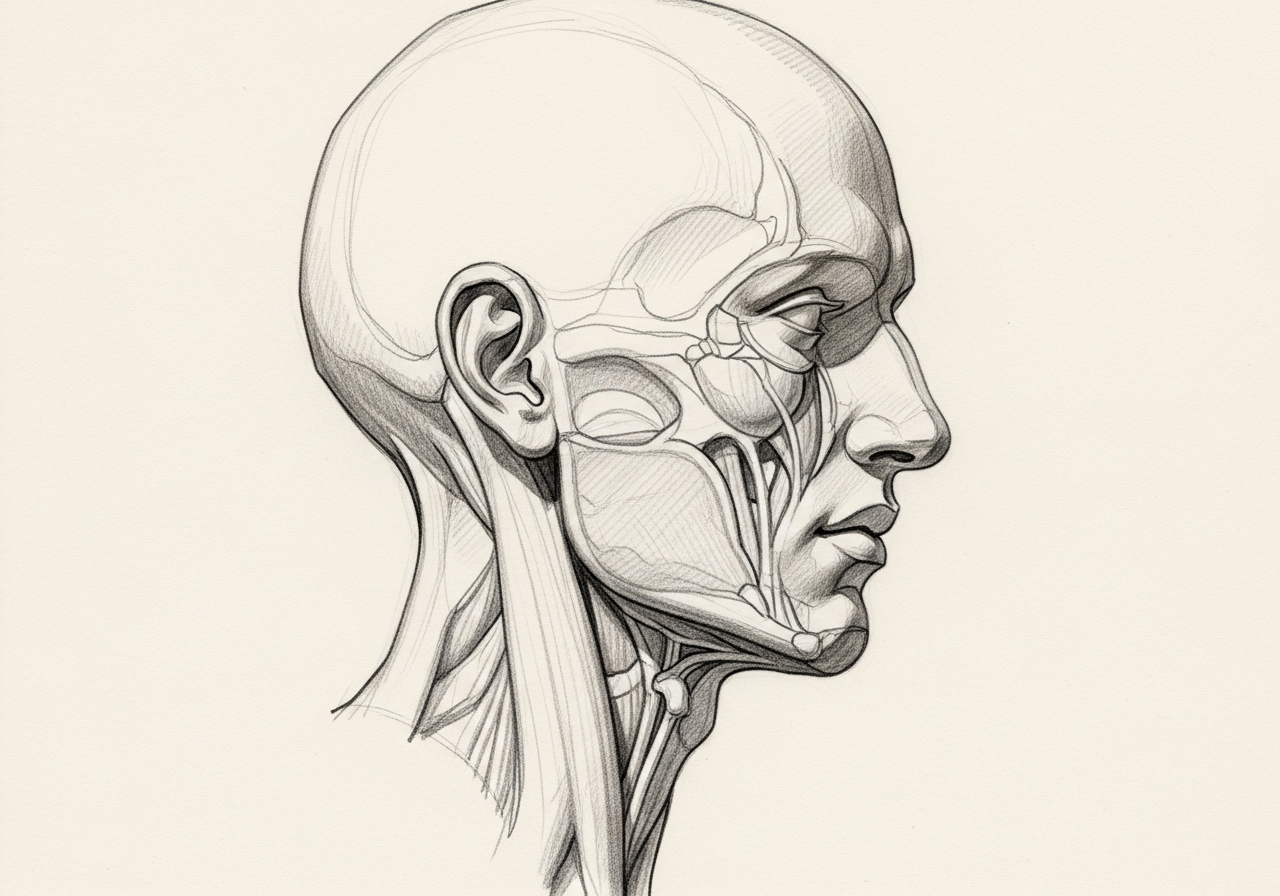
Living with goiter? The next step is a quiet, unhurried conversation.
What happens next
Evaluation usually follows a clear sequence:
- Thyroid function tests and a focused history of pressure and positional symptoms.
- A neck ultrasound to characterize nodules and cervical anatomy.
- A thyroid biopsy of selected nodules when ultrasound features and size support it, using the same approach as thyroid nodule evaluation.
- Cross-sectional imaging when substernal extension, tracheal compression, or deep anatomy is a concern.
- A treatment comparison based on symptoms, hormone status, cancer risk, anatomy, and personal preference. When an operation is appropriate, thyroid surgery is planned to protect the nerves that control the voice and the parathyroid glands.
Symptoms and warning signs
Small goiters often cause no symptoms. Larger ones may be visible, create a sense of neck pressure, or make swallowing or breathing feel different, especially when lying flat. If thyroid hormone levels are abnormal, symptoms of an overactive or underactive thyroid can occur.
Features that deserve prompt attention include rapid enlargement, a firm or fixed area, a persistent voice change, or difficulty breathing or swallowing.
Causes and risk factors
Goiters can result from several causes, including:
- Multinodular enlargement of the gland
- Autoimmune thyroid conditions
- Iodine imbalance
- Inflammation of the thyroid
- Less commonly, thyroid cancer within an enlarged gland
Risk factors a clinician may ask about include family history of thyroid disease, prior radiation exposure, and iodine status.
How it is diagnosed
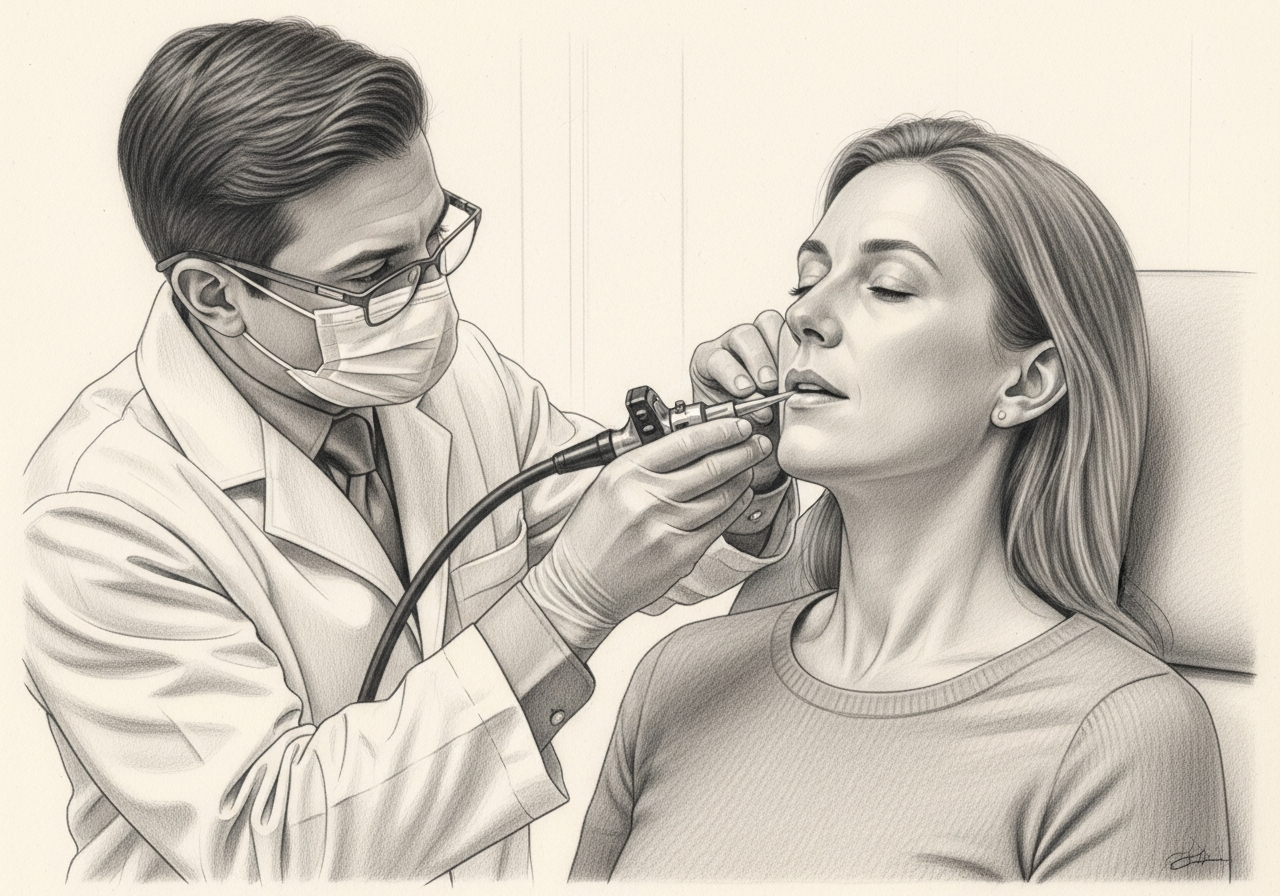
Evaluation begins with a history and a neck examination, followed by targeted testing:
- Thyroid blood tests show whether the gland is overactive, underactive, or normal
- Neck ultrasound measures the gland and characterizes any nodules
- Fine needle aspiration biopsy may be recommended for suspicious nodules
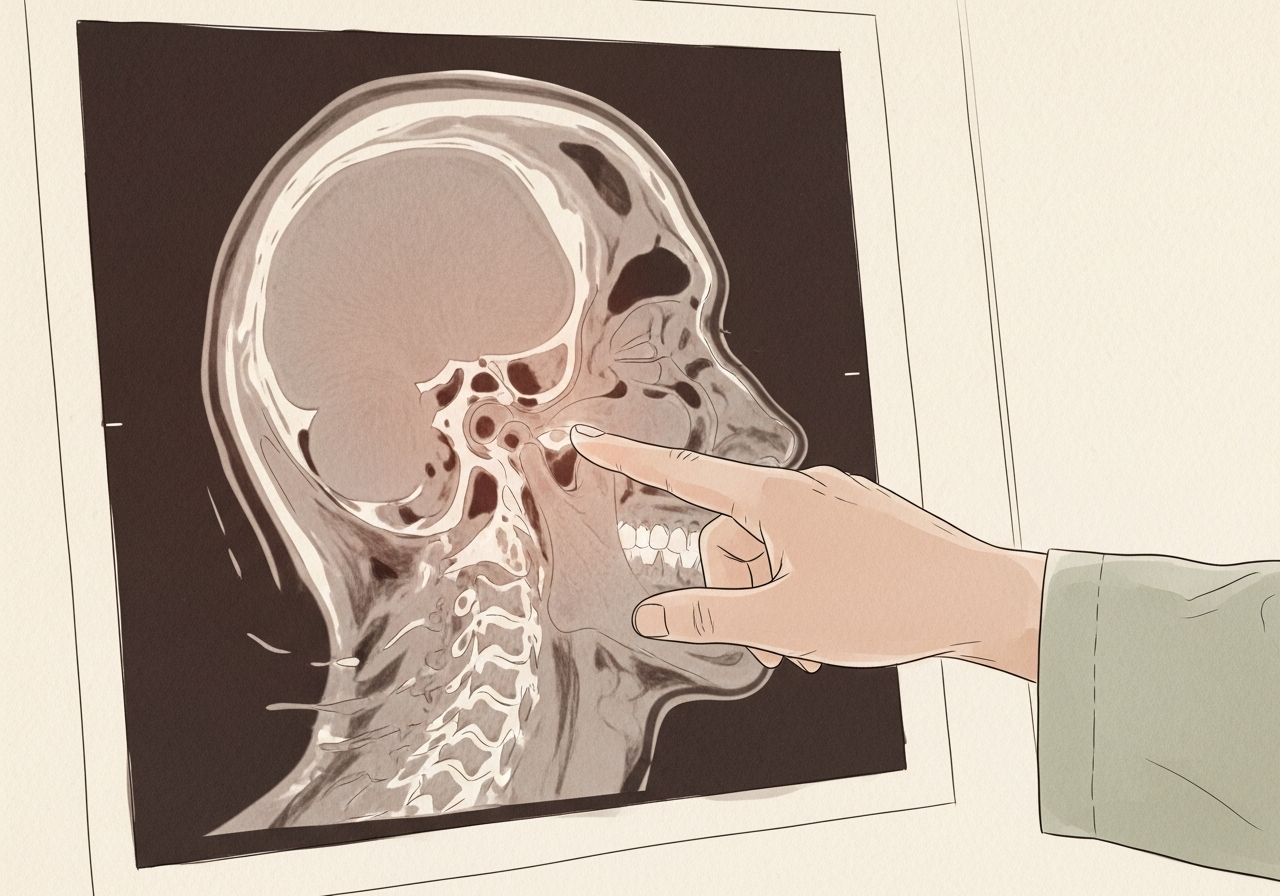
- CT or MRI is sometimes used for very large goiters extending into the chest
This combination clarifies both function and structure.
Treatment options
Many goiters can be monitored when the thyroid is functioning normally and there are no pressure symptoms or concerning nodules. Abnormal hormone levels are managed medically, often with endocrinology.
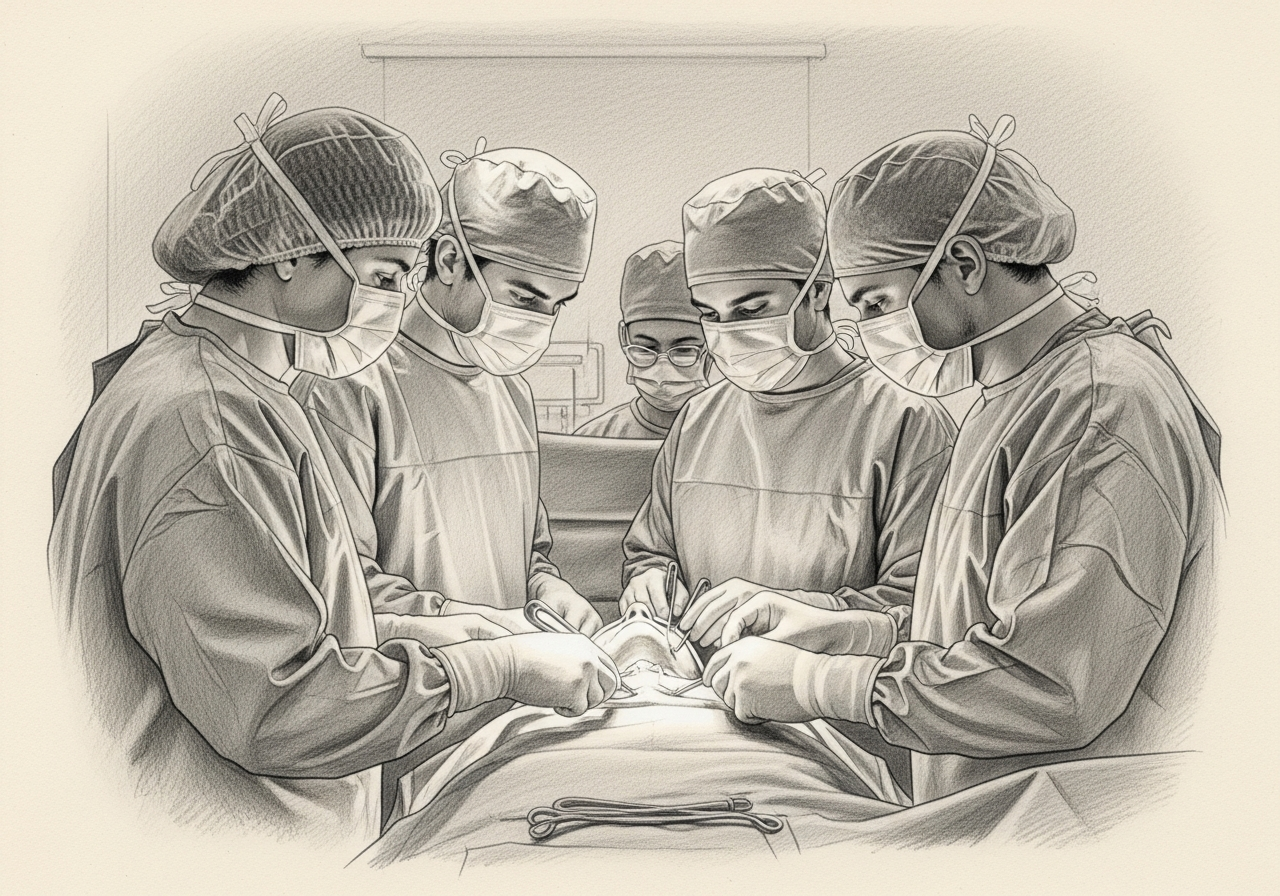
Surgery is considered when a goiter is large, causes pressure on the windpipe or swallowing passage, extends into the chest, or contains nodules suspicious for thyroid cancer. Surgery is planned to protect the recurrent laryngeal nerves that control the voice and the parathyroid glands that regulate calcium.
When to seek urgent care
Use these categories to guide timing:
- Emergency, meaning call 911 or go to the nearest emergency department: difficulty breathing, noisy breathing, an inability to swallow, or severe shortness of breath when lying flat.
- Same-day or urgent evaluation: rapidly increasing neck swelling or quickly worsening pressure symptoms.
- Routine specialist evaluation: a visible or growing neck swelling, neck pressure, swallowing changes, or a new or persistent voice change. A goiter found incidentally on imaging is also worth assessing.
The online consultation form is for routine scheduling and is not an emergency service.
Clinical perspective
Our head and neck surgeons emphasize that treatment follows what the gland is doing, not its size alone. A goiter may sit entirely in the neck or extend behind the breastbone, where it can displace or compress the windpipe. Patients often do not connect symptoms such as collar tightness, choking when lying flat, or progressive difficulty swallowing to the thyroid.
Factors that generally favor surgery include compressive symptoms, substernal extension, nodules suspicious for cancer, or hormone problems that cannot be managed medically. Factors that call for caution include significant medical conditions that affect anesthesia or healing, and many stable goiters with normal function and no pressure symptoms can be observed.
What commonly changes the recommendation is new ultrasound or biopsy detail, the degree of airway displacement on cross-sectional imaging, and what the patient values most. Candidacy is determined individually after specialist review rather than from a general rule.
What to bring to your consultation
Bringing the right records makes a consultation more efficient. Helpful items include:
- Prior imaging and the written reports
- Pathology or biopsy results when available
- Recent thyroid blood test results
- Treatment notes from any prior care
- A current medication list
- The specific decision you want the consultation to answer
Request a consultation for a focused review of the diagnosis, the available options, the likely tradeoffs, and the steps needed before treatment. For urgent symptoms, follow the guidance above rather than using the routine form.
Medical review
This page is a patient-education resource reviewed by the responsible Norelle ENT clinician before publication. It does not replace an in-person evaluation. If symptoms are severe or rapidly worsening, seek immediate medical care.
Specialists who treat goiter

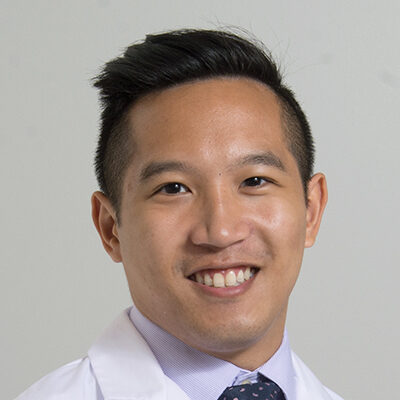
Dr. Moustafa Mourad
MD, FACS
Double Board-Certified Head & Neck and Facial Plastic & Reconstructive Surgeon
Dr. Moustafa Mourad is a double board-certified head and neck and facial plastic and reconstructive surgeon who cares for the full range of cosmetic and complex conditions affecting the face, head, and neck.
- Facial plastic and reconstructive surgery
- Head and neck cancer surgery
- Microvascular free-flap reconstruction
- Facial trauma and reconstruction
Also caring for this area

Not sure who to see? Our patient coordination team can help match you with the right specialist.
(212) 444-8006Frequently Asked Questions
A goiter is an enlarged thyroid gland. It can be smooth or contain nodules, and it can occur with normal, overactive, or underactive thyroid function. Evaluation determines the cause and whether treatment is needed.
Not necessarily. A goiter describes size, not function. Thyroid blood tests show whether the gland is overactive, underactive, or normal, which guides whether medication is needed.
Many goiters can be monitored. Surgery is considered when a goiter is large, presses on the windpipe or swallowing passage, extends into the chest, or contains nodules suspicious for cancer.
Evaluation typically includes a neck examination, thyroid blood tests, and a neck ultrasound. A biopsy may be added for suspicious nodules, and imaging is sometimes used for very large goiters.
A large goiter can press on nearby structures and, rarely, affect the nerves near the voice box. Thyroid surgery is planned to protect these nerves, and any existing voice concern should be mentioned before treatment.
Most goiters are benign, but cancer can occasionally be present within an enlarged gland. Ultrasound features and biopsy of suspicious nodules help assess this risk.
It depends on how much of the gland is removed. After a total thyroidectomy, thyroid hormone replacement is needed, while after removal of one side some patients need medication and others do not.
No. Goiter describes enlargement of the thyroid. Most enlarged thyroid glands are not cancer, although individual nodules within a goiter may still need risk assessment.
A CT scan may be helpful when the gland extends behind the breastbone, compresses or displaces the airway, or cannot be fully assessed by ultrasound.
Yes. Positional symptoms can occur when an enlarged gland narrows or displaces the airway, and this should be discussed during evaluation.
The pattern of disease, nodules in each lobe, hormone status, cancer risk, anatomy, recurrence risk, and patient preference all influence the extent of surgery.
Clinical References
These independent resources from medical and professional organizations offer further reading. They are provided for general education and do not replace a consultation with a clinician.
Related Procedures

Related Conditions

Request a consultation for goiter
Schedule an evaluation with our team to review your symptoms and the appropriate next steps.