
Overview
A thyroid nodule is a lump or growth within the thyroid gland, and most nodules turn out to be benign. The goal of evaluation is to assess risk accurately without over-treating, because a smaller number of nodules can represent thyroid cancer or may need treatment if they grow, cause pressure symptoms, or become overactive.
Many nodules are found by ultrasound, a physical exam, or imaging done for another reason. The central questions are whether a nodule is benign, whether it is producing thyroid hormone, whether it is enlarging, and whether it is pressing on nearby structures. Ultrasound features, nodule size, change over time, thyroid blood tests, and a fine needle aspiration biopsy help guide what to do next.
Norelle ENT approaches thyroid nodules conservatively and individually. Not every nodule needs surgery, some are best monitored over time, and when an operation is appropriate the plan is designed to protect the recurrent laryngeal nerves that control the voice and the parathyroid glands that regulate calcium. Care is often coordinated with endocrinology, radiology, and pathology.
How we approach the decision
Most thyroid nodules are benign, and the goal is to assess risk without over-treating. The decisions this care is meant to help you understand are:
- Does the ultrasound pattern and size meet a guideline-based threshold for biopsy or follow-up?
- What does the Bethesda category mean, and would repeat biopsy, molecular testing, surveillance, or surgery add useful information?
- Is the nodule causing compression, hormone excess, or a voice concern that changes management?
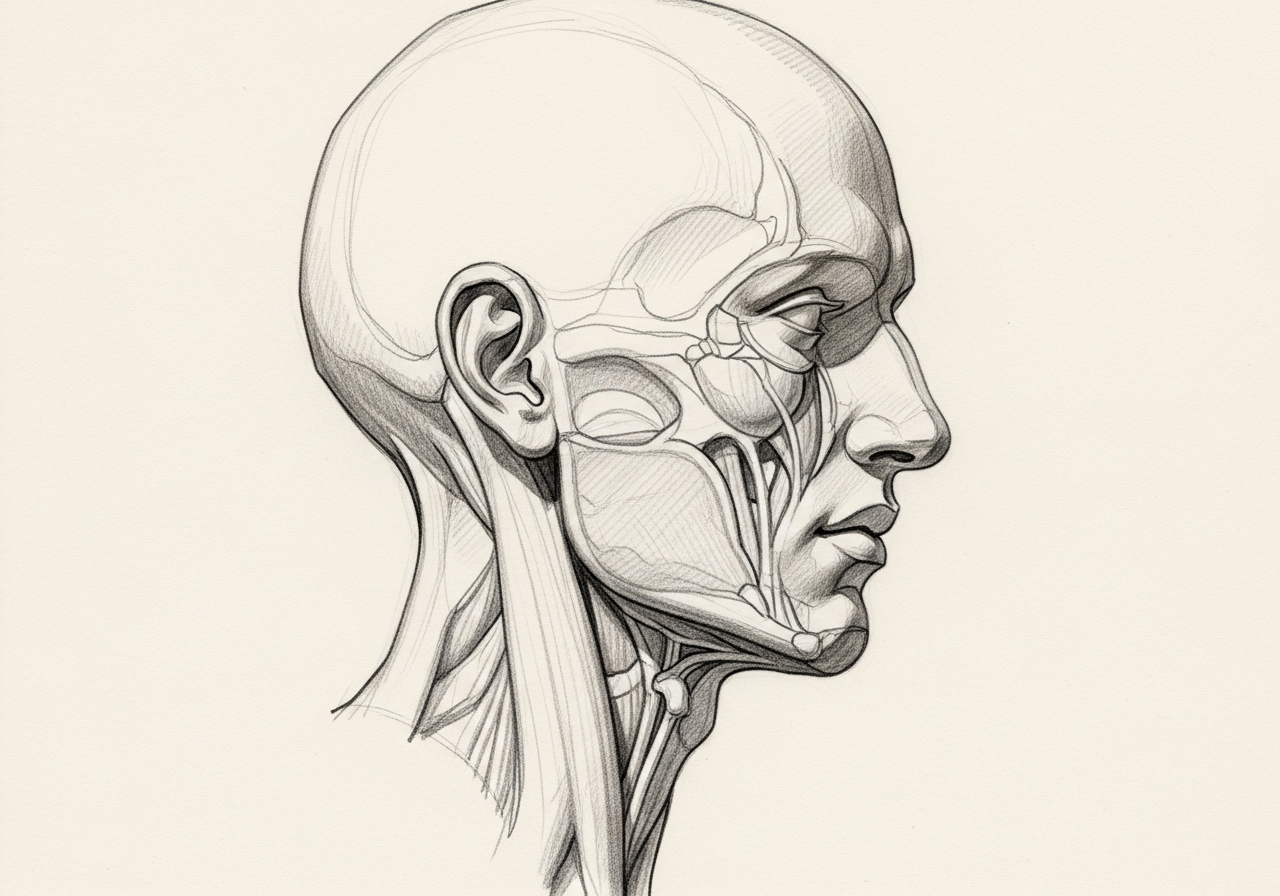
Living with thyroid nodules? The next step is a quiet, unhurried conversation.
What happens next
Evaluation usually follows a clear sequence:
- History, a neck examination, and thyroid-stimulating hormone testing.
- A structured ultrasound review of the thyroid and cervical lymph nodes.
- A selective thyroid biopsy when size and sonographic risk support it.
- Cytology review using Bethesda terminology, with molecular testing only when it can change a real decision.
- A documented follow-up interval or treatment plan, including what degree of growth or symptom change should prompt reassessment. When a nodule proves to be a thyroid cancer or is causing pressure, thyroid surgery is considered, and a larger or multinodular gland is evaluated as a goiter.
Why patients seek evaluation
Patients usually come in with a specific worry: a lump in the neck, an abnormal scan, a biopsy result, pressure when swallowing, or a voice change. Behind those concerns are practical questions about whether the finding is serious, whether more testing is needed, whether medication is enough, whether surgery is necessary, how long recovery takes, and who should be involved.
A helpful evaluation answers those questions directly and also addresses the fears behind them, including cancer risk, scarring, anesthesia, and uncertainty. The aim is to explain the actual consultation pathway, from ultrasound and blood tests to biopsy, possible surgery, and follow-up, rather than simply stating that the practice treats the condition.
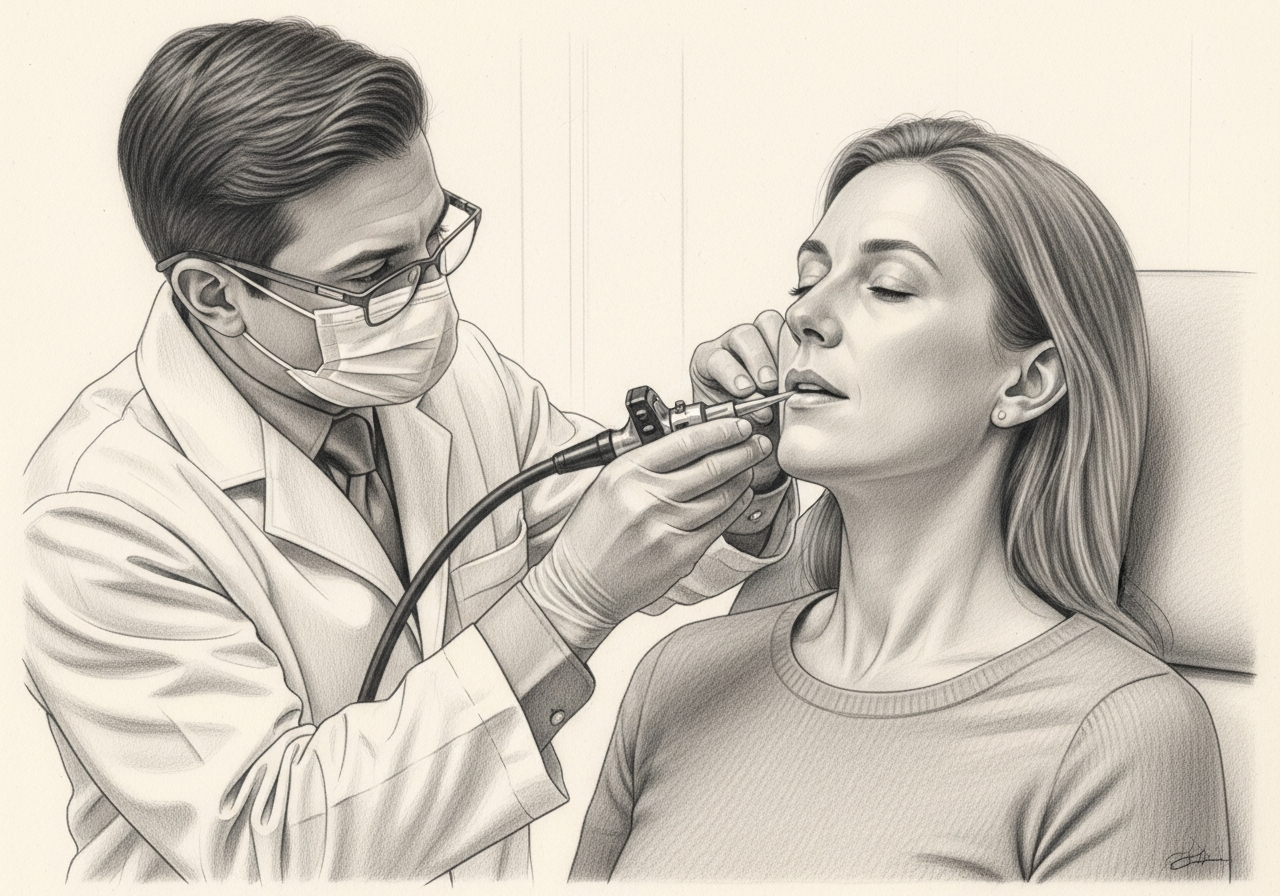
How Norelle ENT evaluates thyroid nodules
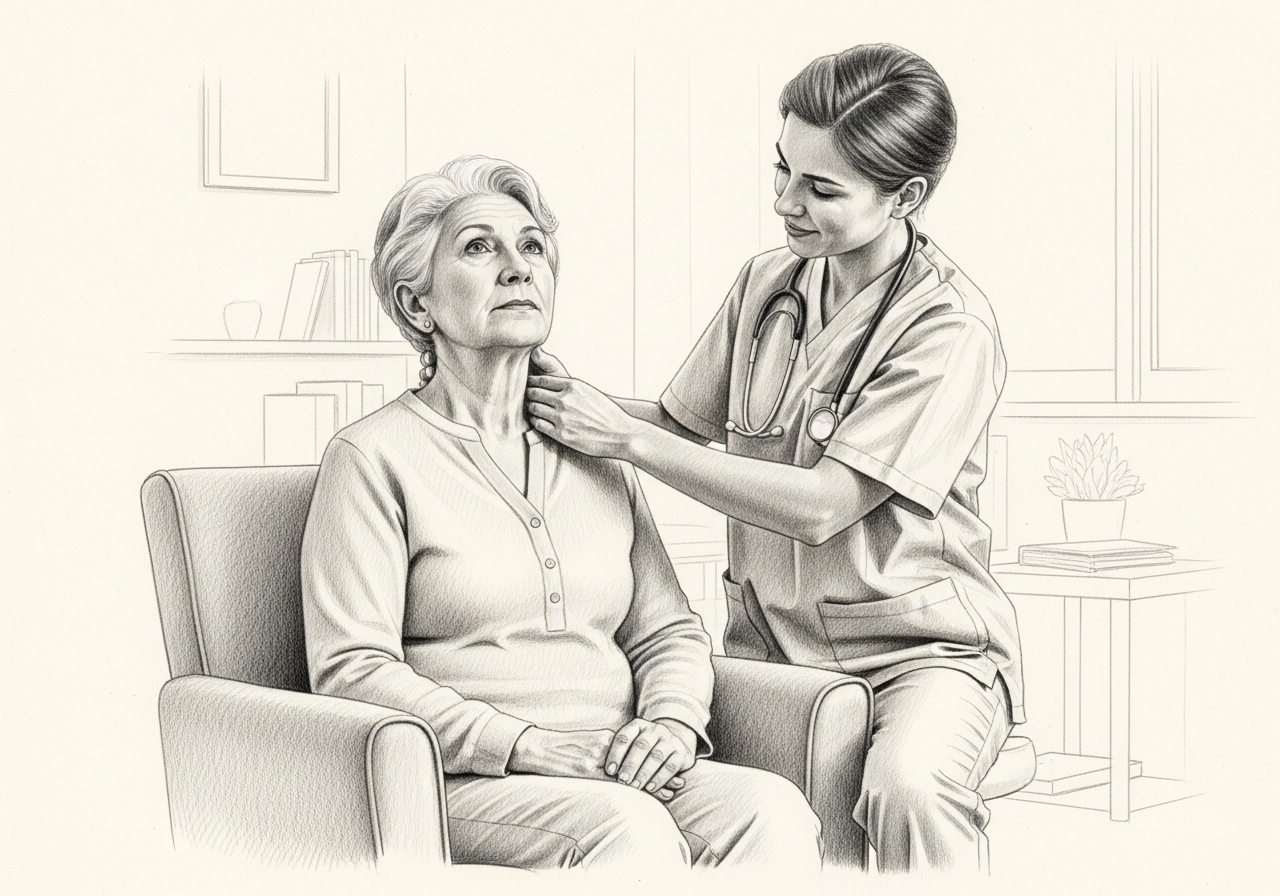
Evaluation begins with a detailed history. The clinician asks when a nodule or symptom was first noticed, whether it has changed, what testing has already been done, and what the patient wants to understand or achieve. A focused neck examination and a review of prior records follow.
From there, testing is matched to the situation. A neck ultrasound assesses the size and features of a nodule, thyroid blood tests show whether the gland is overactive or underactive, and a fine needle aspiration biopsy may be recommended based on ultrasound features and size. When results are unclear, molecular testing of biopsy samples can sometimes help. Evaluation is often staged: one visit for history, exam, and ultrasound, then testing, then a follow-up to review results and decide on a plan. This avoids treating every patient the same way.
Understanding ultrasound and biopsy results
Thyroid blood tests and cancer risk answer different questions. Blood tests such as TSH show how the gland is functioning, meaning whether it is overactive or underactive, but a normal level does not by itself tell whether a nodule is benign or cancerous. Function and cancer risk are assessed separately.
Ultrasound describes features that help estimate risk, including whether a nodule is solid or cystic, its margins, shape, echogenicity, and the presence of certain calcifications. These features, together with size, guide whether a biopsy is recommended. A fine needle aspiration biopsy is then reported in standardized categories that range from benign to suspicious or malignant, with some samples described as indeterminate. For indeterminate results, repeat sampling or molecular testing of the cells can sometimes refine the estimate of risk, which helps decide between monitoring and surgery. The clinician explains what a particular result means for the next step.
Symptoms and warning signs
Many thyroid nodules cause no symptoms at all and are found incidentally. When symptoms do occur, they may include a visible or palpable neck lump, pressure or a sensation of fullness when swallowing, a change or hoarseness in the voice, or an enlarging goiter. Symptom severity does not always match how concerning a nodule is, which is why testing matters.
Some features deserve prompt attention, including a rapidly enlarging mass, a persistent voice change, difficulty breathing or swallowing, or a nodule found alongside risk factors such as prior radiation exposure or a family history of thyroid cancer. These do not mean cancer is present, but they do make a focused evaluation reasonable.
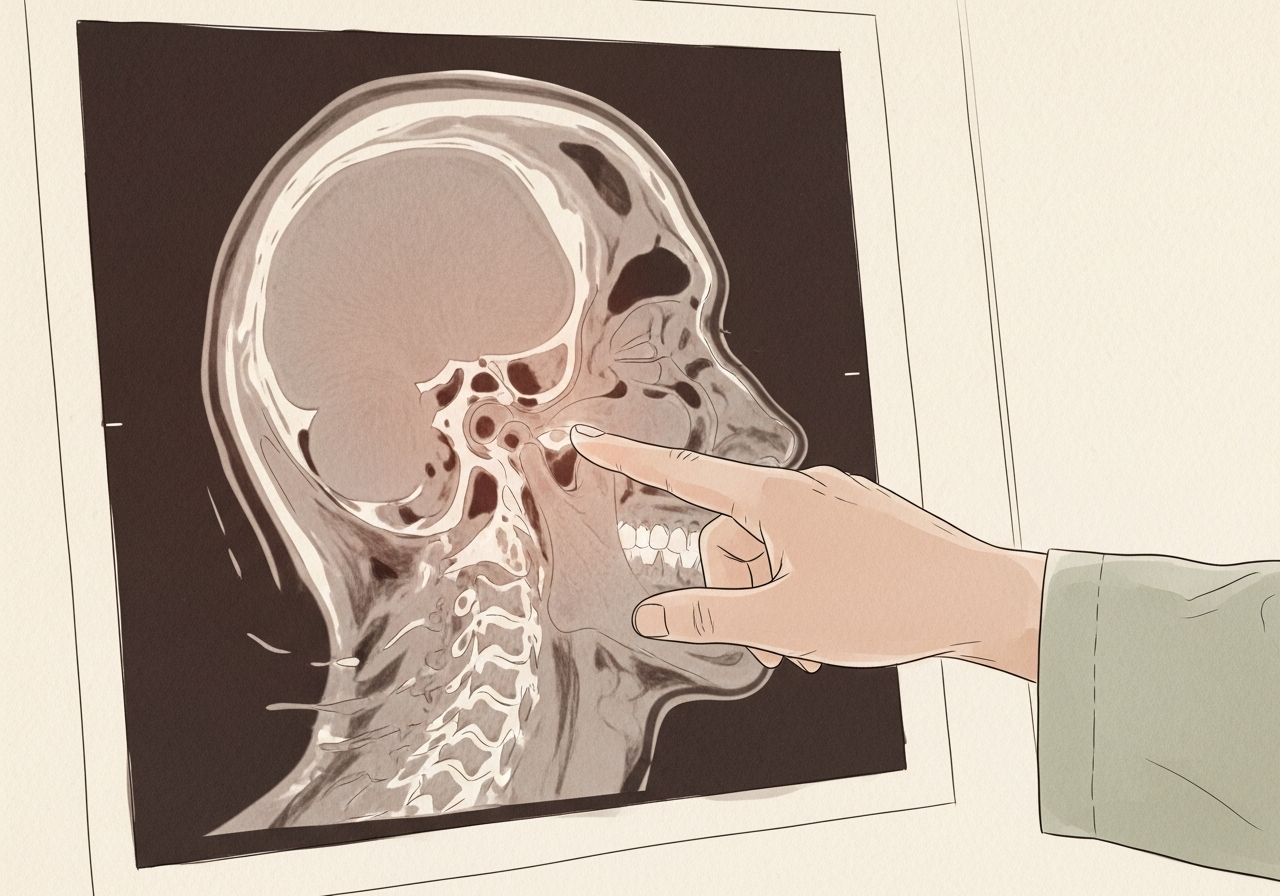
Causes, risk factors, and related conditions
Thyroid nodules are common and can have more than one cause, including benign overgrowth of thyroid tissue, fluid-filled cysts, inflammation of the thyroid, and, less often, thyroid cancer. A single patient may have several nodules of different types.
Risk factors that the clinician may ask about include prior radiation exposure to the head or neck, a family history of thyroid disease or thyroid cancer, iodine status, and age. Related conditions such as goiter, an overactive or underactive thyroid, and parathyroid disease can occur alongside nodules, which is why the evaluation looks at the gland and the neck as a whole.
Treatment options
Treatment is individualized and may change after testing. Options can include:
- Observation with periodic ultrasound when a nodule appears low risk
- Fine needle aspiration biopsy to clarify the diagnosis
- Molecular testing for indeterminate biopsy results when appropriate
- Thyroid lobectomy (removal of one side) for selected nodules
- Total thyroidectomy in selected cases
- Coordination with endocrinology for hormone management and overactive nodules
The pathway usually begins with diagnosis and risk assessment. Many nodules can be safely monitored, while others are better managed with a procedure. The reasoning behind each option, and why a patient may or may not be a candidate for surgery, should be explained clearly so the decision can be made together.
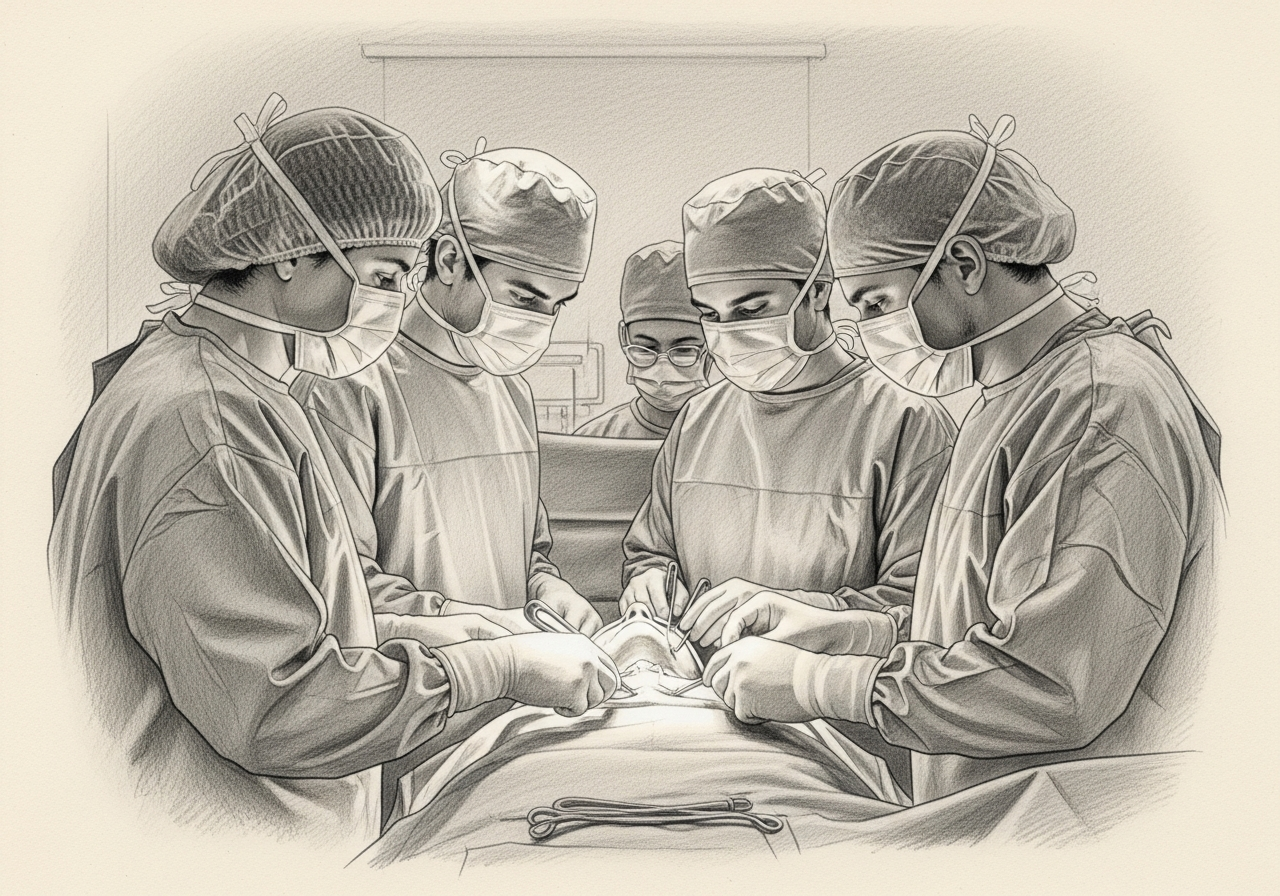
Risks, limitations, and alternatives
When surgery is considered, the main risks include bleeding, infection, a visible scar, temporary or, less commonly, lasting changes in calcium levels from effects on the parathyroid glands, and voice changes from irritation or injury to the nerves that supply the larynx. There is also a possibility that final pathology changes the plan.
Alternatives to surgery may include continued monitoring, medication, or endocrine management, depending on the diagnosis. No single approach is right for everyone. Online information can describe the possibilities, but it cannot determine candidacy or replace an examination and a review of the relevant records.
Recovery and follow-up
For patients who are monitored, follow-up centers on periodic ultrasound, thyroid blood tests, and symptom checks to watch for change over time.
After thyroid surgery, recovery typically involves incision care, monitoring of the voice and calcium levels, a review of final pathology, and clear instructions about activity and what symptoms should prompt a call. Some patients need thyroid hormone medication afterward, and long-term surveillance may be recommended, particularly when a nodule proves to be cancer or carries higher risk. Follow-up intervals are individualized based on the diagnosis, treatment, and risk profile.
What makes Norelle ENT different
Norelle ENT focuses on careful diagnosis, clear explanation, and conservative decision-making, with coordination across endocrinology, radiology, and pathology when needed. Patients are evaluated in context, taking into account anatomy, medical history, prior testing, personal goals, and the balance of risks and benefits, rather than being treated as an isolated finding on a scan.
When to seek urgent care
Use these categories to guide timing:
- Emergency, meaning call 911 or go to the nearest emergency department: difficulty breathing or significant difficulty swallowing.
- Same-day or urgent evaluation: rapidly increasing neck swelling or a new voice change.
- Routine specialist evaluation: most incidental nodules, which can be assessed in a planned outpatient visit.
The online consultation form is for routine scheduling and is not an emergency service.
Clinical perspective
Our head and neck surgeons focus on assessing risk accurately while avoiding unnecessary biopsy and surgery. Ultrasound features such as composition, echogenicity, margins, shape, and calcifications combine in a structured risk system that, together with size, guides whether a biopsy is recommended. A fine needle aspiration result is reported in standardized Bethesda categories, and some results are indeterminate.
Factors that generally favor a procedure include a higher-risk ultrasound pattern, a suspicious or malignant biopsy result, significant growth, compression, or hormone overproduction. Factors that favor monitoring include a low-risk pattern, a benign biopsy, and a small nodule causing no symptoms. For indeterminate results, repeat sampling or molecular testing can sometimes refine the estimate of risk and help decide between surveillance and surgery.
What commonly changes the recommendation is the ultrasound pattern, the biopsy category, change over time, and a patient's own priorities. Candidacy is determined individually after specialist review rather than from a general rule.
What to bring to your consultation
Bringing the right records makes a consultation more efficient. Helpful items include:
- Prior imaging and the written reports, including any thyroid ultrasound
- Biopsy or pathology results and any molecular testing
- Recent thyroid blood test results
- Treatment notes from any prior care
- A current medication list
- The specific decision you want the consultation to answer
Request a consultation for a focused review of the diagnosis, the available options, the likely tradeoffs, and the steps needed before treatment. For urgent symptoms, follow the guidance above rather than using the routine form.
Medical review
This page is a patient-education resource reviewed by the responsible Norelle ENT clinician before publication. It does not replace an in-person evaluation. If symptoms are severe or rapidly worsening, seek immediate medical care.
Specialists who treat thyroid nodules
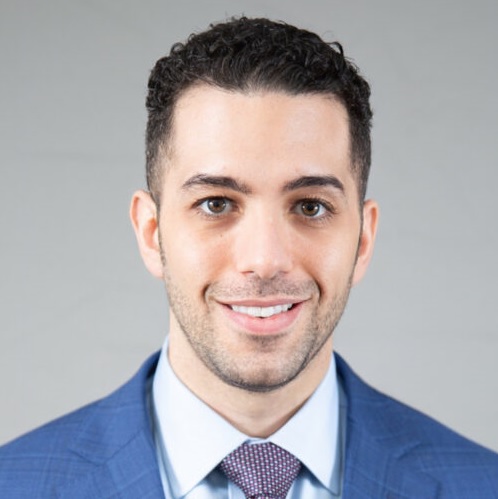
Dr. Moustafa Mourad
MD, FACS
Double Board-Certified Head & Neck and Facial Plastic & Reconstructive Surgeon
Dr. Moustafa Mourad is a double board-certified head and neck and facial plastic and reconstructive surgeon who cares for the full range of cosmetic and complex conditions affecting the face, head, and neck.
- Facial plastic and reconstructive surgery
- Head and neck cancer surgery
- Microvascular free-flap reconstruction
- Facial trauma and reconstruction
Also caring for this area
Not sure who to see? Our patient coordination team can help match you with the right specialist.
(212) 444-8006Norelle Academic Work
Research by Our Physicians
Selected scholarly work related to this topic.
Diagnostic Value of RAS Mutations in Indeterminate Thyroid Nodules: Systematic Review and Meta-Analysis
Otolaryngology–Head and Neck Surgery
Machine Learning and Feature Selection Applied to SEER Data to Reliably Assess Thyroid Cancer Prognosis
Scientific Reports
Intraoperative Nerve Monitoring during Parathyroid Surgery: The Fort Worth Experience
Head & Neck
Utility of Intraoperative Nerve Monitoring in Thyroid Surgery: 20-Year Experience with 1418 Cases
Oral and Maxillofacial Surgery
Citation details link to the original PubMed, DOI, journal, or publisher record.
Explore all Norelle research on this topicFrequently Asked Questions
No. Most thyroid nodules are benign. Evaluation still matters because a smaller number can represent thyroid cancer or may need treatment if they grow, cause pressure symptoms, or become overactive. Ultrasound features, nodule size, and sometimes a biopsy help clarify the level of risk.
Evaluation usually starts with a history, a neck examination, and a neck ultrasound, along with thyroid blood tests. A fine needle aspiration biopsy may be recommended based on the nodule's ultrasound features and size, and molecular testing can sometimes help when a biopsy result is unclear.
No. Many nodules can be safely monitored with periodic ultrasound and blood tests. Surgery is considered when a nodule is suspicious for or proven to be cancer, is growing, is causing pressure symptoms, or is overactive, and when the expected benefit outweighs the risks.
A fine needle aspiration biopsy uses a thin needle, often guided by ultrasound, to take a small sample of cells from the nodule for analysis. It is an office-based test that helps determine whether a nodule is benign, suspicious, or unclear, which guides the next step.
The nerves that control the voice run close to the thyroid, so voice change is a recognized risk of thyroid surgery. Surgery is planned to protect these nerves, and most patients do not have a lasting voice change, but the risk is reviewed before any operation. Tell your clinician about any existing voice concerns.
It depends on how much of the thyroid is removed. After a total thyroidectomy, thyroid hormone replacement is needed. After removal of one side, some patients need medication and others do not. Calcium levels are also monitored after surgery, and supplements are sometimes needed temporarily.
Most nodules are not emergencies and can be evaluated at a routine appointment. Prompt attention is reasonable for a rapidly enlarging mass, a persistent voice change, or difficulty breathing or swallowing. An evaluation helps distinguish findings that can be monitored from those that need closer attention.
Yes. Second opinions are appropriate for complex or high-stakes decisions, especially when surgery is being considered or a cancer diagnosis is involved. Bringing prior imaging, biopsy results, and pathology reports helps make the review efficient.
No. Whether a biopsy is recommended depends on the nodule's ultrasound features and size. Some nodules are low risk and can be monitored, while others meet criteria where a fine needle aspiration helps clarify the diagnosis.
A nodule that is clearly benign on a reliable biopsy is unlikely to become cancer, but nodules can change over time, which is why periodic ultrasound follow-up may be recommended. Any new growth or change is reassessed.
An indeterminate result means the cells do not fall clearly into benign or malignant categories. Depending on the situation, the next step may be repeat sampling, molecular testing of the cells, continued monitoring, or surgery, and the reasoning is discussed together.
TI-RADS is a structured ultrasound system that scores features such as composition, echogenicity, shape, margins, and calcifications. The score, together with nodule size, helps guide whether a biopsy is recommended or whether follow-up is enough.
Bethesda is the standardized reporting system for thyroid biopsy results. Categories range from benign to suspicious or malignant, with some samples called indeterminate, and each category guides the next step.
Molecular testing is most useful for indeterminate biopsy results, where it can sometimes refine the estimate of cancer risk and help decide between monitoring and surgery. It is used only when it can change a real decision.
Yes. A nodule confirmed benign may still be treated if it grows, causes pressure symptoms, or overproduces thyroid hormone. The decision is based on symptoms and change over time rather than cancer risk alone.
Clinical References
These independent resources from medical and professional organizations offer further reading. They are provided for general education and do not replace a consultation with a clinician.
Related Procedures

Related Conditions

Request a consultation for thyroid nodules
Schedule an evaluation with our team to review your symptoms and the appropriate next steps.