
Overview
Snoring is the noise made when air moves past relaxed, vibrating tissues in the nose and throat during sleep. It is very common and can range from an occasional, harmless nuisance to a sign of a more significant sleep-breathing problem.
The important question is whether snoring is simple, meaning loud breathing without meaningful drops in airflow or oxygen, or whether it reflects obstructive sleep apnea. Witnessed pauses in breathing, gasping, daytime sleepiness, and unrefreshing sleep make sleep apnea more likely.
Norelle ENT evaluates snoring with attention to the nasal airway, palate, tonsils, and tongue base, reviews the sleep history, and arranges sleep testing when appropriate. Treatment is directed at the cause and at whether sleep apnea is present.
Simple snoring versus sleep apnea
Simple snoring is loud breathing without significant drops in airflow or oxygen and without major effects on sleep quality. Obstructive sleep apnea, by contrast, involves repeated narrowing or collapse of the airway with pauses in breathing.
Clues that point toward sleep apnea include witnessed pauses or gasping, choking at night, daytime sleepiness, and unrefreshing sleep. Because symptoms overlap, testing is sometimes needed to be sure.
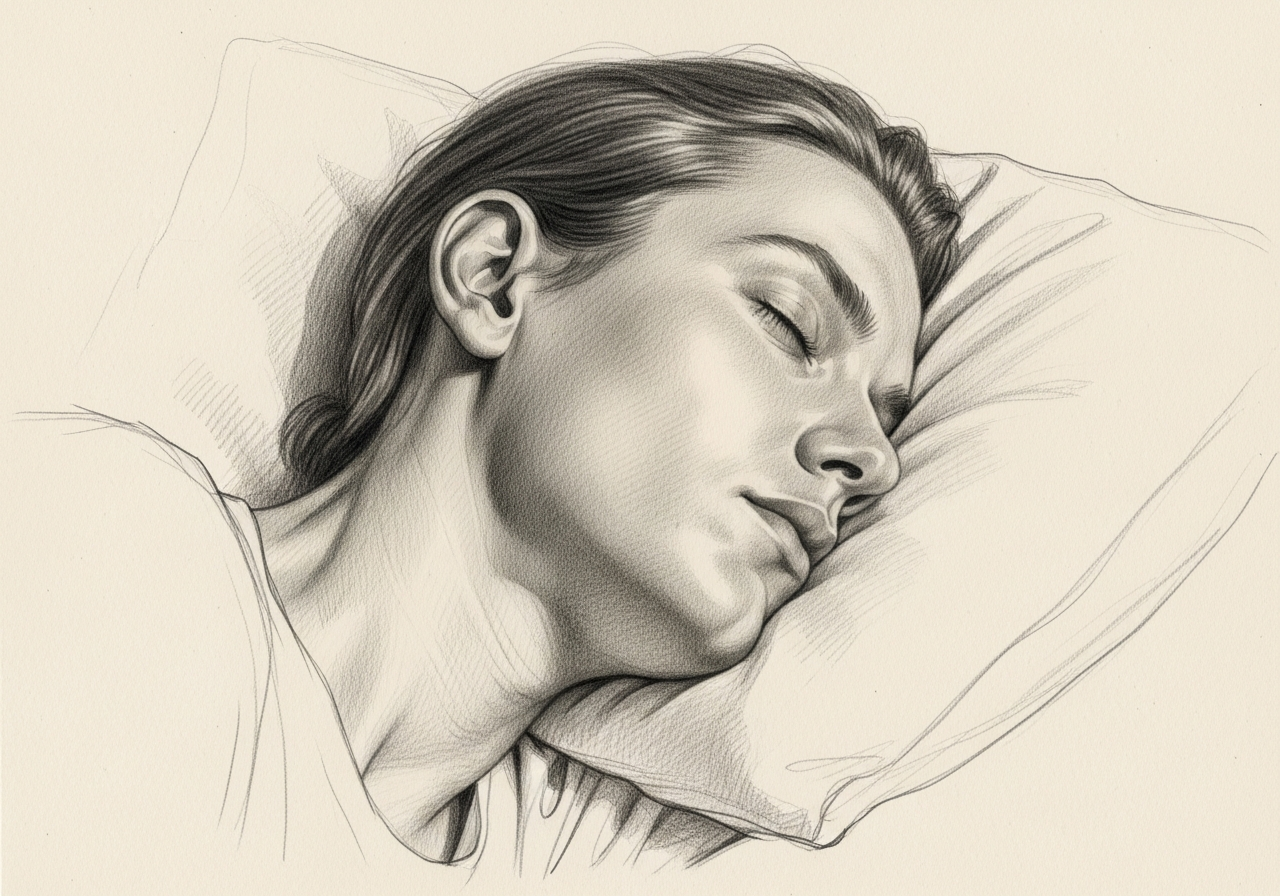
Living with snoring? The next step is a quiet, unhurried conversation.
Causes and risk factors
Snoring can come from nasal obstruction, a deviated septum, enlarged turbinates, nasal allergy, a long or floppy soft palate, enlarged tonsils, and a crowded tongue base. Weight, alcohol, sedatives, sleep position, and nasal congestion can all make it worse.
Often several factors combine, which is why an examination of the whole upper airway is useful.
How it is evaluated
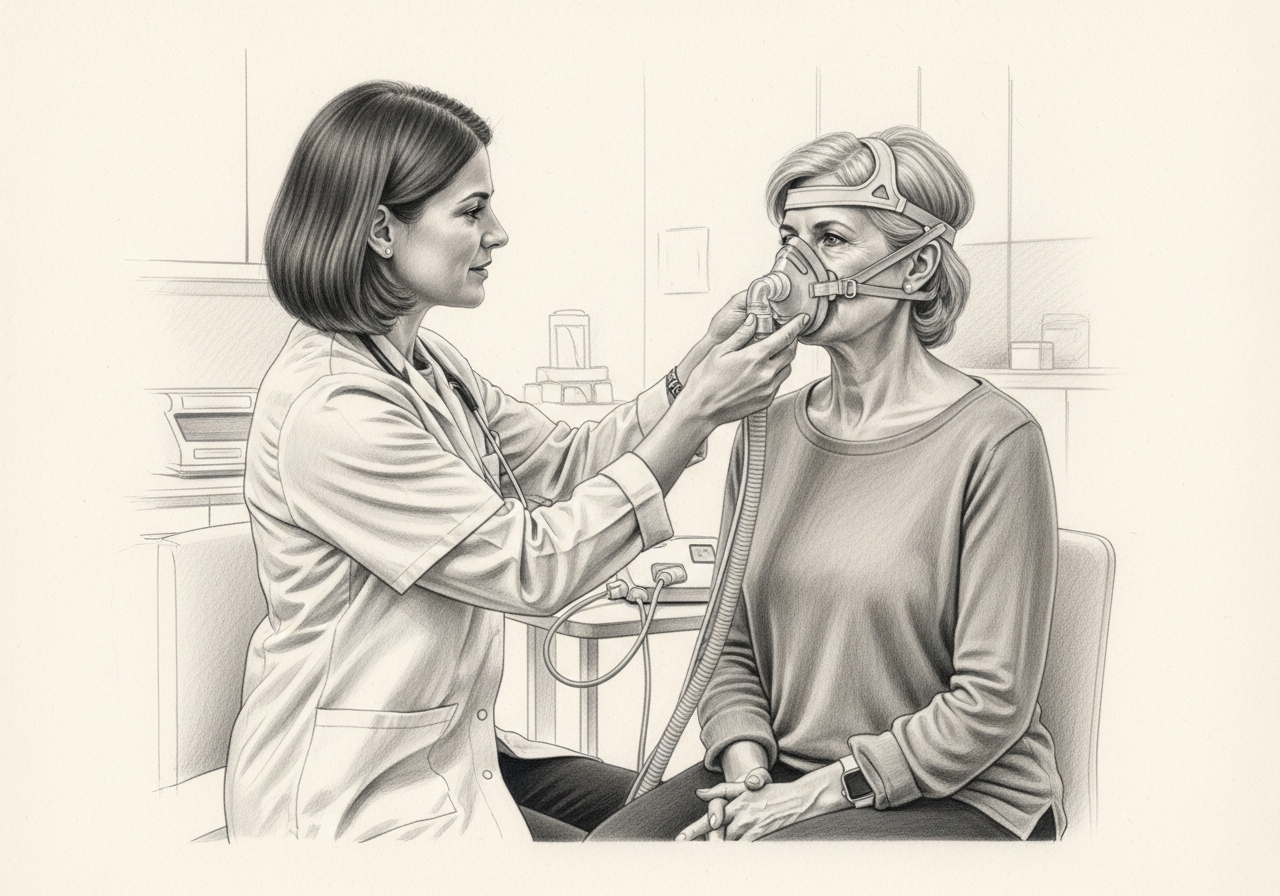
Evaluation begins with a sleep history and an examination of the nose and throat, sometimes with endoscopy to see where the airway narrows. When there are signs of possible sleep apnea, a sleep study, in a lab or at home, is used to check breathing and oxygen levels during sleep.
The results determine whether the focus should be on simple snoring or on treating sleep apnea.
Treatment options
Treatment is matched to the cause and to whether sleep apnea is present:
- Treating nasal congestion, allergy, or a deviated septum
- Positional therapy and changes to sleep habits
- Weight management when appropriate
- Reducing alcohol and sedatives before bed
- Oral appliance therapy in selected cases
- Procedures on the palate, tonsils, or nasal airway for selected patients
If sleep apnea is found, it is treated on its own terms, since reducing the snoring sound does not by itself treat apnea.
When to seek care
Consider an evaluation when snoring is loud or frequent, disturbs a bed partner, or is accompanied by witnessed pauses in breathing, gasping, or daytime sleepiness. Those last features make obstructive sleep apnea more likely and should prompt testing.
Clinical references
- American Academy of Otolaryngology-Head and Neck Surgery: https://www.entnet.org
- American Academy of Sleep Medicine: https://sleepeducation.org
Medical review
This page is a patient-education resource reviewed by the responsible Norelle ENT clinician before publication. It does not replace an in-person evaluation. If symptoms are severe or rapidly worsening, seek immediate medical care.
Specialists who treat snoring

Dr. Adrian Ong
MD
Board-Certified Facial Plastic & Reconstructive and Head & Neck Surgeon
Dr. Adrian Ong is a board-certified surgeon who practices exclusively on the face, head, and neck, with expertise spanning rhinoplasty, sinus surgery, facial trauma, reconstruction, and sleep surgery.
- Functional and aesthetic rhinoplasty (including revision)
- Sinus surgery and complex revision sinus surgery
- Facial trauma and nasal fractures
- Head and neck cancer surgery and microvascular reconstruction
Also caring for this area

Not sure who to see? Our patient coordination team can help match you with the right specialist.
(212) 444-8006Frequently Asked Questions
Snoring can be simple and harmless, but it can also be a sign of obstructive sleep apnea. Witnessed pauses in breathing, gasping, and daytime sleepiness make sleep apnea more likely and are reasons to be evaluated.
Snoring comes from vibrating tissues in the nose and throat. Common contributors include nasal congestion, a deviated septum, a floppy soft palate, enlarged tonsils, weight, alcohol, and sleep position.
Improving nasal breathing can reduce snoring for many people, especially when nasal obstruction is a major factor. It does not always eliminate snoring, and it does not treat sleep apnea on its own.
Not always. If there are no signs of sleep apnea, snoring may be managed with conservative measures. When pauses in breathing, gasping, or daytime sleepiness are present, a sleep study is recommended.
Weight can be a contributing factor, and weight management may reduce snoring and improve sleep-breathing for some people. It is usually one part of a broader plan.
Procedures on the nasal airway, palate, or tonsils can help selected patients, particularly when a specific structural cause is identified. Candidacy depends on where the airway narrows and whether sleep apnea is present.
Bring notes on your snoring and any witnessed pauses in breathing, your daytime energy, a list of medications, and any prior sleep study results.
Related Procedures

Related Conditions

Request a consultation for snoring
Schedule an evaluation with our team to review your symptoms and the appropriate next steps.